



Office Furniture Leasing: Premium & Circular | Enky
A growing team usually reaches the same point at roughly the same time. Headcount is rising, the office can't stay half-furnished, and finance doesn't want a large lump-sum furniture purchase landing in the same quarter as hiring, fit-out works, and software renewals. That's where office furniture leasing becomes a procurement decision, not just a sourcing shortcut.
The UK market already reflects that shift. Future Market Insights projects the UK furniture rental and subscription market to grow at 10.2% a year between 2025 and 2035, well ahead of the wider furniture sector. Buyers aren't only looking to rent desks and chairs. They're looking for flexibility, design quality, and clear end-of-life terms.
That's the gap between generic hire and a more considered approach. For startups, scaleups, boutique hotels, and co-working operators, the right model has to solve for cash flow, workspace change, and what happens to the furniture later. That's where a design-led circular model stands apart.
Table of Contents
- Understanding Your Office Furniture Leasing Options
- The Financial Case for Leasing: From CAPEX to OPEX
- Sustainable Leasing as a Quantifiable ESG Benefit
- The Enky Model: Design-Led Furniture as a Service
- Your Procurement Checklist for Leasing Office Furniture
- Common Questions About Office Furniture Leasing
Understanding Your Office Furniture Leasing Options
A company moving into a first proper office often assumes there are only two routes. Buy everything outright, or use short-term office furniture rental. In practice, office furniture leasing sits across three distinct models, and choosing the wrong one usually creates friction later.

Traditional leasing and when it fits
Traditional leasing works best when the team size is relatively predictable and the business wants fixed monthly costs over a defined term. It's often suitable for a company with a stable office footprint that needs desks, ergonomic chairs, storage, and meeting tables without a large upfront spend.
The limitation is rigidity. If the team grows faster than expected or the layout changes after six months, a fixed furniture schedule can become awkward. That's why operations teams should treat lease terms as a space-planning decision, not just a finance decision.
A lease only works cleanly when the business has a realistic view of headcount, layout change, and office moves over the coming years.
Subscription and leaseback are different tools
Subscription, or FaaS, is better suited to businesses that expect movement. A scaling company may need to add task seating, swap meeting furniture, or introduce acoustic zoning without restarting a procurement cycle. That's very different from standard office furniture rent.
Leaseback solves a separate problem. It's useful when a company already owns furniture assets and wants to free up capital, up to 90% of the furniture's value, while keeping those items in use. That can be relevant after a major fit-out, or when finance wants to improve cash flexibility without stripping out a functioning workplace.
A simple internal review usually clarifies the right path:
- Map headcount movement over the next 24 to 36 months.
- Check cash-flow priorities against other demands such as hiring and building works.
- Assess the space itself, including layout flexibility, square footage, and the likelihood of a move.
For a 50-person startup furnishing a new office, the question isn't only whether to rent office furniture. It's whether the company needs fixed-term certainty, modular scaling, or an asset strategy that includes furniture already on the balance sheet.
The Financial Case for Leasing: From CAPEX to OPEX
A finance lead signs off a new office, then sees the furniture line item land at the same time as hiring plans, IT spend, and dilapidation works. That is usually the moment leasing becomes a serious procurement option rather than a fallback.

Buying furniture outright places the full cost on day one. For a growing business, that cash often has a better use elsewhere, whether that is recruitment, product development, kitchen and MEP works, or preserving runway. Leasing moves furniture into predictable operating spend, which can make approvals easier and protect working capital at the point of highest pressure.
That accounting shift matters. So does the operational one.
In practice, the strongest financial case for premium Furniture as a Service is not just lower upfront spend. It is avoiding the hidden cost of getting the specification wrong, then having to replace, store, or dispose of furniture 12 to 24 months later as the team changes. Standard rental firms rarely solve that well. They provide stock for a term. A circular, design-led FaaS model is built around adaptation, refurbishment, and redeployment, which is where the financial return starts to look different.
Where the savings show up in real projects
Enky has seen this most clearly with scaleups and hospitality groups that want high-quality furniture without tying up capital in fast-changing spaces. When Enky furnished Dalenys' Paris office on subscription, the model freed around €150,000 in working capital that an outright purchase would have absorbed, at exactly the stage when that cash had better uses. And at RP France in Poitiers, a phased subscription for 155 people meant the seating mix could be adjusted mid-contract as real usage emerged, without restarting procurement.
The point is not the headline saving on day one, although that matters. The bigger gain is that the business avoids paying twice. Once for furniture that no longer fits the space, and again for the replacement.
That is also why finance teams should compare more than monthly price. Cheap hire can look attractive on paper, but if the product quality is lower, the design offer is limited, and there is no practical route to swap, refurbish, or recover assets, the total cost of use climbs quickly. Premium FaaS usually costs more than basic rental on a line-by-line basis. It can still be the better financial decision if it reduces replacement cycles, storage costs, and procurement friction across the term.
A useful reference point for companies reviewing asset flexibility is Enky's leaseback model for freeing up capital from existing assets.
Financial rule: if preserving cash and retaining flexibility matter more than owning furniture on day one, OPEX is usually the stronger choice.
Sustainable Leasing as a Quantifiable ESG Benefit
The sustainability case for sustainable office furniture leasing only holds when the model extends useful life. If the furniture is rented for a term and then replaced with no credible recovery route, the ESG case weakens quickly.
The most useful benchmark comes from product lifecycle analysis. LCA research on circular office furniture models points to a consistent conclusion: renting outperforms buying environmentally when the supplier keeps assets well utilised and manages refurbishment, because extending the life of existing units avoids the carbon-intensive manufacturing of new ones.
What that means in a real office
Embodied carbon sits largely at the manufacturing stage. A desk or chair that stays in use longer, gets maintained, and is redeployed instead of replaced usually performs better environmentally than a buy-discard-repeat pattern.
That changes how procurement should be framed. The key question isn't "is leasing greener?" in the abstract. The ultimate question is whether the supplier retains enough control over maintenance, refurbishment, and redeployment to keep the product in use past the usual replacement cycle.
What buyers should verify
A credible circular model should show evidence of design and material decisions that support longevity:
- Certified materials: FSC/PEFC timber and OEKO-TEX textiles, where applicable, help support material traceability and lower-risk specification choices.
- Repairability: modular parts, replaceable components, and easy disassembly matter more than broad sustainability language.
- End-of-life recovery: the contract should state what happens when the term ends and who is responsible for collection, sorting, and redistribution.
Buyers that want a deeper view of this procurement logic can compare models through Enky's circular purchase approach.
For hospitality operators and workplace teams alike, the strongest sustainability outcome usually comes from specifying durable products once, then keeping them in circulation for as long as function and appearance still support the space.
The Enky Model: Design-Led Furniture as a Service
Most office furniture to lease in the market falls into a commodity pattern. Standard desks, standard chairs, basic terms, and vague collection language at the end. A design-led model works differently because layout, acoustics, material quality, and recovery are treated as part of the same system.

Three access models with different jobs
At Enky, the structure is built around three options that solve different operational problems:
| Model | Best suited to | Core logic |
|---|---|---|
| Subscription FaaS | Growing teams, phased projects, flexible offices | Monthly access to furniture with the option to buy |
| Circular purchase | Businesses that want ownership with a recovery plan | Own from day one, with end-of-life recovery included |
| Leaseback | Companies holding existing furniture assets | Unlock capital, up to 90% of the furniture's value, while keeping it in use |
That's more useful than a simple rent office furniture offer because the model can match actual use, and the models combine in practice: at WorkPad's London office, 347 pieces including 98 workstations were structured as a split between lease and subscription, matching the stable core of the workspace and its flexible layer to different financial routes. A startup scaling into a London office doesn't have the same needs as a boutique hotel refurbishing lounge seating in phases.
Design quality matters operationally
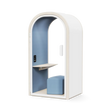
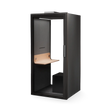
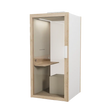
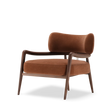
Premium brands aren't only an aesthetic choice. They often support durability, repairability, and stronger long-term performance. Pedrali task seating can suit agile workstations, Muuto brings a softer residential tone to breakout areas, Alki fits hospitality-led workplace zones, and Framery is relevant where acoustic privacy is part of the brief.
Acoustic products illustrate the point well. BuzziSpace's BuzziTripl Desk Split uses three layers of 100% recycled PET felt in a 1.45 cm partition, with powder-coated metal fixes, anti-skid pads, abrasion resistance, and EN 13501-1 fire rating. That isn't decorative add-on specification. It's a practical way to introduce desk-level privacy and sound attenuation in open-plan teams without hard construction.
A broader explanation of the operating model sits in this article on Furniture as a Service, and the primary route for monthly access is the subscription model. For buyers comparing providers, a key difference is that design support, installation, maintenance, recovery, and next-life redistribution can sit inside the same commercial logic.
Your Procurement Checklist for Leasing Office Furniture
Procurement problems usually start before a supplier is contacted. A business asks for a quote too early, before it has worked out whether the furniture count, term length, and layout assumptions are stable.

The internal checks to complete first
A useful procurement review should cover these points:
- Headcount movement: Don't only count today's desks. Build in growth buffers if hiring is active.
- Cash priorities: If the business is preserving capital for recruitment or fit-out works, OPEX may be the cleaner path.
- Layout flexibility: Open-plan benching, private meeting rooms, touchdown areas, and acoustic zones all affect the furniture mix.
- Move risk: If there's a good chance of relocation, modular systems matter more than fixed furniture plans.
Some of the worst leasing decisions come from specifying a static furniture count for a team that isn't static.
The questions every vendor should answer
Generic office furniture rental providers often prove less convincing. Ask direct questions.
- How is wear defined? A hidden liability in many lease contracts is normal wear being misclassified as damage, which can create unpredictable end-of-term charges. The definitions and the inspection process should be written into the agreement, not left to interpretation at collection.
- What happens at contract end? Removal, sorting, recovery, and redistribution shouldn't be implied. They should be written.
- Can quantities scale up or down? Teams rarely stay fixed through an entire term.
- Are the materials certified? FSC/PEFC and OEKO-TEX aren't decorative labels. They indicate a more disciplined specification process.
- Who coordinates delivery and install with the fit-out team? That matters when architects, contractors, and furniture suppliers overlap.
For workplace planning support, the most relevant resource is the workspace collection. Buyers that want ownership with a structured return path can also review circular purchase options.
Common Questions About Office Furniture Leasing
What lease term do most companies choose?
A 36-month term is the default for many growing companies because it matches the period when workspace needs usually change again. In practice, that is often a funding milestone, a relocation, or a headcount reset. Hospitality groups, co-living operators, and phased refurbishments often choose shorter terms because room formats, occupancy patterns, and guest expectations move faster than a standard office cycle.
What happens at the end of the lease?
End-of-term handling should be treated as a procurement point, not an admin detail. If the contract does not spell out collection, inspection, refurbishment, and redistribution, the provider may remove the furniture directly and close the file. That gap matters: WRAP estimates only around 17% of the UK's discarded office furniture is recycled, so weak end-of-life planning usually means landfill by default.
The better contracts state who collects the furniture, how condition is assessed, what gets repaired, and whether items are remarketed or returned to service elsewhere. That is one of the clearest differences between circular FaaS and basic hire.
Can the contract flex if team size changes?
Yes, but only if the mechanism is written into the agreement from day one.
Scaleups often need to add 20 desks, then remove 10 six months later when teams reconfigure around hybrid working. Hospitality clients face a different version of the same problem, with lounges, coworking areas, and back-of-house zones changing by season or concept. Contracts that allow planned top-ups, partial swaps, and quantity reductions handle that reality better than fixed schedules built around a single headcount forecast.
Is office furniture leasing better than buying?
Leasing is the stronger choice when the business expects change, wants to protect cash, or needs a defined recovery route for the furniture. Buying is the stronger choice when the layout is stable for years, the company wants full ownership from day one, and there is internal capacity to manage maintenance, storage, and disposal later.
That is the real decision line.
For a 60-person scaleup likely to relocate after its next raise, tying capital up in owned furniture is often the wrong move. For a mature firm with a settled headquarters and a long hold on the space, ownership can be cheaper over the full life of the assets. The mistake is treating every leasing model as equal. Generic rental can look cheaper monthly and still cost more over the term if the product quality is poor, the fit-out lacks design value, or end-of-lease charges are vague.
Does premium specification still work on a leasing model?
Yes, if the provider has built the model around durable, recoverable products rather than short-life stock. That matters because premium specification only works commercially when the furniture can stay in circulation across more than one client lifecycle.
In Enky projects, that is why brands such as Pedrali, Muuto, Alki, Softline, Lapalma, and Framery are specified. The value is not just appearance. It is durability, repairability, acoustic performance, and the ability to keep a workspace credible for clients, hires, and staff without treating furniture as a disposable fit-out line.
Businesses comparing office furniture leasing with generic hire usually need more than a price list. They need a model that fits cash flow, supports workspace change, and gives a clear answer on what happens to every item later. Explore the catalogue or contact Enky to assess subscription, circular purchase, or leaseback against the space, term, and asset strategy in play.


