


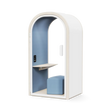
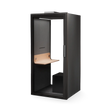
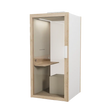
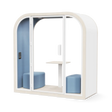
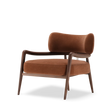
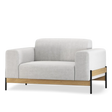
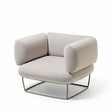
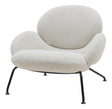
Furniture-as-a-service: Flexible solutions for businesses.
A property team is handed a deadline. The lease starts in six weeks, the site has to open on time, and the furniture brief is still unresolved. Buying ties up capital in assets that may need to be replaced, resized, or relocated far sooner than the depreciation schedule suggests. Basic rental solves the timing issue, but often at the cost of design control, service quality, and any clear plan for what happens to the furniture at the end of use.
That pressure is why furniture-as-a-service has become a serious asset strategy for finance and operations teams. The case is not only operational. Circular business models are gaining ground across the UK economy, with strong employment, output, and business growth already attached to them. The same logic applies to furniture. Keep products in use longer, recover value through refurbishment and redeployment, and avoid paying repeatedly for assets that still have useful life.
The practical point is straightforward. Furniture as a service works best when it gives a business options, not just inventory.
That is where Enky stands apart from simpler rental providers. Its model includes subscription, circular purchase, and leaseback, which gives teams different ways to match furniture decisions to cash flow, asset ownership, project duration, and ESG targets. A fast-growing company may want subscription for flexibility. An operator fitting out a long-life site may prefer circular purchase. A business with furniture already on its balance sheet may use leaseback to release capital without losing operational use.
This matters beyond the office. The same asset logic applies to hospitality rollouts, serviced living, student schemes, and other furnished environments where demand changes, refresh cycles are frequent, and disposal costs are often ignored until late in the process. Furniture-as-a-service is stronger when it is treated as part of asset planning from the start, not as a short-term rental patch.
Table of Contents
- What is Furniture-as-a-Service (FaaS)
- The three models: subscription, circular purchase and leaseback
- FaaS vs Traditional Buying A Financial Comparison
- The ESG Case for a Circular Furniture Model
- FaaS Beyond the Office Hospitality and Residential Use Cases
- Implementing a Furniture as a Service Strategy
- Frequently Asked Questions about FaaS
What is Furniture as a Service (FaaS)
Furniture as a service shifts the decision from owning furniture to accessing furniture performance over time. That sounds simple, but the commercial impact is much larger than the phrase suggests.
In a conventional purchase model, the buyer acquires desks, chairs, booths, and tables as fixed assets. The procurement event ends once delivery is complete. After that, maintenance, repairs, churn, storage, and disposal all sit with the client. In a proper FaaS model, those lifecycle responsibilities sit inside the service structure from the start.

Access replaces one-off procurement
The most useful way to understand FaaS is as a managed asset model. A business pays for access to furniture and the operational support around it, rather than taking on every cost and risk attached to ownership.
That matters most when the space itself is variable. A hybrid office may need fewer desks and more collaboration zones. A boutique hotel may want to refresh public areas without replacing every item outright. A co-living operator may need to turn units quickly while keeping a consistent design standard.
Practical rule: If the space will change before the furniture wears out, a one-time purchase usually creates friction.
True FaaS includes lifecycle control
Basic rental solves one issue. It removes the upfront purchase. It usually doesn't solve what happens next.
A mature FaaS offer should address at least these points:
- Maintenance responsibility so wear and minor failures don't trigger a new procurement cycle
- Refurbishment pathways so products can return to service instead of being discarded
- Swap or scale options when layouts or occupancy change
- End-of-life recovery so the client isn't left handling disposal
FaaS allows the circular economy to become operational rather than theoretical. The model depends on repair, refurbishment, recovery, and redistribution. That's why FaaS works best with durable products, modular construction, and repeatable service processes.
It's not the same as leasing or hire purchase
Leasing can spread cost, but it often treats the item as a financing object. FaaS treats it as a service-backed asset in circulation. That difference affects service levels, redeployment, and residual value.
For a CFO or operations lead, the core question isn't “can furniture be financed monthly?” It's “who carries the lifecycle burden, and how much flexibility does the contract preserve?”
The three models: subscription, circular purchase and leaseback
Most providers stop at one version of furniture-as-a-service. That's usually some form of monthly rental. In practice, buyers need a more precise fit between furniture strategy, cash-flow requirements, and balance sheet priorities.
A stronger framework uses three distinct models. The choice depends on the business objective, not on a default sales format.

Subscription for flexibility first
Subscription is the closest expression of classic FaaS. The client pays a monthly fee for access to furniture, often with delivery, assembly, maintenance, and end-of-life recovery included. It suits businesses that expect change.
A fast-growing scaleup is a straightforward example. A team of about 50 may take a fitted office today, add meeting rooms six months later, then reduce fixed desks as hybrid patterns settle. In that setting, furniture subscription for business is often more practical than purchasing a static inventory.
This is also the model that has seen the fastest adoption among scaleups and co-living operators because it matches operational uncertainty. Enky's subscription model is structured around that use case, with a buy option available where ownership becomes relevant later.
Circular purchase for ownership with recovery built in
Some organisations still want ownership from day one. That may be driven by accounting policy, internal asset rules, or a preference for long-term control over a flagship site.
Circular purchase works when the buyer wants to own the furniture but doesn't want end-of-life responsibility to become an afterthought. Recovery, refurbishment, and redistribution are designed into the relationship from the beginning. The asset is purchased, but the circular pathway remains active.
This is often the right choice for organisations with stable occupancy and clear ESG requirements. It keeps the ownership model intact while addressing what usually goes wrong after years of use: fragmented maintenance, avoidable replacement, and waste-heavy disposal.
Leaseback for capital release
Leaseback answers a different problem. Some businesses already own quality furniture but would rather not keep capital tied up in those assets.
In a leaseback structure, existing furniture is transferred into a service agreement and remains in use. The operator keeps the furniture in place while releasing capital from the balance sheet. That can be useful after a fit-out, during restructuring, or when treasury priorities change.
Leaseback isn't a furniture trend. It's an asset strategy for businesses that already bought well but now want liquidity without operational disruption.
Which model fits which objective
| Business goal | Best-fit model | Why |
|---|---|---|
| Preserve flexibility in a changing space | Subscription | Supports swaps, scaling, and monthly budgeting |
| Own the asset but avoid linear disposal | Circular purchase | Combines ownership with planned recovery |
| Unlock value from existing furniture | Leaseback | Releases capital while keeping furniture in use |
This is the practical distinction many buyers miss when comparing office furniture rental vs buying. The actual decision isn't binary. It's about choosing the structure that best matches the asset's expected life, the client's cash-flow priorities, and the amount of future change built into the space.
FaaS vs Traditional Buying A Financial Comparison
Finance teams usually start with the wrong comparison. They compare a purchase price with a monthly fee. That's too narrow. The more useful comparison is one-time procurement versus lifecycle-managed access.
UK public-sector procurement provides a strong reference point here. The furniture framework used by the UK Government Commercial Function emphasises total cost of ownership, lifecycle management, and refurbishment or repair rather than just unit price, as noted in this furniture procurement framework reference. That is the right lens for commercial buyers as well.
Where buying still works
Traditional purchase can make sense in a stable environment with long occupancy, low churn, and a clear internal maintenance process. If a business expects to keep a fit-out unchanged for a long period, ownership may be efficient.
The issue is that many spaces no longer behave that way. Headcount shifts. Meeting patterns change. Hospitality interiors need refresh cycles that are often shorter than the technical life of the furniture itself.
A clearer comparison
| Financial factor | Traditional buying | FaaS |
|---|---|---|
| Upfront spend | High initial CAPEX | OPEX-led monthly structure |
| Maintenance | Managed separately | Usually integrated into service |
| Reconfiguration risk | Buyer absorbs it | Shared or contract-managed |
| End-of-life handling | Buyer organises disposal or resale | Recovery can be built into the model |
| Asset flexibility | Low once purchased | Higher where swaps or scaling are allowed |
That's why the strongest FaaS business case usually appears when furniture is treated as a managed asset rather than a static product. The service layers matter. Without them, monthly pricing can look like financing. With them, the model starts to reduce operational friction.
A monthly fee only makes sense if it removes hidden costs elsewhere. Repairs, redeployment, storage, and disposal are usually where that difference shows up.
Cash-flow planning matters more than unit price
CFOs rarely evaluate furniture in isolation. They're often balancing fit-out, connectivity, workplace technology, relocation, and move logistics at the same time. Teams already reviewing broader guides on planning office IT infrastructure expenses often reach the same conclusion with furniture: preserving cash for core operations usually matters more than owning every item on day one.
A basic office chair comparison won't show that. A full asset strategy will.
The ESG Case for a Circular Furniture Model
A sustainability claim in furniture only holds up if the operating model changes what happens to the asset over time. ESG value comes from longer product life, fewer premature replacements, repair instead of disposal, and a clear route back into use after one client no longer needs the item.
That matters because circular models are becoming a bigger part of mainstream business activity in the UK, not a niche procurement choice. As noted earlier, circular firms are outpacing the broader business base on growth, which helps explain why procurement and finance teams are giving asset recovery and reuse more attention.

Waste reduction starts with design choices
The environmental result is decided early, at the specification stage. If a chair cannot be repaired, if a desktop cannot be refinished, or if parts cannot be replaced, the circular story usually ends at the first damage or first redesign.
Institutional furniture standards point in a consistent direction. Durability, ease of care, repairability, adaptability, standard dimensions, and long warranties all support longer service life, as summarised in this workplace furniture standards reference. In practice, modular construction and disassembly matter more than broad sustainability language.
For procurement teams assessing whether a product can stay in circulation, the practical checks are straightforward:
- Certified materials such as FSC or PEFC wood and OEKO-TEX textiles where relevant
- Replaceable wear parts so arms, glides, tops, and covers can be changed without scrapping the full item
- Refurbishment readiness so the product can be cleaned, repaired, and reassigned after one contract ends
- Traceable recovery so collection and next-use planning are built into the agreement
Ownership can still fit that logic. Teams that want assets on balance sheet can use circular furniture procurement options to buy within a model that still plans for recovery, refurbishment, and redeployment later. That is one reason FaaS should be treated as an asset strategy, not just a rental decision.
Disposal remains an operational risk
Furniture waste is rarely handled well under a linear model. A relocation, refurbishment, hotel refresh, or residential turnover creates a disposal problem fast, especially when items were never selected for second-life use.
The ESG test is simple. Can the provider show how maintenance is handled, what gets repaired, what gets recovered, where refurbishment happens, and how products are redistributed? If those steps are vague, the circular claim is weak.
Enky's model matters here because the route can change by asset type and business need. A subscription may suit short-cycle flexibility. A circular purchase may suit teams that want ownership with a recovery path. Leaseback can release capital from existing furniture while keeping those assets in managed circulation. That flexibility produces a better ESG outcome than a basic rental offer when the objective is to keep furniture working longer across office, hospitality, and residential settings.
FaaS Beyond the Office Hospitality and Residential Use Cases
Most discussions of furniture as a service stay inside the office. That misses some of the strongest operational use cases.
Hospitality and residential operators deal with a different pressure profile. Furniture isn't just functional. It shapes the guest experience, absorbs heavy wear, and often needs refreshes before the product is technically finished. That makes a rigid buy-and-replace cycle inefficient.

Hospitality benefits from managed refresh cycles
A boutique hotel lobby is a good example. The operator wants a strong first impression, but lounge seating, bar stools, and café tables take visible abuse. In a conventional purchase model, the finance team pays upfront and then handles each failure or refresh as a separate problem.
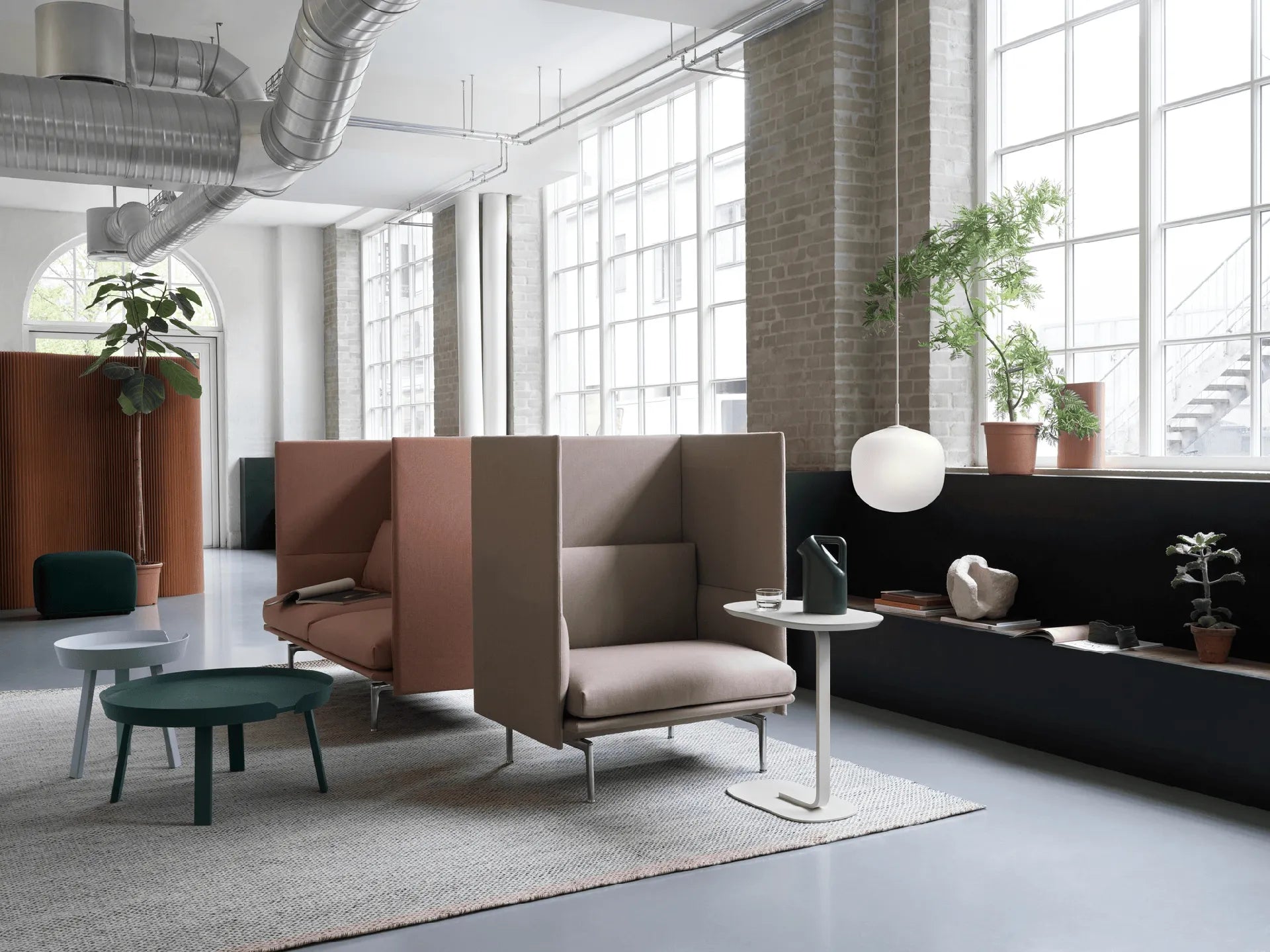
A subscription structure changes that. Pedrali bar stools in a breakfast area, Muuto lounge seating in a reception space, or Framery booths in a mixed-use hotel workspace can be specified as part of a managed service. The operational gain isn't just lower CAPEX. It's a cleaner way to handle maintenance, consistency, and replacement timing.
Guest-facing spaces rarely fail all at once. They degrade unevenly. The right service model accounts for that from the start.
Co-living and residential need adaptability
Co-living operators face a different version of the same challenge. Units turn over. Shared spaces change function. Residents expect furnished spaces to feel intentional rather than temporary.
Modular Softline sofas, adaptable dining setups, and durable Alki pieces fit well here because they can support repeated use with a design language that still feels residential. Furniture as a service gives the operator room to scale up, swap configurations, or maintain a consistent aesthetic across multiple properties without rebuilding the specification every time.
Flexible workspace also pushed the model forward
In the UK, the rise of flexible workspace after the pandemic made these service models commercially relevant beyond theory. Industry analysis notes strong recovery in serviced office and flexible workspace demand in London by 2024, with flexible space taking a materially larger share of the central London office market than before 2020, as described in this analysis of furniture as a service and flexible real estate. That same demand pattern applies to hospitality lounges, hybrid amenity spaces, and residential common areas where layout changes are part of normal operations.
The practical lesson is simple. FaaS works best where churn, image, and wear all matter at once.
Implementing a Furniture as a Service Strategy
The quality of the contract matters as much as the quality of the furniture. A weak FaaS agreement can leave a buyer with the cost structure of subscription and the operational burden of ownership.
Procurement teams should treat implementation as a service design exercise, not a catalogue exercise.
Start with the volatility of the space
The first question isn't aesthetic. It's operational. How likely is the space to change before the furniture reaches the end of its useful life?
A practical checklist helps:
- Headcount movement. Will the team expand, contract, or move to hybrid seating patterns?
- Layout uncertainty. Are meeting rooms, focus zones, or lounge areas likely to be reconfigured?
- Traffic intensity. Will certain pieces in guest-facing areas wear faster than others?
- Portfolio complexity. Does the operator manage one site or several?
If the answer points to frequent change, flexibility should be written into the agreement rather than handled informally later.
Review the service terms line by line
A strong furniture as a service strategy depends on clear answers to ordinary operational questions.
Look for these details:
- Maintenance scope. Which repairs are included, and how are incidents handled?
- Swap terms. Can pieces be exchanged if usage changes?
- Return conditions. What happens at the end of the contract?
- Buy option. Can the client purchase selected items later?
- Recovery route. What process governs refurbishment and redistribution?
One model that can be useful where balance-sheet pressure matters is furniture leaseback for business assets. It suits organisations that already own furniture but need to release capital without disrupting current use.
Don't overlook installation and move logistics
Operational handover is where many projects lose time. Delivery sequencing, assembly, room readiness, and post-install snagging need clear ownership. Even adjacent tasks matter. Teams coordinating broader site changes sometimes review practical resources such as bed setup for movers because the same lesson applies to commercial furniture: installation should be planned as part of service delivery, not treated as a last-minute add-on.
If a provider can't explain what happens when a chair fails, a team doubles in size, or a contract ends, the model isn't fully built.
Frequently Asked Questions about FaaS
Is furniture as a service just another name for rental
No. Rental usually focuses on temporary access. FaaS should include lifecycle management, which means maintenance, possible refurbishment, recovery, and a defined end-of-contract pathway. The difference matters because it affects total operating effort, not just payment timing.
Does subscription mean lower furniture quality
It shouldn't. The model only works when products are durable enough to survive multiple use cycles. That's why premium commercial pieces from brands such as Pedrali, Muuto, Alki, Softline, and Framery make sense in this context. Quality supports the economics.
When does office furniture rental vs buying make more sense
Buying suits stable spaces with low churn and a clear long-term layout. FaaS suits environments where occupancy, function, or design requirements are likely to change. The more uncertainty there is, the more valuable service flexibility becomes.
What do buyers ask about most often
Three issues come up repeatedly: flexibility, maintenance coverage, and end-of-life transparency. Buyers want to know whether they can scale up or swap pieces, who pays when something breaks, and where the furniture goes when the agreement ends.
Can FaaS work outside offices
Yes. It is often well suited to boutique hotels, restaurants, co-living schemes, and furnished residential projects because those spaces combine heavy use, design sensitivity, and periodic refresh needs.
Teams evaluating furniture as a service usually aren't choosing between furniture products. They're choosing between asset strategies. Enky offers subscription, circular purchase, and leaseback across workspace, hospitality, and residential projects, which makes it relevant for buyers comparing flexibility, ownership, and capital release rather than looking at rental alone.


