


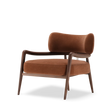
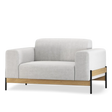
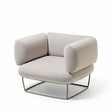
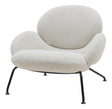
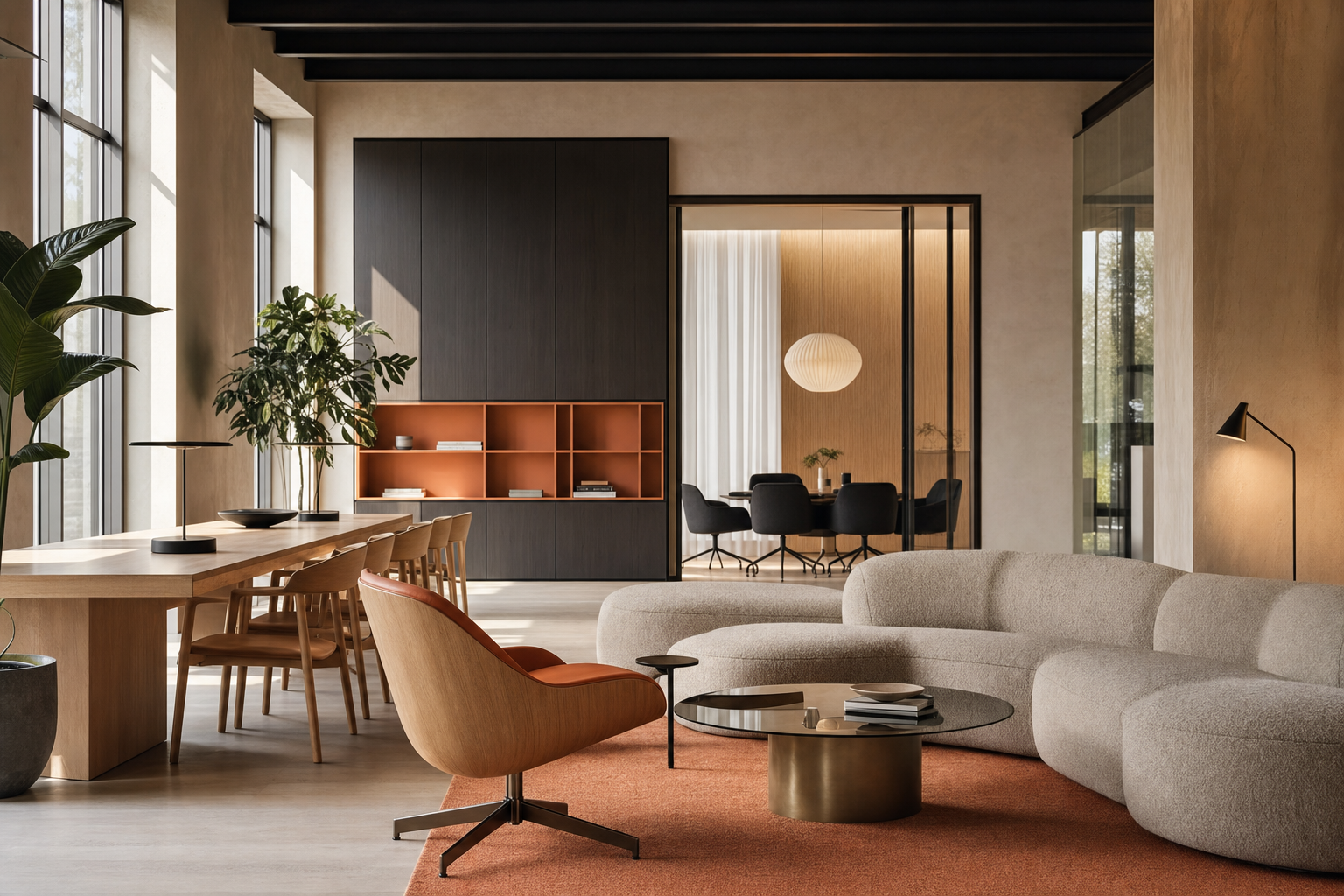
The furniture problem isn't just aesthetic or environmental. It's operational. In the UK alone, around 22 million furniture items are thrown away every year, according to WRAP figures reported by Furniture News, and on the commercial side, WRAP estimates roughly 1.2 million desks and 1.8 million office chairs are discarded annually, with only about 17% of office furniture recycled. For any business fitting out a workspace, hotel, co-living scheme or restaurant, that should reframe the conversation immediately.
Circular furniture matters because the usual buy-use-replace cycle destroys value twice. It ties up capital at the start, then leaves operators with disposal costs, storage issues, and assets that are hard to recover at the end. That's why the strongest circular furniture strategies aren't built around vague sustainability claims. They're built around access models, recovery pathways, maintenance logic, and asset planning.
For firms specifying premium European brands such as Pedrali, Alki, Muuto, Framery, Softline and Lapalma, the question isn't whether circularity sounds good. The question is which model makes commercial sense. That could mean ownership with end-of-life recovery, a subscription structure that shifts spend from CAPEX to OPEX, or a leaseback that releases cash from existing assets while keeping the furniture in use.
Table of Contents
- Introduction: From Disposable Decor to Valuable Assets
- Understanding Circular Furniture Business Models
- The Dual Return: Environmental and Financial Benefits
- Designing and Specifying for Durability and Recovery
- The Enky Approach: Circularity as a Service
- Procurement Checklist for Your Circular Project
- Frequently Asked Questions About Circular Furniture
Introduction: From Disposable Decor to Valuable Assets
Circular furniture usually gets framed as an ethical choice. That framing is too small. For operators under pressure to control fit-out costs, preserve design quality, and avoid waste, it's a procurement and asset strategy.
A hotel lobby, hybrid office, or co-living lounge rarely fails because furniture can't physically function anymore. More often, the problems are commercial. A team scales faster than expected. A floorplate changes use. A brand refresh comes earlier than planned. Upholstery wears in high-traffic areas while frames remain sound. The result is predictable. Good pieces are treated like disposable stock because the original buying model gave no practical route for maintenance, recovery, or redeployment.
Circular furniture works when the commercial model is designed before the specification list is finalised.
This is the shift. Furniture stops being viewed as a one-off purchase followed by a future headache. It starts being treated as a managed asset with a planned next life. In practice, that changes who should be involved early. Finance teams need clarity on CAPEX vs OPEX. Facilities teams need service conditions. Designers need products that still look premium after repair, reupholstery, or reconfiguration.
The strongest circular projects don't begin with "buy second-hand". They begin with a better question. What is the most efficient way to access, use, maintain, and recover this furniture over time?
Understanding Circular Furniture Business Models
The biggest confusion in circular furniture comes from treating every alternative to buying new as the same thing. It isn't. Resale, refurbishment, subscription, end-of-life recovery and leaseback all solve different problems.

The linear baseline
The standard model is simple. Buy furniture, install it, use it, then deal with it later. That feels straightforward at procurement stage because the cost is visible and immediate. The hidden part arrives later through maintenance gaps, mismatched layouts, storage needs, and poor recovery options.
This is why so many fit-outs look efficient on paper and become inefficient in use. A workspace might buy fixed meeting tables, private focus booths, lounge seating and task chairs based on one headcount assumption. Then hybrid work changes utilisation, teams expand, or a floor is re-zoned. The furniture may still be good. The model around it is what's failed.
Three models that change the economics
Circular purchase keeps ownership in place, but adds an organised recovery pathway. That means a business buys desks, shelving, lounge seating or dining chairs from day one, while also building end-of-life collection and redistribution into the plan. That's particularly useful for developers, hospitality groups and operators that want ownership but don't want disposal risk. A practical example is a residential developer furnishing communal lounges with Muuto seating and Pedrali tables while preserving a route for future take-back rather than ad hoc replacement.
Furniture as a Service works more like a software model. Access matters more than title. A client pays for use over time, which makes sense where layouts, team size or brand requirements are likely to change. A startup opening a London office for fifty people may need ergonomic chairs, meeting tables, acoustic phone booths and modular sofas now, but not in the same quantity or configuration next year. A subscription model can absorb that uncertainty better than a fixed ownership decision. For a deeper explanation of that structure, this guide to Furniture as a Service is useful.
Leaseback solves a different problem. It's the furniture equivalent of releasing value from an asset without losing access to it. A business sells an existing furniture fleet, receives cash, and continues using the assets under a leasing arrangement. This can be especially relevant in hospitality, where chairs, tables and lounge seating are still operational but capital is needed for renovation, repositioning or working capital.
Practical rule: Circularity is strongest when the model matches the business constraint. Flexibility needs subscription. Liquidity needs leaseback. Long-term control with planned recovery needs circular purchase.
Material recovery and recycling still matter, but they sit lower in the value chain. If a product can be repaired, refurbished, reupholstered, or redeployed, those options usually preserve more value than reducing it to raw materials. That's why the most effective circular economy furniture industry strategies start with life extension, not disposal.
The Dual Return: Environmental and Financial Benefits
Refurbishment is one of the few sustainability actions that's also easy to explain to a finance director. It keeps a useful asset in service and avoids the embodied carbon of manufacturing a replacement. The scale of the reuse opportunity is documented: WRAP research reported by Furniture News found that purchasing reused home furniture instead of new could save UK households £2.37 billion annually while avoiding 62,255 tonnes of carbon emissions, the equivalent of taking over 28,000 cars off the road for a year.

Carbon savings come from keeping products in use
Those numbers matter because they point to the true source of benefit. Carbon isn't reduced by labelling a project circular. It's reduced when businesses avoid unnecessary new production and extend the life of pieces that already carry embodied energy and materials.
Take a fifty-person scaleup moving into a first proper office. It may need ergonomic seating, multi-user desks, lounge furniture for informal meetings, lighting, and at least one acoustic booth. If the company buys everything new, then changes layout after a year of growth, it pays twice. It pays financially through replacement and logistically through removal. It also locks in avoidable embodied carbon. If that same project uses a circular furniture design approach with reconfigurable products, maintenance, and recovery routes, the project becomes easier to adapt without scrapping useful assets. That's exactly how RP France approached its Poitiers workspace: a phased subscription build-out for 155 people, with furniture added and swapped as real usage patterns emerged, rather than a day-one purchase that would have needed unwinding.
Cash flow improves when procurement matches real use
The financial side is just as important. Subscription and lease structures move procurement away from a large upfront hit and toward planned monthly operating cost. For businesses protecting cash, that can be more valuable than owning every chair on day one. The effect is measurable in practice: when Enky furnished Dalenys' Paris office on subscription, the model freed around €150,000 in working capital that an outright purchase would have absorbed.
A hospitality operator refurbishing a lobby, breakfast area and flexible lounge may prefer access and service over ownership. A growing office may want predictable monthly spend and the option to adjust inventory. A group sitting on an existing furniture fleet may need liquidity more than another capital purchase. Each of those cases points to a different sustainable furniture business model.
For teams comparing options, the fit-out conversation is often clearer when paired with a financing lens such as this overview of leaseback for furniture.
Designing and Specifying for Durability and Recovery
A circular furniture strategy lives or dies at product level. If the item can't be repaired, disassembled, reupholstered or parts-replaced without damage, the business model around it has limited value.
What specifiers should check first
The UK Government Buying Standard for Office Furniture is useful because it turns broad sustainability language into practical criteria. Under the standard, furniture must be designed for disassembly using standard tools, suppliers must provide technical documentation verifying that capability, and spare parts must be available for at least 5 years post-sale, as set out in the UK Government Buying Standard for office furniture.

That changes specification behaviour in a very concrete way. Buyers should ask:
- How does it come apart? Mechanical fixings usually support repair better than glued assemblies.
- Can high-wear components be replaced? Upholstery, glides, tabletops, arm pads and acoustic panels often wear before the frame does.
- Are materials separable? Mixed materials can be beautiful, but they should still be recoverable in discrete streams.
- Is there credible certification? FSC or PEFC for timber and OEKO-TEX for textiles, where applicable, are practical filters when responsible sourcing and non-toxic material choices matter.
A product that looks durable but can't be serviced is only delaying waste, not preventing it.
Premium design only works if recovery is possible
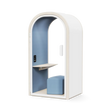
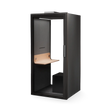
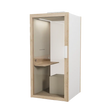
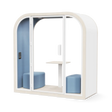
Premium brands justify their place in a circular project. A Pedrali chair in a restaurant or café setting isn't useful circularly just because it has better design language. It becomes useful when the frame, finish and components support maintenance over time. The same applies to Muuto lounge seating in a breakout area or Framery acoustic booths in hybrid workplaces. If parts can be changed and surfaces restored, the product remains commercially relevant longer.
There's also an aesthetic point that often gets missed. Durable doesn't have to mean visually heavy or utilitarian. Hospitality and co-living projects still need warmth and character. Natural oak finishes, refined metal details, and textiles with OEKO-TEX credentials can support that balance. The principle is the same at every scale: preserve the core asset, restore the visible wear layer, and avoid premature replacement.
That is the practical side of circular furniture design. It isn't about rough-looking reclaimed objects. It's about specifying pieces that can survive real use and still justify a second life.
The Enky Approach: Circularity as a Service
Most furniture suppliers still force clients into one procurement path. Buy now, solve the rest later. That's where circular furniture often stalls, because the model doesn't adapt to different balance sheets, timelines, or asset strategies.
Subscription for changing workspaces
A subscription model suits organisations that expect change. A startup opening a London office may need desks, ergonomic chairs, meeting tables, shelving, lounge seating and a Framery booth quickly, but it may also expect team growth, hiring pauses, or a relocation. In that context, furniture as a service is less about novelty and more about reducing procurement friction. The furniture supports the business without demanding a large capital outlay at the moment of move-in.
A practical route for that type of project is Enky's furniture subscription model, particularly when operational flexibility matters more than immediate ownership.
Leaseback for capital release
Leaseback is useful for mature operators with usable furniture already in place. Under Enky's leaseback model, companies can release up to 90% of their existing furniture's value while retaining access to the same assets. That can be relevant for a boutique hotel in London, a restaurant group updating front-of-house areas, or a co-working operator looking to free up capital without emptying the space.
The mechanic is straightforward. Existing chairs, tables or seating are transferred, liquidity is released, and the assets stay in service under a structured agreement. Refurbishment and maintenance then become part of the lifecycle rather than an afterthought.
Circular purchase for long-term ownership
Some clients still want ownership, and that can make complete sense. Residential developers, long-hold hospitality operators and businesses with stable environments may prefer to own premium furniture from day one. The circular shift here is end-of-life recovery. Instead of buying without any plan for what follows, the procurement model includes maintenance, take-back and redistribution logic.
That's where a structured option such as circular purchase becomes commercially sensible. It preserves ownership while avoiding the dead end that usually comes at replacement stage.
The same asset logic also explains why furniture has become investable. Through Enky Invest, individuals can access furniture-backed investment opportunities with target returns of up to 9%. As with any investment, capital is at risk and returns are not guaranteed. The point isn't financial novelty. It's that well-specified furniture can be treated as an active, income-producing asset rather than a sunk fit-out cost.
Procurement Checklist for Your Circular Project
Most circular projects don't fail because the idea is weak. They fail because finance, operations and design teams ask different questions at different moments. Procurement needs a shared checklist.

For finance teams
Finance should test the model before approving the moodboard.
- What's the total cost of access? Compare monthly operating cost, service coverage, maintenance, and end-of-life handling against one-off purchase plus likely replacement.
- Where does the spend sit? CAPEX and OPEX treatment affects cash planning differently. That matters more than the headline unit price.
- Is residual value addressed? This is one of the least-discussed gaps in the market. Many circular proposals talk about carbon but provide limited clarity on end-of-term asset value assumptions.
For operations and facilities
Operations teams live with the consequences of weak specification.
- Who handles maintenance? The answer should be explicit, not implied.
- What happens at contract end? Collection, return condition, recovery, and any dismantling responsibilities need to be clear early.
- Can the layout evolve? Modular sofas, moveable shelving, demountable tables and acoustic furniture should support change without forcing replacement.
Good circular procurement removes future ambiguity. Bad circular procurement postpones it.
For architects and designers
Design teams need to protect both longevity and aesthetic quality.
- Specify materials that age well: FSC or PEFC timber, OEKO-TEX textiles, and finishes that can be restored matter more than trend-led novelty.
- Check disassembly logic: If a component fails, can it be replaced independently?
- Protect visual longevity: In hospitality, guests don't reward worthy materials if the interior looks tired after one season.
A practical shortlist for any circular economy furniture industry tender should include reconditioned office furniture capability, premium brand compatibility, clear take-back terms, and evidence that the supplier can support full project coordination for workspace or hospitality schemes. For workspaces specifically, Enky's workspace collection is a relevant reference point when teams need furniture and layout strategy considered together.
Frequently Asked Questions About Circular Furniture
Is circular furniture just second-hand furniture?
No. That's one route, but it's far too narrow. Circular furniture includes new products designed for disassembly, subscription models, refurbishment programmes, take-back systems, leaseback structures, and next-life redistribution. The quality level can be fully premium. In practice, many buyers choose circular models precisely because they want design-led brands without repeating the waste of a linear procurement cycle.
Does circular furniture limit flexibility?
Usually the opposite happens. Flexible access is one of the main reasons businesses adopt it. A hybrid office might need more collaboration seating and fewer fixed desks over time. A hotel lounge may need reupholstery and layout changes before it needs replacement. Circular models are useful because they recognise that interiors evolve.
Is it actually better for embodied carbon on a fit-out?
It can be, when the project combines reuse pathways with modularity and recovery. Most of a furniture product's embodied carbon sits in its original manufacture, so every year of extended use, every refurbished component, and every redeployed piece displaces the emissions of producing a new equivalent. The gains are real, but they depend on the recovery routes actually being used, which is why circular strategy is a procurement question rather than a labelling exercise.
Is circular furniture more expensive?
Upfront, not always. Over the full lifecycle, that's often the wrong comparison anyway. The actual comparison is between simple purchase price and total operating reality.
| Objection | The Circular Reality |
|---|---|
| It costs more than buying outright | The relevant comparison is total cost of ownership, including maintenance, recovery, replacement risk and cash-flow impact |
| It will look used or inconsistent | Premium circular schemes can use design-led European brands and controlled refurbishment standards |
| It sounds operationally complex | Complexity usually falls when maintenance, take-back and end-of-life recovery are planned from the start |
| It won't suit a changing business | Subscription and modular specification are designed for evolving teams and spaces |
Does reconditioned office furniture mean compromising on design?
Not if the base product is worth recovering. A well-made task chair, modular sofa or hospitality table can support multiple life cycles when components are replaceable and finishes are maintainable. The issue isn't whether a piece is new. The issue is whether it was designed to stay useful.
Businesses planning a workspace, hospitality or residential fit-out can explore Enky for circular purchase, subscription and leaseback options built around premium European furniture, lifecycle management and project support.


