


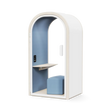
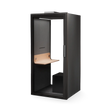
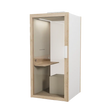
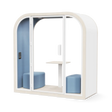
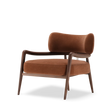
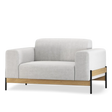
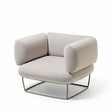
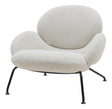
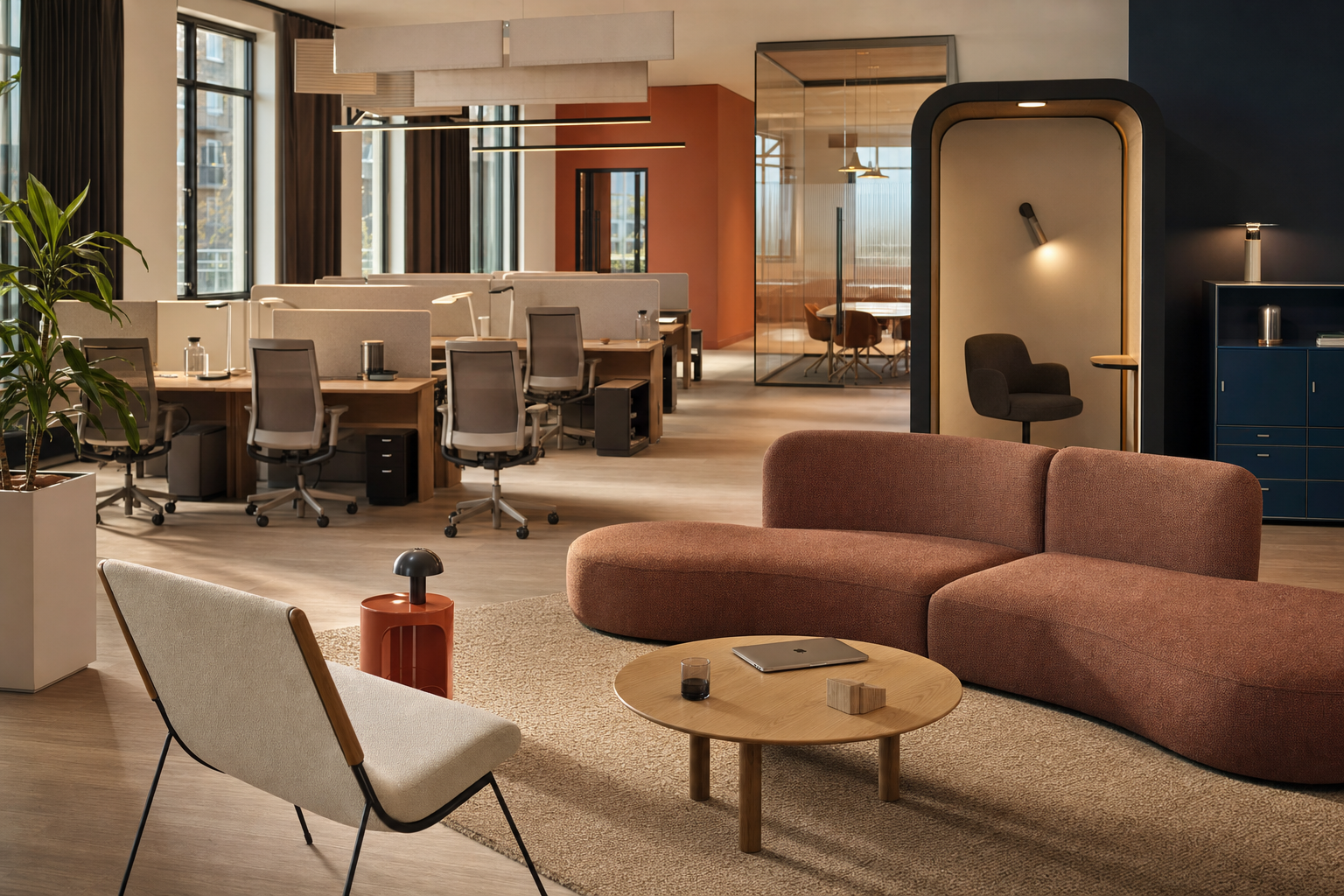
A lounge area that looks good in a render can still fail in daily use. In workspace projects where clients share occupancy data, well-planned lounge interventions reliably move underused zones into active daily use, especially when acoustic separation is added alongside soft seating. That shift changes how an office works. It reduces pressure on meeting rooms, gives teams a credible place for informal collaboration, and turns an underused square metre into an active one.
That's the fundamental question behind office lounge furniture. Not which sofa looks contemporary in a product grid, but which mix of seating, acoustics, materials and procurement model will stay useful through team growth, layout change and asset review. Buyers in the UK often get pushed toward one-time purchasing and broad stock catalogues. That approach ignores lifecycle cost, the balance between upfront capital and operating spend, and what happens when a reception area, breakout zone or collaboration space needs to evolve.
For buyers comparing office reception seating, office breakout furniture and modern lounge chairs for office use, the smarter decision usually sits beyond the initial quote.
Table of Contents
- A Strategic Guide to Office Lounge Furniture
- Defining High-Performance Office Breakout Furniture
- Key Selection Criteria for Durability and Adaptability
- Specifying Sustainable Materials and Certifications
- Flexible Procurement Models for Lounge Furniture
- Lounge Furniture in Practice: Three Typical Scenarios
-
Frequently Asked Questions
- Is premium office lounge furniture worth the extra cost?
- Should a business buy, subscribe or use leaseback?
- How should buyers compare office breakout furniture suppliers?
- What's the best setup for a hybrid office lounge?
- How long should office reception seating and lounge furniture last?
- How does Enky Invest relate to furniture projects?
- Procurement Model At-a-Glance
A Strategic Guide to Office Lounge Furniture
The stakes are bigger than styling. CSIL values the European office furniture market at more than €9.5 billion in 2025, with rising demand for refurbished furniture. Within that market, lounge settings are no longer treated as decorative spillover. They sit inside the same procurement logic as task seating. Durability, ergonomics, compliance and utilisation all matter.

High-performing office lounge furniture works when three things align. The furniture has to support the intended behaviour, the layout has to absorb real circulation and noise, and the procurement model has to fit the organisation's cash-flow and asset strategy. Most failed lounge areas break on one of those points. The pieces are too domestic for contract use, the zone is too exposed for focused conversation, or the client buys fixed furniture for a space that will need to change within a lease cycle.
A better approach starts with the space as an operational asset.
Practical rule: If a lounge zone can't explain what kind of work it supports, it usually becomes a waiting area by accident.
That's why a strategic brief for office collaboration furniture should include more than finishes and dimensions. It should define whether the space needs to handle reception seating, quick one-to-ones, informal team reviews, heads-down laptop work, or short hybrid calls. Once those uses are clear, product choice becomes simpler and waste drops.
Defining High-Performance Office Breakout Furniture
A soft chair doesn't automatically become useful office breakout furniture. In hybrid workplaces, that assumption causes expensive underperformance. People increasingly come to the office for collaboration rather than solo desk work, yet buyers still compare fabrics and silhouettes while skipping the acoustic and modular conditions that make a lounge area genuinely usable. That gap shows up in procurement, and later in utilisation.
Reception, collaboration and focused breakout use are different briefs
Office reception seating needs visual clarity, easy maintenance and a posture that supports shorter dwell times. A breakout setting for team use needs deeper comfort, side tables, power access and often more forgiving geometry. A focused lounge zone needs acoustic shielding and enough separation to prevent the whole area becoming background noise for everyone around it.
Those are different jobs. They shouldn't be solved with the same SKU repeated across a floor.
A practical brief usually separates lounge typologies like this:
- Reception seating for first impressions, short waiting periods and guest flow.
- Collaborative soft seating for informal conversations that would otherwise occupy meeting rooms.
- Retreat settings for short focused sessions, quick calls or one-person decompression between meetings.
What tends to work in real environments
Across workspace installs, Muuto's Outline Sofa and Softline's Lago series consistently receive strong employee feedback because they combine generous seat depth, modular reconfigurability and tactile upholstery. Those details matter because people choose lounge areas quickly. If the seat is too upright, too low, too exposed or too difficult to move around, they go back to their desks or book a room.
When occupancy data is available, curated lounge interventions paired with acoustic elements such as a Framery pod or a Pedrali screen tend to raise utilisation and reduce demand on enclosed meeting rooms. That's the point where furniture starts behaving like infrastructure rather than styling.
Lounge areas succeed when they offer a credible alternative to a formal room, not a softer version of dead space.
The strongest pieces solve operational friction
High-performance office lounge furniture usually shares a few traits:
- Modularity that isn't cosmetic. Teams can split, extend or rotate the setting without specialist installers.
- Comfort with discipline. Seats feel residential enough to attract use, but not so reclined that laptops and short meetings become awkward.
- Acoustic support. Screens, booths or high-backed elements stop collaborative zones from leaking into adjacent workstations.
- Serviceability. Covers, glides and upholstery components can be repaired or replaced rather than written off.
This is why office collaboration furniture should be specified with the same seriousness as desking or task chairs. Lounge settings affect occupancy behaviour, room pressure and daily movement across the floor.
Key Selection Criteria for Durability and Adaptability
Most spec sheets hide the information that decides whether a piece ages well. Buyers looking for office lounge furniture should read them with five filters in mind: scale, material durability, modular logic, comfort and upkeep. That's where lifecycle value appears.

Start with the hidden technical layer
Seat foam density and core construction are among the clearest predictors of how soft seating survives high-traffic zones. Two sofas that look identical on screen can age completely differently in a real office, and the difference is almost always in the parts the render doesn't show.
A buyer doesn't need to become a materials engineer, but a few checks are worth making every time:
- Seat core quality matters more than showroom softness.
- Frame construction should suit repeated commercial use, not occasional domestic use.
- Glides and feet need to match the floor finish, especially in reception and café-adjacent areas.
- Upholstery replacement should be possible without replacing the whole item.
- Cleaning and upkeep deserve a plan of their own, because lounge furniture fails early when fabric care and spill response are treated as afterthoughts.
A short product example helps. Alki's Atal counter stool fits this logic well in touchdown lounge settings. It combines an epoxy-coated steel frame with a modular oak veneer seat, and it's available unupholstered, with a seat pad, or front upholstered in fabric, ecoleather, or leather. Delivered fully assembled with protective glides, it suits contract, hospitality and office use where stool seating needs to stay durable without looking purely utilitarian.
Match configuration to change frequency
A sectional system and an individual sofa solve different problems. A modular system such as Muuto's Connect or a Softline configuration works well when a business expects to re-plan the floor, return pieces at the end of a subscription term, or redeploy furniture between sites. Separate components travel and reassemble more cleanly. Browsing modular sofas with that reconfiguration test in mind narrows the shortlist quickly.
A fixed sofa makes more sense where the silhouette itself carries the brief, such as an executive waiting area or boutique hospitality lobby.
For teams planning more adaptive layouts, this guide to modular furniture for small spaces is relevant beyond small footprints. The same logic applies to any office that expects churn, growth or mixed-use breakout areas.
The wrong lounge piece usually isn't ugly. It's just too fixed for the way the business actually changes.
Specifying Sustainable Materials and Certifications
Sustainable office lounge furniture shouldn't be reduced to recycled content claims or green colour palettes. The stronger test is whether the piece is made from traceable materials, can survive commercial use, and can be repaired, recovered or redistributed rather than discarded. That's where FSC, PEFC and OEKO-TEX start to matter in practical terms.
Certification matters when it changes procurement quality
FSC and PEFC help buyers verify responsible wood sourcing. For lounge furniture, that often applies to internal structures, veneer elements, side tables and timber-framed seating. OEKO-TEX is useful on upholstery and textile components because it gives specifiers a clearer basis for material health in indoor environments.
These labels aren't a substitute for good design. They are a filter. If the product can't be disassembled, reupholstered or repaired, certification alone won't protect lifecycle value.
A strong material brief often includes:
- Certified timber components where wood is visible or structural, where applicable.
- OEKO-TEX fabrics in heavily used seating where contact comfort matters.
- Replaceable upholstery parts rather than sealed, throwaway construction.
- Factory-finished surfaces that can cope with repeated cleaning cycles.
Contract standards still set the baseline
The UK Government Buying Standards for furniture set the contract baseline, referencing European durability and safety standards such as BS EN 13761 for visitor seating. That baseline matters for office reception seating and waiting areas where usage is frequent, mixed and difficult to predict.
Material choice also affects second-life potential. Durable wool-blend and solution-dyed fabrics tend to balance comfort with resilience in circular recovery cycles because they resist pilling and staining well enough to remain viable for redistribution after commercial use. For higher-traffic hospitality-adjacent zones, treated upholstery options from brands such as Pedrali and Alki are often more sensible than delicate decorative fabrics.
A sustainable specification isn't just lower impact at purchase. It stays serviceable when the first layout changes and when the first repair decision arrives.
That's why procurement teams increasingly pair material standards with recovery planning. A piece with durable fabric, removable components and repairable construction has a better chance of staying in service longer. Buyers exploring alternative ownership structures can also review how office furniture subscription changes the way maintenance and recovery are handled across a furniture lifecycle.
Flexible Procurement Models for Lounge Furniture
The biggest gap in the UK market isn't style. It's commercial structure. Buyers still have little actionable comparison of how circular lounge furniture models such as subscription and leaseback affect total cost of ownership versus traditional purchase, because most suppliers still sell lounge furniture as a transaction. That leaves finance and workplace teams to carry the operational consequences later.

CAPEX works for some spaces, but not all
Traditional purchase still has a place. If a company has a stable headcount, a long lease horizon and a fixed design brief, owning the furniture outright can be straightforward. The weakness appears when the space changes faster than the depreciation logic. Then the business is left with stranded assets, inconsistent furniture across teams, or a disposal problem no one budgeted for.
That's where alternative models become useful. In this category, Enky workspace projects sit alongside a broader shift toward procurement that reflects how organisations use space.
Three models fit different operating realities
Circular purchase suits clients who want ownership from day one but don't want end-of-life risk to stay unresolved. The key difference from standard buying is that recovery and redistribution are considered upfront.
Subscription through FaaS suits businesses that want office lounge furniture treated more like a service layer. That matters for startups, scaleups and operators managing cash carefully or expecting change within a lease cycle. A monthly model replaces a large upfront outlay with a predictable operating payment; the exact accounting treatment depends on contract terms (longer agreements are typically recognised as a right-of-use asset under IFRS 16), but the consistent benefit is lower upfront capital and better cash-flow timing, especially where maintenance, swaps or future reconfiguration are likely.
Leaseback is useful when a company already owns furniture assets but wants to free up capital while keeping those pieces in use. It's often a strategic move rather than a design move. Finance teams use it when liquidity matters but replacing the entire scheme doesn't.
The right model depends on what has to stay flexible
A simple decision framework helps:
| Business condition | Better fit |
|---|---|
| Stable layout and long-term occupancy | Circular purchase |
| Rapid growth or uncertain layout needs | Subscription (FaaS) |
| Existing furniture assets but pressure on capital | Leaseback |
Enky operates across those three connected models. Circular purchase includes end-of-life recovery. Subscription gives monthly access to furniture with an option to buy. Leaseback releases capital from existing furniture assets while keeping them in use. For buyers comparing sustainable office lounge furniture options, that's often more useful than choosing between catalogue pages that only differ on colour and lead time.
Lounge Furniture in Practice: Three Typical Scenarios
The commercial logic becomes clearer when viewed through three illustrative project types.
Boutique hotel lobby in London
A boutique hotel wants a lobby that feels calm, residential and durable, but it doesn't want a generic contract look. The specification leans toward Pedrali and Alki lounge pieces under a circular purchase model. Ownership is important because the furniture is part of the brand environment, but end-of-life recovery still matters because lobby refresh cycles are shorter than many operators expect. In this case, the right decision isn't only aesthetic. It protects future replacement planning.
Brussels scaleup with a changing floorplate
A 50-person scaleup takes a new office with a breakout area that needs to support coffee chats, informal stand-ups and overflow collaboration. A Softline modular sofa system on subscription makes sense because the team expects headcount change and possibly a layout revision before the current term ends. Individual sofas would create a cleaner visual line on day one, but the modular approach handles churn better and reduces the risk of buying the wrong footprint too early.
Flexible lounge planning works best when the furniture can move with the business, not against it.
Paris co-living developer standardising shared spaces
A co-living operator needs repeatable lounge and reception settings across multiple sites. The requirement is consistent quality, easy maintenance and recoverable value across a portfolio, not one-off showpiece pieces. A leaseback structure can support that by freeing up capital from existing furniture assets while keeping them in use. Durable, repairable products become more important in this model because the furniture has to remain an asset, not just an expense already absorbed by the fit-out.
These scenarios are illustrative, but the pattern matches Enky's real projects. WorkPad in London furnished its Newman Street serviced offices, lounge layer included, through a split lease and subscription model, with 347 pieces delivered on schedule. And at Momoamo's Domaine de Courtigis near Paris, lounge-heavy shared spaces across five buildings combine circular purchase for anchor pieces with a subscription layer that can be refreshed as the concept evolves.
Each of these scenarios asks a different question. The answer isn't just which chair or sofa to specify. It's which ownership model keeps design quality aligned with operational reality.
Frequently Asked Questions
Is premium office lounge furniture worth the extra cost?
It can be, if the buyer evaluates total lifecycle cost rather than only the initial invoice. Lounge furniture in commercial settings fails early when foam quality, upholstery performance, cleaning demands and future reconfiguration are ignored. Premium pieces tend to justify themselves when they stay serviceable, support repair, and remain useful through layout change.
A cheap sofa that needs early replacement is rarely the cheaper decision.
Should a business buy, subscribe or use leaseback?
That depends on budget structure and how fixed the space really is. A stable office with a settled layout may prefer ownership. A growing business with uncertain team shape often benefits from subscription because furniture can be treated more like an operating service. Leaseback suits companies that already hold furniture assets and want to release capital without removing those assets from use.
The right answer usually comes from finance and facilities reviewing the same brief together.
How should buyers compare office breakout furniture suppliers?
Start with criteria that affect operations, not just presentation. Compare suppliers on:
- Contract readiness such as compliance, durability and maintenance logic.
- Material transparency including FSC/PEFC and OEKO-TEX where relevant.
- Layout support because isolated product sales rarely solve circulation or acoustic problems.
- End-of-life handling so the disposal burden doesn't return to the client later.
- Procurement flexibility if CAPEX pressure or fast change is part of the brief.
What's the best setup for a hybrid office lounge?
There isn't one universal layout. Most successful hybrid lounge zones mix at least two behaviours. One part supports short collaborative use with modular sofas or lounge chairs. Another part gives some acoustic shelter for focused work or calls. Where noise pressure is high, adding a booth or screen usually does more than adding more seating alone.
How long should office reception seating and lounge furniture last?
That depends on use intensity, maintenance discipline and the quality of the underlying specification. Contract-grade standards, dense seat construction, resilient upholstery and repairable components all extend useful life. Buyers should ask not only how long the item can stay in place, but how long it can remain presentable enough to justify staying there.
How does Enky Invest relate to furniture projects?
Enky Invest sits alongside the furniture business as an asset-backed investment platform. Individuals and wealth managers can invest in furniture projects, with target annual returns of up to 9%, as presented on the Enky Invest page. As with any investment, capital is at risk and returns are not typically. The relevance for commercial buyers is indirect but important. It reflects furniture treated as an active, recoverable asset class rather than a one-off sunk cost.
Procurement Model At-a-Glance
| Attribute | Circular Purchase | Subscription (FaaS) | Leaseback |
|---|---|---|---|
| Ownership at start | Client owns furniture | Provider retains ownership unless purchase option is used | Existing assets remain in use while capital is unlocked |
| Budget treatment | CAPEX-led | Operating payments in many cases, subject to accounting treatment | Capital optimisation strategy |
| Best for | Stable, design-led environments | Flexible teams and changing layouts | Businesses with existing furniture assets |
| End-of-life planning | Built into the model | Typically integrated with return and recovery logic | Depends on asset strategy and contract structure |
| Reconfiguration flexibility | Moderate | High | Varies by existing inventory |
| Fit for office lounge furniture | Strong where the brief is settled | Strong where lounge use may evolve | Strong where asset management is the main issue |
Buyers comparing office lounge furniture usually don't need more catalogues. They need a clearer decision on durability, space use and procurement logic. Explore Enky for workspace, hospitality and circular furniture models that align lounge design with lifecycle value.


