


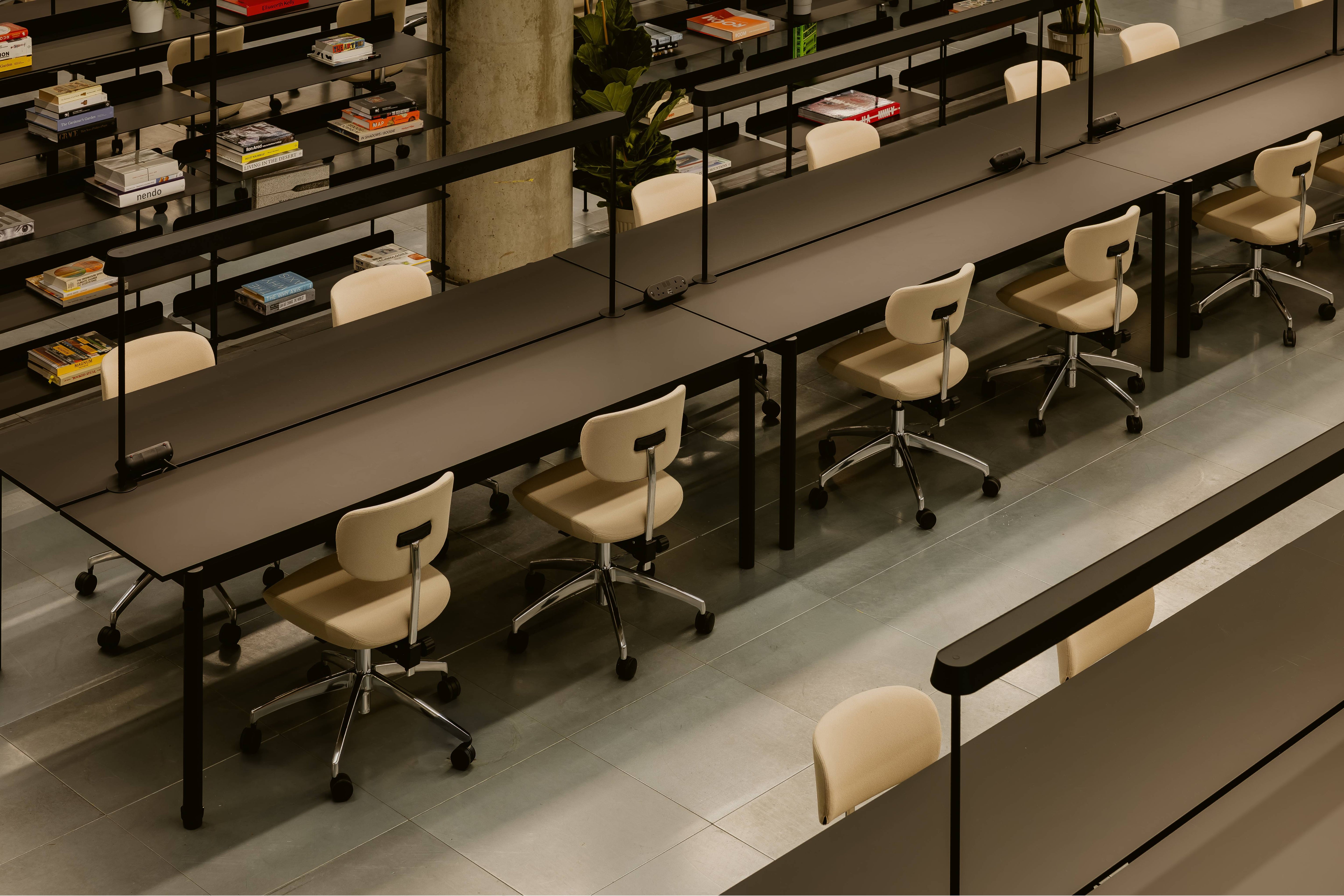
Office Furniture Subscription: Flexible & Sustainable
A familiar brief lands on an operations lead's desk. The lease on a new office is signed, headcount is still moving, finance wants to protect cash, and the team needs a workspace that looks credible from day one. Buying furniture outright solves the immediate need, but it also locks capital into desks, chairs, booths, and meeting tables that may not fit the business twelve months later.
That tension is why office furniture subscription has moved from niche option to serious procurement model. It isn't just about renting desks. It's about matching furniture decisions to business volatility, project timelines, and sustainability targets with fewer stranded assets and less operational drag.
The UK context matters. One estimate from Fortune Business Insights puts the UK office furniture market at about £2.3 billion (USD 2.88 billion) by 2026, within a European market of roughly USD 16.85 billion. Estimates vary between analysts, but the direction is consistent: this is a live, near-term market. Buyers are still spending on workspaces, but they're becoming more selective about how that spend sits on the balance sheet and how long it remains useful. Buyers are still spending on workspaces, but they're becoming more selective about how that spend sits on the balance sheet and how long it remains useful.
Table of Contents
- The Modern Workspace Dilemma A Guide to Office Furniture Subscription
- What Exactly Is Furniture as a Service
- Subscription vs Purchase vs Leaseback A Financial Breakdown
- Calculating the ROI of a Furniture Subscription
- How Subscription Drives a Circular Office Furniture Model
- Choosing Your Office Furniture Subscription Partner
- Frequently Asked Questions
The modern workspace dilemma: A guide to office furniture subscription
A scale-up taking its first dedicated London office often faces the same mismatch. The business needs a complete fit-out quickly, but its planning horizon is short. Team size may rise, hybrid patterns may change, and nobody wants to overbuild a space around assumptions that won't hold.

Traditional procurement struggles in that environment. Outright purchase concentrates cost at the start of the project. It also creates a second problem that's usually ignored during specification. Once furniture is bought, someone has to manage maintenance, replacement, storage, disposal, and the inevitable mismatch between what was ordered and how the office is used.
Where the pressure shows up first
The first issue is usually cash. A business may need height-adjustable desks, ergonomic task chairs, meeting tables, lounge seating, and acoustic booths, but finance would rather keep capital available for hiring, product, or market expansion.
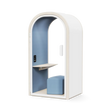
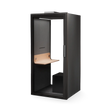
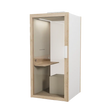
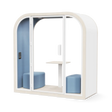
The second issue is speed. Premium workspace products from brands such as Pedrali, Muuto, and Framery are often worth specifying because they hold up better in daily use and suit design-led offices. But a good catalogue alone doesn't remove delivery coordination, installation sequencing, and layout changes once teams start using the space.
The real cost of furniture isn't only the invoice. It's the cost of getting the wrong mix, then living with it.
Why subscription enters the conversation
That's where office furniture subscription becomes useful. It gives a business access to the furniture it needs without forcing every decision into a one-time asset purchase. For startups, scaleups, coworking operators, and hospitality brands with changing occupancy patterns, that flexibility is operational, not cosmetic.
A practical example makes the point. A growing team might begin with open-plan benching and standard task seating, then realise within months that private calls, focused work, and ergonomic adjustments matter more than originally planned. Under a rigid ownership model, that correction is expensive. Under a flexible model, swap and reconfiguration become part of the operating logic.
What Exactly Is Furniture as a Service
Furniture as a Service, often shortened to FaaS, is broader than rental. Rental usually means temporary access to products. FaaS wraps the furniture into an ongoing service model, addressing components buyers tend to underestimate at the start of a project.
That matters because workspace churn is expensive in ways procurement sheets rarely capture. Circular subscription models convert fit-out from a capital purchase into an adjustable operating expense. They also include installation, replacement, repair, and reconfiguration, which means the service absorbs the transaction costs that hit a business whenever teams grow, shrink, or relocate.
What sits inside the service
A proper office furniture subscription typically includes:
- Furniture access. Desks, chairs, storage, lounge pieces, booths, lighting, and meeting furniture suited to the space.
- Logistics and installation. Delivery, assembly, placement, and setup.
- Maintenance and repairs. Ongoing support when products wear, fail, or need adjustment.
- Reconfiguration. Changes when layouts shift from assigned desks to shared zones, project rooms, or touchdown areas.
- End-of-term handling. Recovery, redistribution, resale, refurbishment, or purchase options depending on contract design.
This is the practical difference between “renting furniture” and buying a managed workplace service.
Why CAPEX to OPEX matters
For finance teams, the key shift is from CAPEX to OPEX. Instead of tying up capital in furniture ownership, the business pays a recurring operating cost. That can be easier to align with a lease term, a growth plan, or a temporary occupancy strategy. How the arrangement is treated in the accounts depends on the contract terms, so it's worth confirming the accounting position for each agreement.
For workplace teams, the operational benefit is often bigger than the accounting one. Modular, repairable products are easier to move and easier to keep in circulation. Free-standing desks, ergonomic chairs, shelving, soft seating, and acoustic elements work better in this system than fixed joinery-heavy schemes that become obsolete the moment the brief changes.
For buyers comparing providers, workspace subscription options are worth evaluating on what's included in that monthly cost, not just on the headline rate.
Subscription vs Purchase vs Leaseback: A financial breakdown
The hardest question isn't whether subscription is convenient. It's whether it's the right financial model for the business.
In the UK, where tighter budgets and higher financing costs shape workplace decisions, the core issue is financial resilience. A useful comparison needs to look at total cost of ownership, working capital impact, and end-of-term residual value.

Four models, four different priorities
| Model | Cash profile | Ownership | Flexibility | End-of-life responsibility |
|---|---|---|---|---|
| Outright purchase | High upfront spend | Buyer owns from day one | Low once specified | Buyer manages it |
| Circular purchase | Upfront spend | Buyer owns from day one | Moderate, depends on provider support | Recovery can be built in |
| Subscription | Recurring operating expense | Provider retains ownership unless purchase option applies | High | Usually integrated into service |
| Leaseback | Unlocks value from existing assets | Structure varies by agreement | Useful when capital needs freeing | Depends on contract |
When buying still makes sense
Purchase works when the business has stable occupancy, strong cash reserves, and confidence that the layout won't change much. It can also make sense where a company wants long-term control over a flagship office with a fixed design language.
The problem is that ownership pushes every lifecycle burden back onto the buyer. Repairs, storage, disposal, and replacement stop being hidden costs only after they arrive.
Where circular purchase fits
Circular purchase sits between pure ownership and service-based access. The buyer owns the furniture from day one, but end-of-life recovery is planned into the model. That's useful for organisations that want asset ownership yet still care about recovery pathways and reduced waste.
This approach tends to suit companies with a longer horizon in one site, but a clear sustainability mandate.
Why subscription suits volatile footprints
Subscription is strongest where occupancy, headcount, or layout needs may change. It keeps the procurement model aligned with business movement. That is especially relevant for flexible office furniture strategies, project teams, and businesses opening new sites without certainty on final configuration.
Practical rule: if the organisation can't confidently predict how the office will be used across the next phase of occupancy, flexibility has monetary value.
Where leaseback becomes useful
Leaseback is often overlooked. It matters when a business already owns furniture but needs to release capital tied up in those assets while keeping them in use. For finance teams under pressure, that can create breathing room without forcing a full refit.
For companies evaluating that route, leaseback for furniture assets is one way to structure the decision. There's also a wider capital-market angle for readers interested in how asset-backed furniture projects can be financed through Enky Invest.
Operationally, any model should also account for movement costs. Teams handling expansions or consolidations often underestimate the practical complexity of planning office furniture moves, especially when phased occupation, storage, and floor-by-floor delivery are involved.
Calculating the ROI of a Furniture Subscription
A serious ROI case needs more than “subscription preserves flexibility”. Finance teams usually want a working framework that captures cost, cash preservation, operational friction, and reporting value.
A straightforward way to assess office furniture subscription is to test it against four questions.

Start with avoided capital outlay
If the business needs to furnish quickly, the first measurable benefit is the capital it doesn't have to spend upfront. In one Enky project, an early-stage tech startup furnished a 40-desk open-plan office in under eight weeks, with Pedrali task chairs, height-adjustable desks, and Muuto lounge pieces, avoiding an upfront capital outlay of more than £50,000 by using a monthly subscription. That's a useful example because it captures both timing and runway preservation.
Then test total cost of ownership
Subscription is often judged against sticker price, which is the wrong benchmark. The better test is total cost of ownership over the actual project horizon, including maintenance, replacements, collection, and end-of-life handling.
The most useful internal comparison usually includes:
- What the business pays to access the furniture
- What it avoids in maintenance and replacement administration
- What it avoids in disposal and changeover costs
- What flexibility is worth if the layout changes mid-term
Add carbon and utilisation
A second layer of ROI comes from environmental reporting and better use of the space. Where subscription allows products to be repaired, returned, refurbished, and redistributed, carbon impact can be tracked as deferred emissions through reuse rather than new production.
The other advantage is utilisation. Task chairs and sit-stand desks tend to reveal real usage patterns quickly. If a team starts with one workstation mix and then shifts toward more ergonomic variation, swap capacity turns a poor initial specification into a correctable decision instead of sunk cost.
Good subscription contracts don't assume the first furniture plan is perfect. They assume the office will teach the team what it actually needs.
How Subscription Drives a Circular Office Furniture Model
Circularity is easy to claim and harder to prove. In office furniture, the ultimate test isn't whether a provider uses sustainability language. It's whether products stay in use longer through repair, refurbishment, and redistribution.
That question matters because the UK generated an estimated 40.4 million tonnes of commercial and industrial waste in 2020, the latest UK-wide Defra estimate, and buyers increasingly want measurable lifecycle data rather than generic ESG language.
What real circular performance looks like
A circular office furniture model should answer practical questions:
- Return rates. How much furniture comes back into the system?
- Refurbishment turnaround. How quickly can returned items be cleaned, repaired, and redeployed?
- Replacement availability. Can matching products or equivalent components be supplied when needs change?
- Evidence of reuse. Is the system extending product life, or moving disposal further down the chain?
Without those answers, “sustainable office furniture subscription” stays vague.
Why product quality matters to circularity
Circular systems work better with durable, repairable furniture. That's where specification discipline matters. Products from brands such as Alki, Muuto, and Framery are easier to justify in a circular model when they're built to last, maintainable in use, and still desirable after first deployment.
Material standards help as well. FSC/PEFC-certified timber and OEKO-TEX-certified textiles don't make a model circular on their own, but they improve traceability and support procurement teams that need better documentation.
A practical route for buyers who want ownership with defined recovery is circular purchase for commercial furniture. It keeps the focus on lifecycle planning rather than one-way procurement.
Circularity starts at specification. If the furniture can't be repaired, separated, or redeployed, the contract language won't fix the outcome.
Choosing Your Office Furniture Subscription Partner
Most providers can supply desks and chairs. Fewer can support a full office project without creating friction around design coordination, swaps, and end-of-term handling.
That's why selection should work like a due-diligence checklist rather than a style review.

Five checks that separate a serious partner from a furniture broker
- Catalogue transparency. Ask which brands are actually available. A provider naming Pedrali, Muuto, Alki, Softline, Lapalma, or Framery gives a clearer indication of quality and long-term residual usefulness than a generic catalogue with no manufacturer detail.
- Circular evidence. Ask for the mechanics, not the marketing. Returned stock handling, refurbishment process, repair capability, and recovery routes should be explained plainly.
- Project support. Full fit-outs require more than product supply. Space planning, phased delivery, installer coordination, and alignment with architects matter when a project has multiple moving parts.
- Contract structure. Review term length, swap conditions, damage policy, purchase options, and what happens when the business moves, expands, or exits the space early.
- Operational reach. Logistics capability matters more than most buyers expect, particularly for London projects with building access restrictions or timed delivery windows.
One practical benchmark
One option in the market is Enky's office furniture subscription service, offered across Europe including the UK, which sits alongside circular purchase and leaseback models. That kind of multi-model structure is useful because not every client should be pushed into subscription. Some need ownership with recovery. Others need to release capital from existing furniture. The right partner should be willing to say that.
Frequently Asked Questions
Is office furniture subscription always more expensive than buying?
Not necessarily. The right comparison is total cost of ownership over the period the furniture is needed. Buying may look cheaper on the initial invoice, but it leaves maintenance, replacement, disposal, and mismatch risk with the buyer.
Is this just office furniture rental in the UK with a new name?
No. Rental usually focuses on temporary access. Furniture as a service includes delivery, installation, maintenance, repair, reconfiguration, and end-of-life handling within a broader operating model.
What kinds of companies benefit most from office furniture subscription?
Businesses with changing headcount, uncertain occupancy, phased fit-outs, or multiple sites tend to benefit most. Startups, scaleups, coworking operators, and hospitality groups often need flexible office furniture rather than fixed asset ownership.
Does subscription mean compromising on design quality?
It shouldn't. A serious provider should be able to specify premium commercial products, including ergonomic chairs, height-adjustable desks, acoustic booths, and lounge pieces from recognised European brands.
What should be asked before signing?
Ask what's included in the monthly price, what can be swapped, how repairs are handled, what happens at the end of the term, and whether lifecycle data is available for ESG reporting.
Businesses comparing buy, leaseback, circular purchase, and subscription usually aren't choosing furniture first. They're choosing a risk profile. Enky is one route for teams that need design-led workspace furniture with flexible access models, project support, and lifecycle planning built into the procurement decision.


