




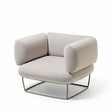
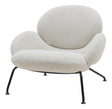
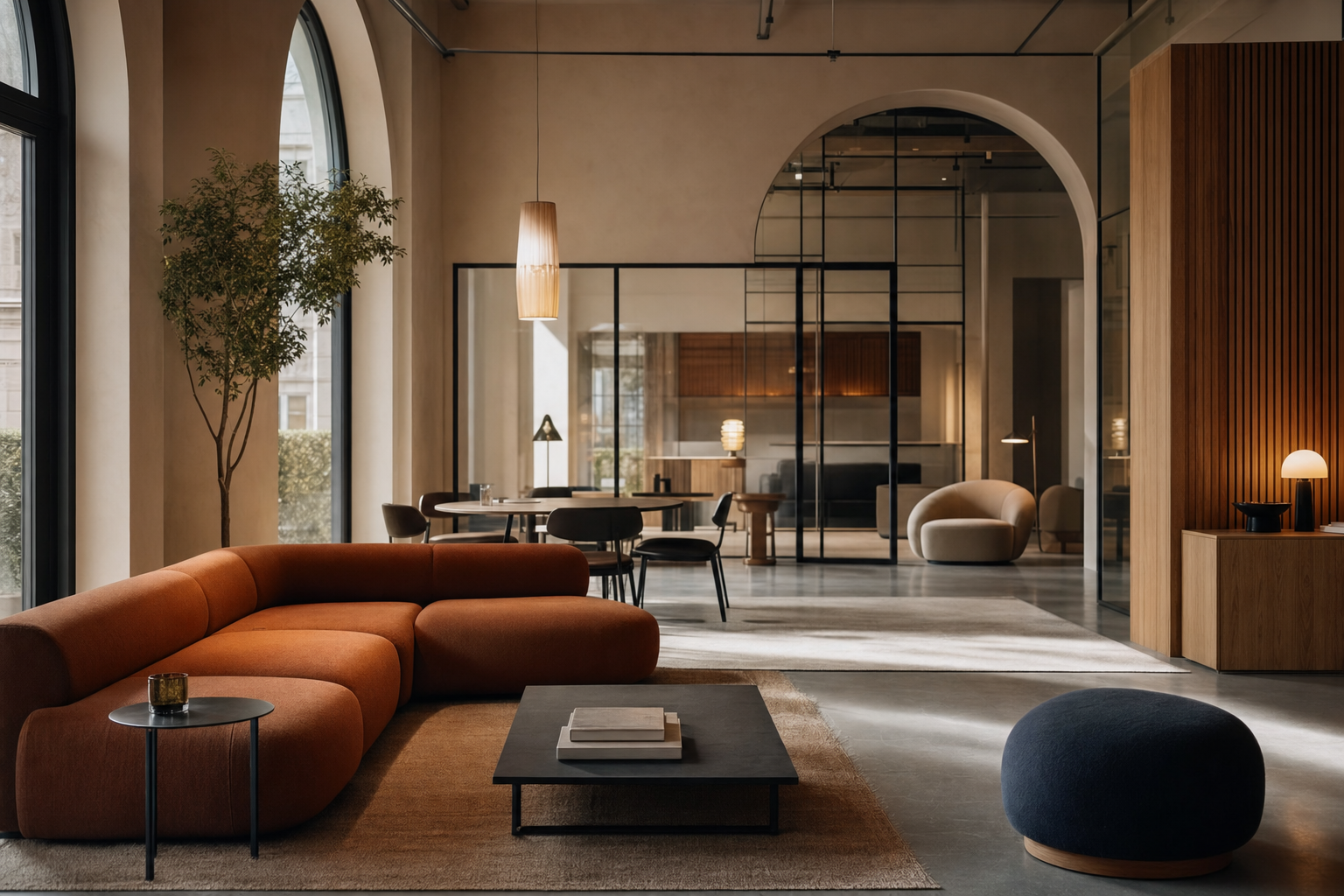
A hotel refurbishment usually looks straightforward on paper. Replace tired chairs, refresh the lobby, reopen quickly. In practice, the hard part isn't choosing finishes. It's choosing a hospitality furniture supplier that won't lock the project into heavy upfront spend, fragmented logistics, and a waste problem a few years later.
That tension matters more as the market shifts toward flexible access. Future Market Insights projects the UK furniture rental and subscription market to grow at 10.2% a year between 2025 and 2035, and hospitality operators are a significant part of that demand. More choice usually means more procurement noise. Buyers get shown catalogues when they really need a model that fits cash flow, brand standards, and operational reality.
That's why good operators now assess procurement alongside design. The right supplier isn't just a vendor. It's a partner in timing, lifecycle, and asset strategy.
Table of Contents
- Introduction
- Redefining the Hospitality Furniture Supplier Role
- Key Selection Criteria: Beyond Price and Style
- Beyond Bulk Purchase: Financial Models for Furniture
- The Project Process: From Concept to Recovery
- How a Circular Approach Reduces Waste and Unlocks Value
-
Frequently Asked Questions for Hospitality Buyers
- How should a hospitality furniture supplier be compared fairly?
- What makes a hotel furniture supplier more useful than a general contract furniture supplier?
- Is subscription only for start-ups and temporary spaces?
- How should a restaurant furniture supplier UK buyer think about lead times?
- What materials and brands tend to work well in premium hospitality schemes?
Introduction
The old buying model still dominates hospitality procurement. A hotel or restaurant commits to a large one-off order, pays upfront, waits through production and delivery, installs everything at once, and then carries the maintenance burden until the next refurbishment cycle. That approach can work for stable properties with long planning horizons. It breaks down when operators need flexibility.
A modern hospitality furniture supplier should solve more than furnishing. The role now sits at the intersection of CAPEX vs OPEX, project coordination, compliance, repairability, and end-of-life recovery. That shift is especially relevant for boutique hotels, restaurant groups, and co-living operators that need design consistency without freezing cash into furniture assets.
The practical question isn't only who supplies the chairs, tables, and lounge seating. It's which procurement model reduces friction across the full life of the project, from specification to recovery.
Redefining the Hospitality Furniture Supplier Role
The strongest hospitality projects don't start with a product list. They start with coordination.
A serious hospitality furniture supplier now operates more like a project partner than a stockist. That means helping operators translate a brief into a workable specification, aligning furniture choices with architect drawings, sequencing deliveries around site readiness, and making sure replacement parts and maintenance aren't treated as an afterthought.

What the role should include
A buyer comparing suppliers should check whether the supplier can handle the following:
- Space planning support so circulation, seating density, and service routes work before orders are placed
- Design coordination with architects and interior designers, especially where bar stools, dining chairs, lounge seating, and lighting need to read as one scheme
- Logistics management across phased openings or multi-site rollouts
- Installation oversight so furniture arrives in the right sequence and doesn't sit boxed on site
- Aftercare planning including spare parts, maintenance, and future recovery
A product without parts support is future landfill. That's the simplest test in commercial furniture hospitality. If a chair arm, glider, fabric panel, or tabletop can't be replaced, the buyer isn't purchasing an asset. The buyer is purchasing a disposal problem with a stylish finish.
Practical rule: Ask what happens in year four, not only what arrives in week ten.
Design-led products still require technical discipline. For example, the Dorik Contract Table Outdoor - Round Ø100 H74 fits contract settings because its demountable system, adjustable levellers, and certified material approach support maintenance and long-term use, not just appearance. That matters more than a polished render.
Key Selection Criteria: Beyond Price and Style
The first filter for any contract furniture supplier should be compliance. In UK hospitality settings, upholstered contract furniture is routinely specified to BS 7176 (medium hazard), which references BS 5852 ignition testing, including the Crib 5 source, for furniture in public spaces. If a supplier can't provide clarity on fire-performance specification, the conversation should stop there. Real projects show what this looks like in practice: at The Moment, a bistrot Enky furnished in Paris, the Pedrali dining chairs and sofa were specified in fire-retardant fabrics and simili leather as standard, not as an upgrade.

Four criteria that matter in practice
| Criterion | What to check | Why it matters |
|---|---|---|
| Certification | FSC/PEFC for wood, OEKO-TEX for textiles, where applicable | Supports traceability and material safety |
| Commercial durability | Evidence of contract-grade testing and warranty logic | Reduces premature replacement |
| Repairability | Spare part availability over time | Keeps assets in use longer |
| Modularity | Ease of disassembly, reupholstery, component replacement | Makes maintenance and recovery realistic |
The distinction between attractive furniture and useful furniture often shows up after opening day. A restaurant chair may look right in a sample pack, then fail once floor teams move it constantly, clean it aggressively, and stack it during service resets. The buyer then pays twice. First for the original purchase, then for replacements and operational disruption.
Why curated brands matter
This is why curated ranges tend to outperform broad unstructured catalogues. Brands such as Alki, Muuto, Softline, Pedrali, Lapalma, and Framery are easier to specify into hospitality projects when the supplier can explain how they perform over time, how parts are replaced, and how they fit into a circular workflow.
For operators working with smaller footprints, Enky's modular furniture guide for compact spaces is also relevant because modularity isn't only a space-saving decision. It affects cleaning access, room reset speed, and how easily a layout evolves without full replacement.
A five-year asset usually starts with a boring question. Can this part be repaired?
Beyond Bulk Purchase: Financial Models for Furniture
Traditional procurement still assumes that ownership is the default. For many hospitality operators, it isn't.

A hotel group opening multiple sites, or a restaurant operator testing a new concept, often needs furniture that preserves liquidity more than furniture that sits on the balance sheet. That's where the separation appears between a catalogue seller and a modern hotel furniture supplier.
Three models and the business problem each solves
| Model | Best fit | Main trade-off |
|---|---|---|
| Circular purchase | Operators that want ownership with planned recovery | Higher upfront spend |
| Subscription or FaaS | Teams preserving cash and expecting change | Ongoing operating expense |
| Leaseback | Businesses holding furniture assets and needing liquidity | Requires asset review and structured transfer |
A practical scenario makes the difference clearer. Consider a boutique hotel group expanding into a second property while refurbishing the first. Under a traditional CAPEX-heavy route, both sites compete for the same cash. Under subscription, the operator can spread furnishing costs into monthly payments and protect capital for staffing, kitchen equipment, and launch marketing. Under leaseback, an operator with existing furniture assets can release up to 90% of their value while keeping the furniture in use. This isn't hypothetical: at The Moment in Paris, the subscription model is exactly what let owner Emilie Piolet and designer Tiphaine Montcerisier specify velvet Pedrali chairs and antique brass finishes that outright purchase would have pushed beyond the opening budget. In the designer's words, renting meant the client could opt for a more upmarket look and play with colours and materials.
For readers weighing these structures in more depth, Enky's overview of furniture as a service gives a useful framework for comparing ownership and access models.
Later in the decision process, one provider that combines subscription, circular purchase, and leaseback with hospitality-focused project support is Enky's hospitality range. That kind of model is particularly relevant when a restaurant furniture supplier UK comparison becomes less about unit price and more about rollout flexibility.
Why this changes quote comparisons
Bulk purchase quotes often look cheaper at first glance. They usually exclude the cost of rigidity. If the concept changes, if one site underperforms, or if part of the furniture can be refurbished instead of replaced, the supposedly cheaper route can become the more expensive one.
The Project Process: From Concept to Recovery
Delivery risk is one of the least discussed reasons to choose a hospitality furniture supplier carefully. A slipped furniture delivery doesn't just move a handover date. In hospitality, it delays opening, and every week of delay during a strong trading season is unrecoverable revenue. That's why logistics discipline belongs in the selection criteria alongside design.

What a joined-up process looks like
A strong process usually follows five stages:
-
Brief and concept development
Layout, capacity, guest flow, and budget get aligned before products are specified. -
Specification and curation
Brands like Pedrali and Muuto are selected against function, finish, lead times, and maintenance realities. -
Procurement and logistics alignment
Orders are timed against site works, not against catalogue convenience. -
Installation and handover
Furniture is staged in sequence, reducing damage, storage issues, and snagging. -
Maintenance and recovery planning
The operator knows what can be repaired, replaced, recovered, or redistributed later.
Lead times and customisation need discipline
For a standard hospitality fit-out such as a 60-cover restaurant or a 30-room boutique hotel, concept approval to on-site installation typically runs 10 to 16 weeks, depending on customisation depth and manufacturer lead times. Bespoke finishes or fabric specification from Pedrali or Alki can add two to four weeks. Well-coordinated projects can move faster: when Enky furnished Konbini's three-floor Paris office, the full fit-out ran eight weeks from order to installation against a fixed move-in date.
Good procurement doesn't remove lead times. It makes them visible early enough to design around them.
How a Circular Approach Reduces Waste and Unlocks Value
Hospitality furniture is typically refreshed every seven to ten years, and often earlier in high-traffic venues. That replacement rhythm is exactly why circularity matters. The waste isn't accidental. It's built into the old model.

What circularity looks like in real projects
A circular system treats furniture as a managed asset, not as a one-time purchase. The sequence is simple:
- Specify repairable pieces with known part availability
- Maintain in use through planned servicing and component replacement
- Recover at end of first life instead of disposing automatically
- Refurbish and redistribute where the product still has commercial value
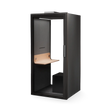
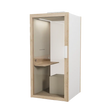
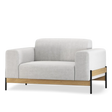
That approach suits design-led products particularly well. A Framery booth, a Lapalma stool, or a modular sofa with replaceable upholstery holds more value when the supplier has a route for maintenance and next-life use. It also keeps visual quality higher across the full lifecycle.
Hybrid structures can serve the same goal. At the Domaine de Courtigis, the 90-hectare retreat estate operated by Momoamo near Paris, Enky combined circular purchase for permanent anchor pieces with a subscription layer that can be refreshed as the concept evolves, keeping design quality high across five renovated buildings without generating waste. For buyers who want ownership but don't want a linear disposal path, Enky's circular purchase model shows how end-of-life recovery can be built into procurement from day one.
Three practical buyer questions
Which certification matters most?
For many hotel and restaurant buyers, OEKO-TEX comes first, especially in sleeping and dining environments where material safety is scrutinised. FSC/PEFC follows closely for wood and veneer specifications.
How should customisation be handled?
The most reliable route is often to customise within existing manufacturer programmes. A boutique hotel with a Scandinavian-meets-Mediterranean identity, for example, can pair Muuto Fiber side chairs in a custom clay-toned upholstery with Lapalma Lem stools in matte oak to achieve a distinctive scheme without moving into unpredictable fully bespoke production.
What should be asked about longevity?
Ask whether parts will still be available five years out. If the answer is vague, the furniture may look premium now but behave like disposable stock later.
Circular procurement works when maintenance, recovery, and redistribution are designed in early. It rarely works when they're added after purchase.
Frequently Asked Questions for Hospitality Buyers
How should a hospitality furniture supplier be compared fairly?
A fair comparison goes beyond unit price. Buyers should compare compliance, lead times, material certifications, repairability, spare-part availability, installation coordination, and what happens at end of life. A cheaper quote can become expensive if it creates delays, early replacements, or disposal costs.
What makes a hotel furniture supplier more useful than a general contract furniture supplier?
Hotels and restaurants place different pressure on furniture. Cleaning cycles are harsher, guest perception matters more, and opening deadlines are less forgiving. A hotel furniture supplier should understand public-area wear, bedroom specification, restaurant turnover, and phased installation.
Is subscription only for start-ups and temporary spaces?
No. Subscription can fit established operators when preserving capital matters more than owning furniture immediately. It's particularly relevant for multi-site rollouts, concept testing, and operators that expect layouts or branding to evolve.
How should a restaurant furniture supplier UK buyer think about lead times?
Buyers should separate standard products from customised items early. Bespoke finishes, fabrics, and mixed-brand schemes can all extend timelines. The main risk isn't only slow manufacturing. It's poor coordination between site readiness, deliveries, and installation sequencing.
What materials and brands tend to work well in premium hospitality schemes?
The most dependable specifications combine certified materials with brands that support contract use and part replacement. That's why buyers often focus on ranges from Pedrali, Alki, Muuto, Softline, Framery, and Lapalma, along with FSC/PEFC and OEKO-TEX requirements where applicable.
Operators comparing a hospitality furniture supplier usually start with catalogue and price. The stronger decision comes from matching the procurement model to the business model. Enky is one route to explore for teams evaluating subscription, circular purchase, or leaseback alongside design-led European furniture and end-of-life recovery.


