



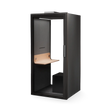
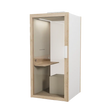

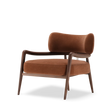
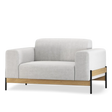
A development team is finalising a new scheme. Unit mix is signed off. Amenities are modelled. Leasing assumptions are under pressure. Then the furniture decision lands on the table and gets treated like a late-stage package exercise.
That's where many BTR projects lose money, often unnoticed.
Build to rent furniture isn't a styling layer. It sits inside leasing speed, turnover cost, maintenance workload, ESG reporting, and how much dead capital a scheme carries after practical completion. The direction of travel is clear: Future Market Insights projects the UK furniture rental and subscription market to grow at a 10.2% CAGR between 2025 and 2035, and the renter generations driving that growth are precisely the ones shaping expectations around flexibility, convenience, and furnished living.
The practical shift is simple. Furniture has to be treated as an operating asset with a lifecycle, not a one-off fit-out line. That's why more operators are looking at furniture subscription models instead of defaulting to bulk purchase.
Table of Contents
- The New Imperative for Build to Rent Furniture
- Why Traditional Furniture Procurement Fails BTR Schemes
- Shifting from CAPEX to OPEX with Flexible Finance Models
- Designing for Durability and Seamless Tenant Turnover
- The Circular Advantage in Build to Rent Furniture
- Answering Key Questions for BTR Developers
- Building Future-Proof BTR Assets
The New Imperative for Build to Rent Furniture
A BTR scheme doesn't furnish for one buyer. It furnishes for repeated occupancy cycles, changing household needs, and long hold periods.
That changes everything about specification. Cheap packs can make an appraisal look tidy at procurement stage, but they rarely stay cheap once units turn, common areas wear in, and operators start managing damage, replacement and disposal. Good build to rent furniture has to support yield over time, not just handover.
What has changed in the operating logic
The market now rewards flexibility more than one-off ownership. A developer choosing furniture today is effectively deciding whether to tie up capital in depreciating assets or keep the furnishing layer responsive to leasing and operational change.
The furnishing question itself is an operator decision, not a default. The Association for Rental Living's best-practice guidance makes the point plainly: residents have different needs and expectations around furnishings, and there's no single solution. That's exactly why the access model behind the furniture matters as much as the pieces themselves.
Practical rule: If the furniture strategy can't survive three tenancy cycles without wholesale replacement thinking, it probably isn't a BTR strategy.
What procurement needs to solve now
A workable brief for BTR furniture packages has to cover more than look and feel:
- Tenant turnover readiness so teams can clean, repair, reconfigure and re-let quickly.
- Lifecycle control so the operator isn't left with unmanaged waste and stranded stock.
- Financial flexibility so furnishing doesn't consume capital better used elsewhere in the scheme.
Why Traditional Furniture Procurement Fails BTR Schemes
The weak point in many schemes is familiar. A developer buys outright, value-engineers too aggressively, installs fast, and inherits every problem after first occupation.

Existing BTR coverage often stays at the level of visual packs and dressed apartments. It rarely deals with the harder issue of long-term asset depreciation and waste liability, and there remains a gap in UK data on end-of-life costs and disposal exposure versus recovered value in circular models. That gap matters because unmeasured cost still hits the P&L.
The hidden cost sits after installation
Outright purchase looks simple because procurement ends with delivery. In practice, that's when the work starts.
A BTR operator then carries damaged stock, mismatched replacements, ad hoc repairs, storage questions, and disposal decisions. Budget packs also create a consistency problem. Once ranges are discontinued or finishes drift, common parts and units lose cohesion and refresh work becomes patchwork.
The false economy isn't the initial invoice. It's the years of small operational losses that follow a poor specification.
Where generic packs break down
Generic packs usually fail in three places:
| Pressure point | What goes wrong |
|---|---|
| Turnover | Upholstery stains, laminates chip, and fixed configurations slow refresh |
| Amenity use | Shared areas take commercial-level wear with residential-grade product |
| End of life | Operators own the removal, replacement, and waste decision with no recovery path |
Outdoor and terrace spaces show this especially clearly. A product such as Ethimo's Calipso Seat Module fits BTR amenity logic because it is modular and built from FSC™ certified teak, powder-coated aluminium, and durable tops in ceramic or enamelled stone. That kind of specification matters less for brochure imagery than for maintenance planning, weather resistance, and the ability to adapt layouts without replacing the whole setting.
Shifting from CAPEX to OPEX with Flexible Finance Models
The smartest change in build to rent furniture isn't aesthetic. It's financial.

In practice, BTR furnishing procurement splits between outright purchase and flexible access models such as rental, subscription and leaseback. That distinction is more than accounting language. It determines how risk is carried, who manages the asset over its life, and what happens when the specification stops fitting the resident base.
Why OPEX suits BTR operations better
BTR income arrives over time. Traditional furniture purchasing demands a large upfront commitment before the scheme has fully proved its leasing assumptions. That mismatch is why many operators now prefer models that align cost with occupancy and asset use.
For finance teams, the operational advantage is predictability. Monthly furnishing cost is easier to budget than sporadic replacement rounds, rushed top-up orders, and disposal events. It also gives more room to test specification by unit type, resident profile, or amenity performance. One accounting note keeps the framing honest: for companies reporting under IFRS, longer furniture leases are generally recognised on the balance sheet as right-of-use assets with corresponding lease liabilities under IFRS 16, so the case for flexible models rests on cash flow, risk transfer and lifecycle service rather than on keeping obligations invisible. The treatment for a specific scheme is worth confirming with the auditor.
When subscription works and when leaseback works
Two routes usually make sense, depending on the asset plan:
- Subscription fits individual units when the operator wants flexibility to refresh layouts, change product mix, or test what specification supports leasing best. A practical overview sits in this guide to Furniture as a Service.
- Leaseback suits lounges, coworking areas, reception zones, and shared dining spaces when a landlord wants to preserve cash while keeping furniture in use.
- Outright purchase with service logic still has a place, but only when recovery, maintenance and end-of-life have been designed in from the start.
What this means in a live scheme
Take a straightforward scenario. A 50-person startup might optimise a workplace around team growth and hybrid use. A BTR operator has a similar problem in residential form. Resident profile shifts. Family demand changes storage needs. Amenity spaces move from launch-stage staging to actual heavy use. OPEX-based furniture models absorb that change more cleanly than static package ownership.
Designing for Durability and Seamless Tenant Turnover
Durability in BTR isn't about making furniture look tough. It's about reducing labour, delay, and unnecessary replacement at turnover.

Good build to rent interior design starts with operational behaviour. Which pieces can be deep-cleaned quickly. Which ones can be moved without specialist labour. Which systems can be reconfigured between residents instead of replaced.
The pieces that lower turnover friction
The most useful products aren't always the most visually expressive. They're the ones facilities teams don't complain about.
- Pedrali chairs work well in amenity dining and multi-use spaces because stackable and linking formats make reset and storage easier.
- Muuto shelving helps in units and lounges where storage needs shift. Adjustable modular systems are easier to adapt than fixed joinery-like furniture.
- Lapalma tables are practical where tops and bases separate cleanly for deep cleaning or selective swap-out.
- Softline upholstered seating becomes more operationally sensible when removable, replaceable covers are specified rather than fixed upholstery.
- Bolzan Letti beds and Colunex sleep systems matter in the units themselves, because the bed is usually the highest-friction item at turnover and benefits most from repairable, component-level construction.
Better tenant turnover usually comes from ordinary details. Washable covers, separable parts, and easy-to-clean junctions matter more than trend-led silhouettes.
What to specify from day one
Procurement teams should screen products against a short list before approving any range:
| Requirement | Why it matters in rental homes |
|---|---|
| Modularity | Lets operators reconfigure instead of replace |
| Repairability | Extends service life and reduces disruption |
| Ease of disassembly | Speeds cleaning, moving, and component swap |
| Certified materials | Supports ESG and resident-facing sustainability claims |
Sustainable furniture for rental homes thus becomes practical rather than rhetorical. FSC/PEFC timber chains support responsible material sourcing. OEKO-TEX textiles, where applicable, are relevant where resident health, cleanability and replacement strategy matter. In a co-living or amenity-heavy scheme, that specification discipline has direct operational value.
Premium design is not just a branding decision
A generic bulk pack can fill a room. It rarely gives a scheme a durable identity.
Curated European brands such as Pedrali, Muuto, Alki, Framery, Softline, and Lapalma give developers a stronger middle ground. The result isn't luxury for its own sake. It's better detailing, easier parts logic, and a furnishing language that attracts quality-conscious renters without relying on disposable visual staging. That's particularly relevant for any co-living furniture supplier strategy tied to resident experience in shared spaces.
The Circular Advantage in Build to Rent Furniture
Most procurement models stop at delivery. That's exactly where BTR operators need the model to continue.

In specialist BTR procurement, the circular model is gaining weight because furniture recovery and next-life redistribution lower waste and improve asset strategy beyond initial CAPEX. That's the part many suppliers still leave unresolved.
The mechanism isn't theoretical. When Enky furnished a 180m² staging project for real estate investment manager DWS, the subscription structure meant that once the space was let, every piece re-entered Enky's ecosystem to be maintained and redeployed rather than written off. The same recovery logic applies to a BTR amenity refresh or a show-unit cycle.
What circular procurement changes
A circular model treats furniture as a managed asset from specification to end of use. Recovery is considered upfront. Refurbishment is planned, not improvised. Redistribution is part of the commercial logic, not an afterthought.
That matters in three practical moments:
- At refresh when selected pieces can be repaired or recovered instead of stripped out wholesale.
- At repositioning when amenity areas need a new layout or resident offer.
- At end of use when disposal shouldn't be the default outcome.
One model that fits this shift
One option in this space is Enky, which structures residential furnishing around subscription, leaseback, and circular purchase, with maintenance, recovery, and redistribution built into the asset logic. For teams comparing suppliers, the relevant reference point is the circular purchase model, because it addresses a problem standard package suppliers rarely price properly: what happens when the furniture is no longer right for the asset but still has material value.
If end-of-life hasn't been priced, it hasn't been solved. It has only been postponed.
This is also where furniture as a service residential becomes more than a payment mechanism. It creates a route to keep assets in circulation rather than moving directly from install to waste.
Answering Key Questions for BTR Developers
Commercial buyers usually ask the same questions. They should. Most furnishing proposals still overpromise on style and under-explain lifecycle performance.
One caution matters upfront. Furnished schemes bundle utilities, services and furniture into a single offer, and there is no clean UK dataset isolating how much of any rental premium comes directly from furniture quality. So any supplier claiming a precise furniture-only uplift without methodology deserves scrutiny.
FAQ Section
| Question | Answer |
|---|---|
| How is build to rent furniture different from a standard commercial fit-out? | A commercial fit-out often reflects one occupier's brand and one occupancy period. BTR furniture has to survive repeated tenancy cycles, different lifestyles, and long hold periods. That pushes selection toward modular, repairable, disassemblable pieces rather than furniture chosen mainly for first impression. |
| Do furnished BTR units command stronger leasing performance? | Furnished units are widely seen as attractive to mobile professionals and renters who want lower friction at move-in. But clean UK data isolating furniture quality from other bundled factors is limited. The more reliable operational measure is usually reduced void cost and faster re-let readiness when furniture can be cleaned, repaired, or refreshed without a full replacement cycle. |
| Which pieces usually make turnover easier? | Modular shelving, stackable amenity seating, separable tables, beds with repairable component construction, and upholstered products with removable covers are the most useful. Pedrali, Muuto, Lapalma, Softline and Bolzan Letti each fit these needs in different ways. The common thread is easy cleaning, low-damage movement, and component-level replacement. |
| What do landlords usually choose between subscription and leaseback? | Amenity and common areas often suit leaseback because the model can reduce upfront outlay and create predictable operating cost. Individual apartments often suit subscription when the operator wants more freedom to test layout and resident specification over time. The hold horizon usually decides the model. |
| Why not just buy outright and manage the furniture internally? | Some owners do. The issue is that internal management often underestimates maintenance coordination, stock inconsistency, storage, refresh planning, and end-of-life removal. Those costs don't disappear because they sit outside the initial purchase order. |
A sensible evaluation checklist
Before appointing any supplier, buyers should ask for clarity on four points:
- Lifecycle handling: What happens at damage, refresh, and end of use.
- Parts and repair logic: Whether covers, tops, bases or modules can be replaced individually.
- Material standards: Whether FSC/PEFC and OEKO-TEX are relevant to the ranges proposed.
- Project coordination: Whether the supplier can work across phased delivery, show units, amenities, and later top-ups without range drift.
Building Future-Proof BTR Assets
The strongest BTR schemes treat furniture as an income-supporting asset layer, not a finishing package. That means selecting build to rent furniture that works financially, operationally and environmentally across repeated tenancy cycles.
Flexible access models reduce pressure on capital. Design-led, modular specification lowers turnover friction. Circular recovery protects value that standard procurement tends to ignore. For teams reviewing options, the useful next step is to assess residential ranges, financing model, and end-of-life process together rather than in separate decisions. A practical starting point is Enky's living collections for residential projects.
For developers, operators, and asset managers comparing furnishing strategies, Enky is worth reviewing for residential, hospitality, and workspace projects that need subscription, circular purchase, or leaseback rather than a one-off package.


