


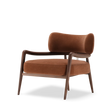
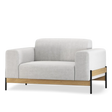
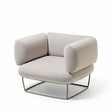
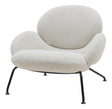
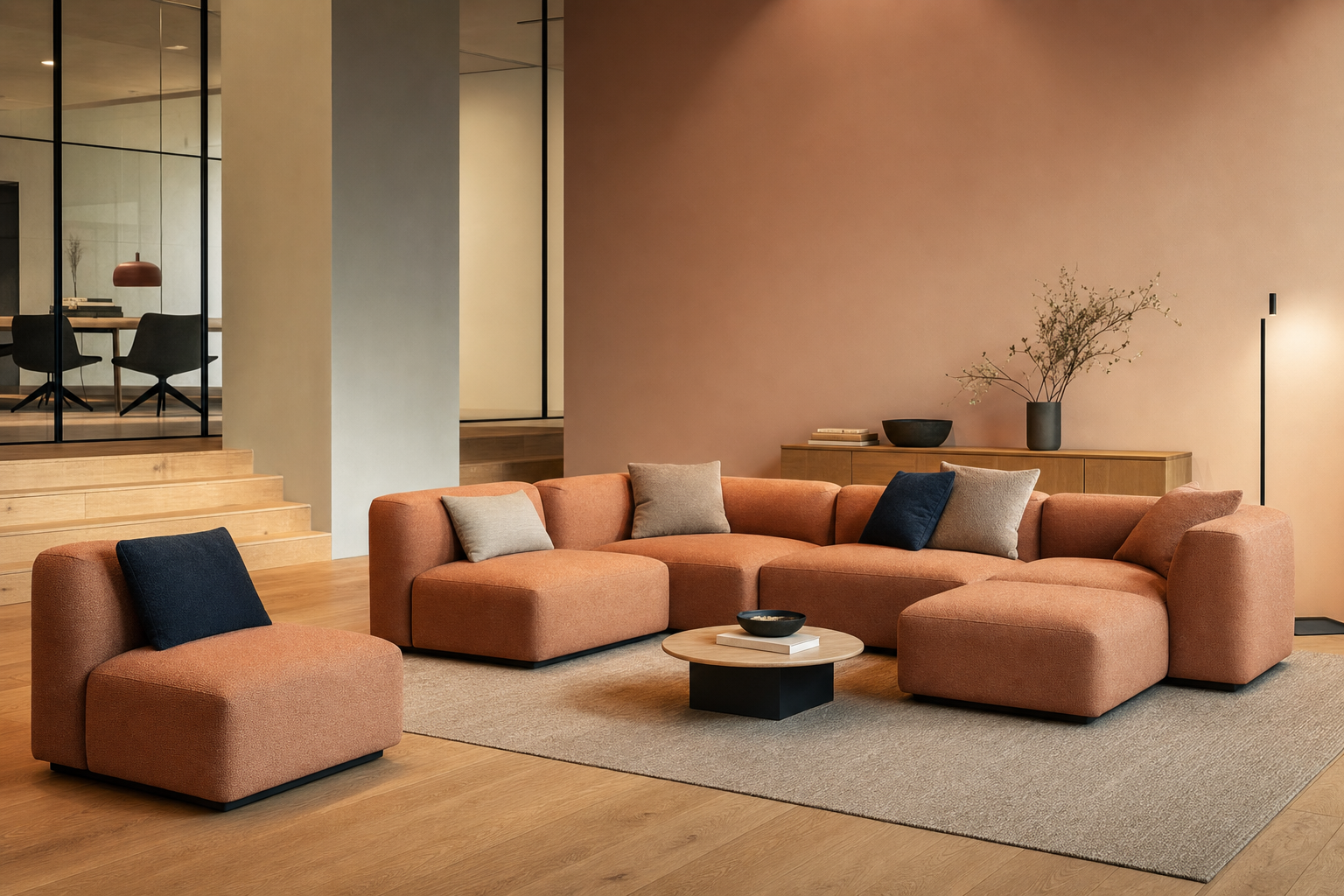
Your lobby has become three different rooms without anyone changing the lease. At 8 a.m. it's a laptop zone. By noon it's an informal meeting area. By evening it needs to host arrivals, waiting guests, and a drinks crowd that wants to linger. The furniture, meanwhile, still behaves like the room has one job.
That's the point where most operators start asking what modular seating is. Not as a style question, but as an operational one. They need seating that can change with occupancy, events, staffing patterns, cleaning routines, and refresh cycles without forcing a full replacement every time the space evolves.
In commercial settings, modular seating matters because static furniture creates hidden costs. Fixed sofas are hard to resize, awkward to repair, and unforgiving when a floor plan changes. Modular seating offers a different logic. It treats seating as a system you can reconfigure, maintain, and manage over time.
Table of Contents
- The End of Static Spaces
- Thinking in Systems, Not Sofas
- The Commercial Case for Adaptable Seating
- From L-Shapes to Serpentine Layouts
- Specifying Modular Seating for High-Traffic Environments
- Beyond Purchase: The Circular Economy of Modular Furniture
- Your Modular Seating Checklist and Case Studies
The End of Static Spaces
A hotel lounge gets refurbished, opens beautifully, and works well for about six months. Then the true operating pattern emerges. Guests drag chairs together for group check-ins. Staff need clearer circulation. A quiet corner becomes a high-demand work spot. The event team wants the same room opened up for private functions. Suddenly the original furniture plan starts getting in the way.
The same thing happens in workplaces. Breakout areas that were designed for casual use become touchdown zones, interview waiting areas, or all-hands overflow space. If the seating can't move with those shifts, the room stops performing long before the furniture wears out.
That's where modular seating earns its place. Instead of treating a sofa as a fixed object, it treats seating as a configurable asset. Individual sections can be rearranged, added, separated, or replaced as the room changes. For teams exploring modular sofa systems for adaptable spaces, that distinction matters more than any trend language.
Why static furniture starts failing
Fixed seating usually breaks down operationally in familiar ways:
- Layout lock-in: The room gets one dominant arrangement, even when daily use demands several.
- Costly damage response: One torn seat or stained section can compromise the whole piece.
- Poor future fit: A rebrand, expansion, or service change forces premature replacement.
- Awkward circulation: Large monolithic pieces often work against traffic flow once usage intensifies.
Static seating is easy to buy and often expensive to live with.
What modular seating solves
In practice, modular seating solves for change. It gives operators a way to reshape a room without starting over. That matters in hospitality, coworking, co-living, and mixed-use residential environments where the furniture has to support shifting demands, not just look resolved on install day.
The best commercial interiors aren't the most rigid. They're the ones that can absorb change without feeling improvised.
Thinking in Systems, Not Sofas
When clients ask what modular seating is, the shortest useful answer is this: it's a seating system made from separate units that work together. That's very different from a single-piece sofa with a fixed shape and fixed lifespan.
A good analogy is a digital playlist versus a CD. A CD gives you one locked sequence. A playlist lets you reorder, add, remove, and adapt. Modular seating works the same way. The value isn't just in the individual pieces. It's in the way the pieces connect and reconnect as needs change.

The core building blocks
Most modular seating systems are built from a small family of parts. The exact mix varies by manufacturer, but the design logic stays consistent.
- Seat units: These are the base modules. They can stand alone or combine into longer runs.
- Corner units: These turn a straight line into an L-shape, U-shape, or more complex composition.
- Ottomans and benches: Useful when you want loose, flexible seating or a softer edge in a lounge.
- Chaise or extended modules: These create more relaxed hospitality-style seating zones.
- Integrated tables or linking surfaces: Helpful in lounges, waiting areas, and workplace commons where people need a place to put devices or drinks.
- Arms and backs: Some systems let you specify these as separate elements so the same base can serve different functions.
That component logic is what makes modular seating more than a sectional in the residential sense. It's not only about a left-hand chaise or a right-hand return. It's about building a kit of parts that can support multiple room behaviours over time. European contract brands built around exactly this logic include La Cividina, Softline, MDF Italia, and Muuto, whose Connect Soft system by Anderssen & Voll pairs an FSC-certified frame with fully modular components.
The hardware decides whether the system works
This is the part many buyers miss. Modular seating is only as good as its connection method. Systems join through clips, brackets, magnets, or interlocking frames, and that hardware determines how well the assembly resists drift, gap opening, and racking under repeated reconfiguration in high-traffic areas.
If the connectors are weak, the layout drifts. Seams open. Units rack under use. Staff stop reconfiguring the furniture because it becomes a hassle. At that point, the theoretical flexibility has no operational value.
Practical rule: Evaluate the connector before you evaluate the silhouette.
What modular means in real use
In a commercial setting, modular seating should let a team do three things without major disruption:
- Rearrange the layout for a new use case.
- Replace one failed component instead of scrapping the whole setup.
- Expand the system if the room program changes later.
That's the answer to what modular seating is. It's not a trend category. It's a system designed to make change manageable.
The Commercial Case for Adaptable Seating
Modular seating earns its keep when a business wants furniture that performs across years, not just at install. In commercial spaces, the case usually comes down to three questions. Can the room adapt without major spend? Can the furniture be maintained without constant disruption? Can the asset stay useful through multiple refresh cycles?
One reason the category keeps expanding is that the underlying demand is already strong. Future Market Insights values the global modular furniture market at USD 88.4 billion in 2025, projected to reach USD 134.7 billion by 2035 at a 4.3% CAGR, with living room furniture the largest segment at 27.6% of the market, driven by demand for customisable, space-efficient furniture in both residential and commercial spaces.
Adaptability has operating value
In hospitality, a lobby rarely has one stable use. In workplaces, shared zones shift with team size, meeting style, and occupancy patterns. Modular seating lets operators adjust the room without bringing in a new furniture package every time needs change.
That flexibility matters most when the layout changes are small but frequent. A straight run can become a conversational cluster. A large grouped arrangement can break into smaller islands. A waiting area can gain more openness by separating modules and changing orientation.
Maintainability changes the replacement equation
A fixed sofa concentrates risk. If one section takes damage, the whole piece can become compromised visually and operationally. A modular system spreads that risk across components.
That changes day-to-day maintenance in practical ways:
- Cleaning teams can isolate problem areas more easily when units can be separated.
- Facilities managers can swap damaged modules rather than pulling an entire seating run.
- Operators can refresh upholstery selectively if the manufacturer supports component-level replacement.
- Multi-site brands can keep visual consistency while replacing only what fails first in each location.
Modular seating often wins on total cost of ownership, even if the upfront purchase price is higher. The savings don't always appear on day one. They show up later, when the room changes, a section wears unevenly, or a property wants to extend asset life without accepting a tired-looking space.
Financial prudence comes from optionality
A lot of furniture decisions get made as if the floor plan will stay frozen. It won't. Teams grow, service models change, guest behaviour shifts, and common areas get repurposed. Modular seating gives a business options when that happens.
The strongest commercial furniture choices don't just fit the room. They preserve choices for the operator.
There's also a branding advantage. Modular systems let designers maintain a coherent visual language while changing layout density, traffic patterns, and seating formats. That means a lounge can evolve without looking patched together.
The key is to stop viewing modular seating as a consumer convenience feature. In commercial environments, it's a way to reduce friction between changing space needs and long-lived furniture assets.
From L-Shapes to Serpentine Layouts
A modular system becomes useful when you can translate parts into layouts that solve real room problems. The same kit of seats, corners, ottomans, and tables can create very different experiences depending on how you compose it.
Contract systems typically rely on standardised module widths and consistent seat heights, which lets designers plan repeatable layouts, predict capacity, and scale inventory with less risk. Start with the planning principle, then choose the shape. Don't choose the shape first and force the room to obey it.

Five layouts that work in practice
-
L-shape
Useful in corners, under stairs, or at the edge of a larger open plan. It defines territory without building a wall. In hotel lounges, it can create a semi-private zone for small groups while still keeping sightlines open. -
Straight row
This is the cleanest answer for waiting areas, corridor edges, and narrow footprints. It's easy to understand and easy to maintain, but it can feel formal if there's no softening element such as a table, ottoman, or angled end module. -
U-shape
Better for conversation, workshops, or informal team huddles. It creates a social center quickly. The caution is circulation. If the opening is too tight, the arrangement starts to feel defensive rather than welcoming. -
Serpentine or curved
Strong in larger lobbies where you want the seating to guide movement rather than stop it. Curved compositions can soften hard architecture and create a more fluid arrival sequence. -
Individual pods
Best when users need personal space, quick touchdown seating, or a sense of privacy without full enclosure. These work well in coworking lounges and mixed-use common areas.
The same grid logic extends beyond seating. Mute's modular 3x3 configuration, a room-in-room system built from repeatable units, shows how standardised modules can scale from a simple cluster to full architectural structure, which is exactly the discipline that makes modular seating dependable.
Match the layout to the behaviour
A common mistake is specifying modular seating for visual flexibility, then arranging it once and never revisiting it. The better approach is to assign each layout to a behaviour.
| Layout | Best Use Case | Main Watchout |
|---|---|---|
| L-shape | Corner lounges and spatial zoning | Can trap circulation if oversized |
| Straight row | Waiting areas and linear spaces | Can feel static without variation |
| U-shape | Collaboration and group conversation | Needs enough access width |
| Serpentine | Large hospitality spaces and flow control | Requires precise planning to avoid wasted area |
| Individual pods | Focus seating and dispersed occupancy | Can feel disconnected if overused |
Why standardisation helps
Standardised module sizes make reconfiguration less risky. Designers can predict capacity, operators can add units later, and replacement doesn't turn into a custom puzzle. That predictability is one of the least glamorous features of modular seating, and one of the most valuable.
Specifying Modular Seating for High-Traffic Environments
Not all modular seating belongs in commercial settings. Some systems are designed for occasional domestic rearrangement. Others are built to survive daily use, frequent cleaning, and repeated reconfiguration. The difference shows up in the specification, not the marketing copy.

Start with the stress points
In a hotel, lounge seating gets dragged, leaned on, spilled on, and cleaned hard. In a workplace, it gets used for tasks it wasn't originally assigned to. People perch on arms, rotate modules slightly out of alignment, and create concentrated wear on the most convenient seat.
So the specification has to answer real operational questions:
- How does the connector behave over time? Ask how modules stay aligned and what happens after repeated moves.
- Can one unit be replaced without remaking the whole order? This matters for damage, phased upgrades, and multi-site consistency.
- Is the upholstery suitable for the cleaning regime? The right fabric choice depends on the setting, not just the design intent.
- How accessible are service parts? If feet, glides, clips, or covers fail, how quickly can they be replaced?
What to prioritise in a commercial brief
A strong commercial modular seating brief usually includes the following:
| Specification Area | What Good Looks Like |
|---|---|
| Connector system | Stable, easy to operate, resistant to drift and gap opening |
| Module dimensions | Standardised sizes that simplify planning and future additions |
| Frame and build | Construction suited to repeated use and movement |
| Upholstery strategy | Finish choices aligned with cleaning, stain response, and wear patterns |
| Serviceability | Clear path to replacement parts or component-level repair |
| Expansion logic | Ability to add matching modules later without redesigning the room |
Buy the maintenance path, not just the showroom composition.
Residential logic often fails in commercial use
A residential-grade modular sofa may look similar to a contract-oriented system, but it often breaks down faster under commercial behaviour. The problem isn't only durability. It's serviceability. If the vendor can't support replacement components, connector maintenance, or repeat orders, the system stops being modular in any meaningful operational sense.
This is also where teams should ask about integrated power, linking tables, and whether the system can support circulation-led planning. In lounges and shared work areas, seating often needs to do more than provide comfort. It needs to support devices, transitions, and dwell time without creating clutter.
The best specification decisions aren't glamorous. They're quiet choices that keep the room working year after year.
Beyond Purchase: The Circular Economy of Modular Furniture
The most interesting thing about modular seating isn't only that it can change shape. It's that the same design logic supports a different ownership model. If furniture can be disassembled, repaired, refreshed, and reconfigured at component level, it becomes far easier to manage as a long-term asset.
That matters because many sustainability claims in furniture remain broad and hard to verify. Modularity is often said to reduce waste, but the stronger question is whether disassembly and repairability actually lead to measurable environmental gains in a given project. Buyers are right to push suppliers on that.

Why modularity fits circular procurement
Circular procurement works best when the product itself is designed for separation and recovery. Modular seating is one of the few furniture categories where that can be structurally true, not just aspirational.
A practical circular model can include:
- Component-level repair: Replace one worn unit, not the full arrangement.
- Reconfiguration in place: Adapt layouts as needs change instead of buying new furniture.
- Refurbishment between uses: Recover serviceable modules for another project or another phase.
- Take-back potential: End-of-use management becomes more realistic when products come apart cleanly.
That doesn't automatically make every modular system circular. Some products add complexity without making recovery easier. Buyers still need to ask how the system is disassembled, what parts are replaceable, and whether the supplier supports next-life use.
The finance model can change too
Modular seating is relevant to finance teams, not just designers. A system designed for reuse and repair works more naturally with leasing, subscription, and leaseback arrangements than a monolithic furniture package that's difficult to refresh or remarket.
Instead of treating furniture as a one-time capital expense with uncertain residual value, teams can treat it as a managed asset with multiple service stages. That can reduce the operational shock of future change. It can also make fit-out decisions easier when a brand expects growth, churn, or periodic refreshes.
For teams evaluating circular furnishing models, Enky's circular purchase model is one example of how ownership, maintenance, recovery, and next-life redistribution can be designed together, alongside subscription and leaseback routes.
Circular value only works when the product, the service model, and the recovery path are designed to support one another.
What works and what doesn't
What works is a modular system with clear disassembly logic, replaceable components, and a supplier willing to support the product after installation.
What doesn't work is buying a nominally modular sofa with no realistic repair path, no replacement plan, and no take-back structure. That's still a linear purchase. It just arrives in more pieces.
Your Modular Seating Checklist and Case Studies
The unresolved question for many buyers isn't what modular seating is. It's whether it's better for commercial use. That's a fair concern: durability under repeated reconfiguration has to be examined honestly, and a higher upfront price only makes sense if the total cost of ownership justifies it.
Modular Seating Selection Checklist
| Consideration | What to Look For | Why It Matters |
|---|---|---|
| Connector durability | Stable joining method that resists separation and visible drift | Weak connectors undermine the whole system |
| Replacement parts | Clear availability of clips, feet, covers, and individual modules | Keeps downtime and replacement scope under control |
| Standardised dimensions | Repeatable module sizes and consistent geometry | Makes future additions and layout revisions easier |
| Cleaning fit | Upholstery and construction suited to the site's maintenance routine | Reduces premature wear and operational frustration |
| Reconfiguration effort | Modules that can be moved with minimal tools and staff burden | Flexibility only has value if teams will actually use it |
| Expansion path | Ability to order matching pieces later | Protects design continuity across phases and sites |
| End-of-life plan | Repair, refurbishment, return, or recovery options | Supports circular procurement goals |
Three real-world use cases
A hospitality operator uses modular seating because the rooms have conflicting jobs. At the Domaine de Courtigis, the retreat estate operated by Momoamo near Paris, WeWood's Dome modular sofa and MDF Italia's Array system anchor lounge zones that host anything from a 15-person leadership offsite to a 50-person company retreat, with the composition adapting to each group.
A startup workplace chooses modular seating because headcount and team rituals are still changing. Instead of locking into one oversized lounge piece, it starts with a smaller kit of modules and adds to it as the office settles into real occupancy patterns. That's the same phased logic RP France applied in Poitiers, building its 155-person workspace in deliberate stages as real usage became clear.
A co-living operator specifies modular seating for common areas where wear is uneven and layouts get adjusted often. When one high-use section shows damage first, the team replaces that module rather than discarding the full arrangement.
The pattern is consistent. Modular seating performs best when the room won't stay static, the operator cares about asset life, and the procurement team values optionality as much as appearance.
If you're reviewing a lounge, lobby, workplace hub, or shared residential common area and the current furniture feels too fixed for the way the space operates, Enky is one option to explore. The company works with hospitality, workspace, and living environments on modular and circular furniture strategies, including subscription, circular purchase, and leaseback models that support long-term flexibility, maintenance, and recovery.


