


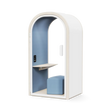
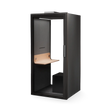
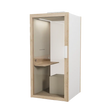
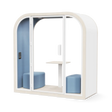
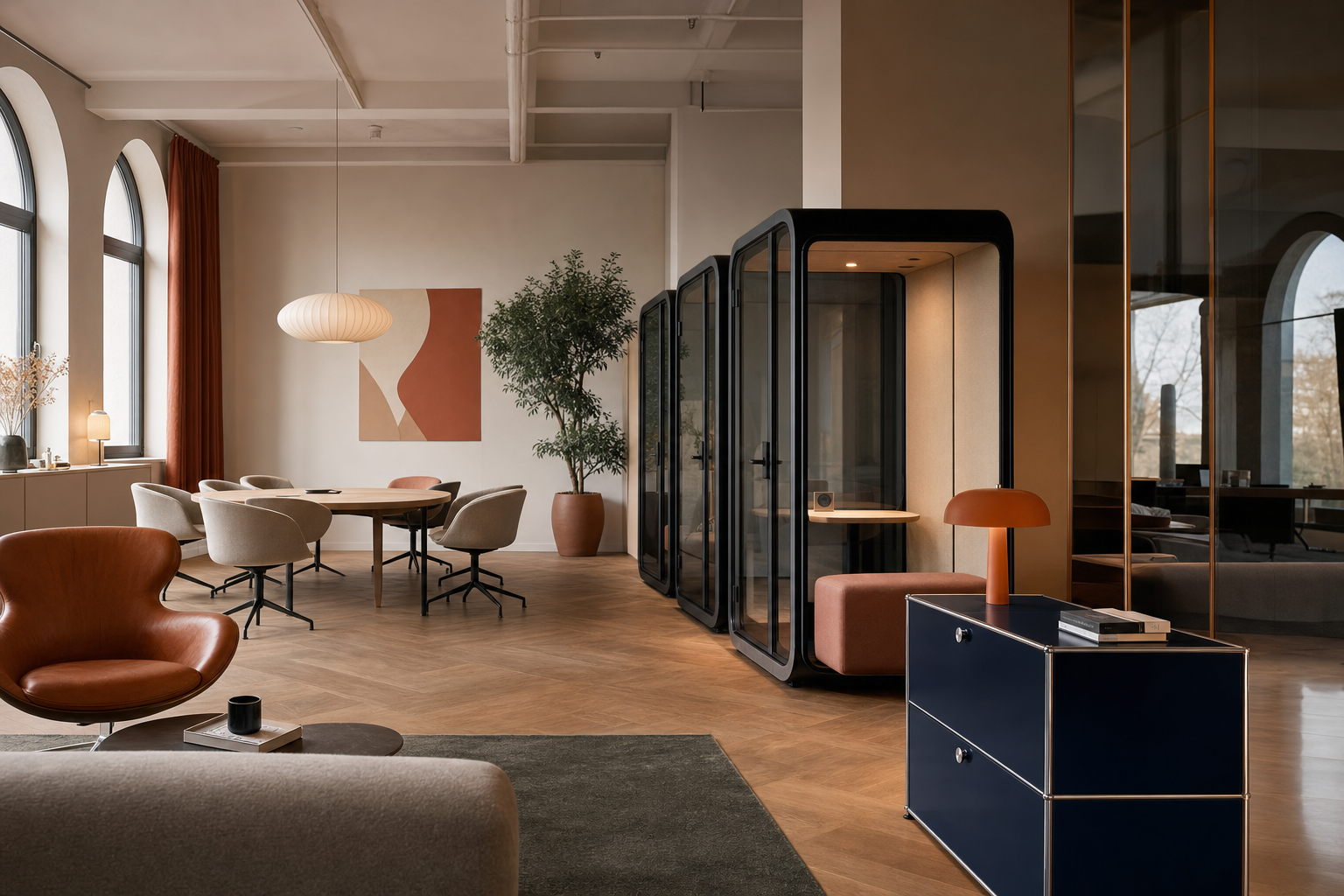
Open-plan offices rarely fail all at once. The problem usually appears in fragments. A sales lead takes a client call from a corridor, a founder steps into a stairwell for a board conversation, and a enclosed meeting room stays blocked for half-hour video calls. That's the moment the search for soundproof booth rental typically begins.
The category is growing because the need is structural, not cosmetic. Future Market Insights projects the UK furniture rental and subscription market to grow at 10.2% a year between 2025 and 2035, and acoustic furniture sits squarely inside that shift as hybrid work makes noise-dampening solutions standard rather than optional. For a scaling business, though, the fundamental decision isn't just whether to rent a booth. It's whether a booth should be treated as a temporary fix, a flexible operating asset, or part of a broader circular workspace plan that also includes desks, chairs, lighting and collaboration settings.
Table of Contents
- The Modern Office Dilemma: Noise, Focus and Flexibility
- Beyond Basic Rental: Assessing Your Acoustic Needs
- Decoding Acoustic Performance and Key Specifications
- Soundproof Booth Rental vs Subscription: A Financial and Strategic Comparison
- Budgeting for an Office Pod Rental in the UK
- From Delivery to End-of-Term: Your Installation Checklist
- Frequently Asked Questions About Soundproof Booths
The Modern Office Dilemma: Noise, Focus and Flexibility
A 50-person startup can move from "one team, one room" to daily acoustic friction in a single quarter. Hiring adds density. Hybrid schedules create uneven peaks. Informal calls start happening everywhere. In that setting, soundproof booth rental looks less like a furniture line item and more like operational infrastructure.

The mistake is treating the booth as a standalone fix. A pod can solve privacy for calls, but if the business is also reworking layouts, balancing upfront capital against operating spend, and trying to avoid waste, the smarter route is usually a model that leaves room to adapt later. That's where circular purchase for workspace furniture changes the conversation. It frames the booth as one part of a longer asset lifecycle instead of a short-term patch.
Practical rule: If the office layout is likely to change before the next lease event, the access model matters almost as much as the booth itself.
Premium pods such as Framery units are often most effective when placed within a broader ecosystem of meeting tables, ergonomic desks, lounge zones and circulation planning. That's why office managers comparing an office pod rental UK provider shouldn't just ask what the booth costs. They should ask what problem on the floorplate it removes, and what happens when headcount, tenancy terms or working patterns shift again.
Beyond Basic Rental: Assessing Your Acoustic Needs
A common initial question involves which booth to choose. The better question is what kind of acoustic work the space needs to support. A booth for investor calls has a different brief from a booth used for daily stand-ups, focused solo work or sensitive HR conversations.
Start with the work, not the product
Three questions usually clarify the brief quickly:
-
What happens inside the booth?
Confidential calls, short video meetings and heads-down focus sessions place different demands on privacy, ventilation and booking patterns. -
How many people need access at the same time?
One booth may work for occasional overflow. It won't solve daily pressure if multiple teams rely on ad hoc calls. -
Where can the booth sit without damaging flow?
A pod near a noisy collaboration zone can absorb demand well. A pod dropped into a circulation bottleneck usually creates a new problem.
A practical acoustic plan often combines enclosed and open interventions. A booth handles privacy. Softer acoustic elements reduce spill and reverberation around it. In some layouts, a freestanding piece such as BuzziSpace's BuzziShade Standing can help shape a calmer zone around touchdown areas. It is a freestanding acoustic lighting element with a BuzziFelt shade made from 100% recycled PET, set on a powder-coated metal frame, with an E27 socket, a 250 cm fabric-covered cord with footswitch, and a stability-focused base.

Common planning errors
Teams often overestimate how much privacy they need in one corner of the office and underestimate how often people need fast, frictionless access throughout the day.
The most frequent missteps are straightforward:
- Buying for edge cases: A booth specified for rare high-confidentiality use can be excessive if most use is routine video calls.
- Ignoring adjacency: Pods placed beside breakout seating often underperform because surrounding activity never settles.
- Forgetting the rest of the fit-out: A booth can't compensate for a floor full of reflective surfaces and no acoustic zoning.
This is where a workspace strategy earns its keep. The best acoustic phone booth rental decisions are made after mapping demand, movement and behavioural patterns, not before.
Decoding Acoustic Performance and Key Specifications
A booth described as "soundproof" can mean almost anything unless the acoustic performance is stated clearly. That's why buyers comparing soundproof booth rental options should focus on measurable attenuation, airflow, materials and installation logic, not marketing language.

What a dB figure actually means in use
The most useful single figure is speech level reduction measured under ISO 23351-1, the standard developed specifically for pods. Framery's smart pods, for example, are rated at 30 dB speech level reduction, the top Class A rating under that standard. In practical terms, that's the level at which a pod can sit right next to workstations without the people outside overhearing the conversation inside. It's the difference between a call feeling exposed and a call feeling contained.
That does not mean every business needs the same configuration. A standard office call booth and a booth for legal, financial or executive conversations are not the same brief. For many teams considering phone booths for office use, the key is matching the measured performance to the actual task rather than assuming the word "soundproof" covers every use case.
Ventilation decides whether the booth gets used
A booth can test well acoustically and still fail operationally if people don't want to stay in it. Ventilation is usually the reason. Silent airflow matters because a pod used for back-to-back calls needs to stay comfortable without creating extra noise leakage.
A few technical checks matter more than long feature lists:
- Air movement: Look for integrated ventilation designed for occupied use, not passive airflow alone.
- Door and seal quality: Good attenuation depends on consistent closure, not just thick wall materials.
- Material traceability: FSC/PEFC and OEKO-TEX specifications, where applicable, support durability, indoor quality and procurement transparency.
- Relocatable construction: Freestanding systems are easier to redeploy during layout changes.
Why material quality matters beyond acoustics
A premium pod should sit well inside a premium interior. Framery booths are often specified in offices that also use Pedrali tables, Muuto lounge pieces or Alki seating because the visual language has to work across the whole scheme. Acoustic furniture is still furniture. If it looks temporary, the space often feels temporary too.
A strong booth specification balances privacy, comfort, finish quality and lifecycle logic. If one of those is weak, users notice quickly.
Soundproof Booth Rental vs Subscription: A Financial and Strategic Comparison
Short-term rental solves a narrow problem well. It gives a business access to a booth without immediate ownership. That's useful for temporary swing space, pilot projects or short leases. It becomes less convincing when the business expects headcount changes, phased fit-outs or a wider furniture refresh.
The larger issue is waste. Sustainability Magazine's coverage of Enky's UK launch notes that Europe produces around 11 million tonnes of furniture waste a year, with only about 3% recycled. That makes lifecycle planning part of the financial discussion, not a separate sustainability note.
Access Models Compared: Rental vs Subscription vs Circular Purchase
| Criterion | Short-Term Rental | Enky Subscription (FaaS) | Enky Circular Purchase |
|---|---|---|---|
| Primary use case | Temporary need, short occupancy, trial phase | Growing business that needs flexibility over time | Long-term fit-out with ownership from day one |
| Budget treatment | Operating payments | Operating payments with structured flexibility; accounting treatment depends on contract term (IFRS 16 may apply) | CAPEX with end-of-life recovery built in |
| Scalability | Limited to rental term and provider stock | Designed to adapt as teams scale or reconfigure | Stable for mature layouts with lower expected change |
| End-of-term path | Return the booth | Continue, swap, buy, or return into circular flow | Keep in use, then recover at end of life |
| Fit-out integration | Often treated as a standalone unit | Works within a wider furniture ecosystem | Works within a wider furniture ecosystem |
| Circularity | Varies by provider | Built around reuse, maintenance and redistribution | Built around recovery and responsible next life |
Where subscription changes the decision
A simple phone booth leasing model can work if the requirement is fixed and isolated. It becomes restrictive when the booth is part of a larger workplace programme. A company may add meeting tables, replace task chairs, create touchdown space, or swap one-person booths for larger enclosed settings within the same period.
That's where furniture subscription for commercial projects is strategically different. It lets the pod sit inside a broader FaaS structure that can include items from brands such as Framery, Pedrali, Muuto, Alki and Lapalma, rather than forcing the team to solve acoustics as a disconnected procurement task.
Circular purchase suits a different maturity stage
Circular purchase is usually the better fit for operators with a settled brief. Boutique hotels, co-living schemes and mature offices often want ownership, but they also want end-of-life recovery, repairability and less exposure to stranded assets. In those cases, the booth is not just an expense. It is a durable, design-led asset with a defined next-life route.
Budgeting for an Office Pod Rental in the UK
The headline monthly fee is useful, but it's only the starting point. A budgeting exercise for office pod rental UK needs to account for access terms, service scope, and whether the booth will stay a short-term operational fix or become part of the long-term workplace model.
In the UK market, entry-level rental plans for one-person booths are commonly advertised from around £120 per month, with terms ranging from a few months to several years. That price point explains why acoustic phone booth rental has become a practical alternative to upfront purchase for startups and project-led teams.
What finance teams should actually budget for
The useful budgeting frame is total cost of access, not just monthly spend. That usually includes:
- The term structure: A lower monthly figure may come with a commitment that outlasts the need.
- Included services: Delivery, installation and support can materially affect the true cost.
- Exit flexibility: Contract changes matter when headcount or lease plans shift.
- Portfolio fit: A booth procured alone can create a fragmented furniture strategy later.
Budget lens: If the business expects organisational change during the term, a slightly higher flexible model can be cheaper than a lower-cost rigid one.
For a startup furnishing a first proper office, this often comes down to capital discipline. Keeping cash free for hiring, product and market activity can matter more than nominal ownership, especially when the broader space plan is still evolving. That's why soundproof office booth subscription tends to appeal to operations leaders who want the acoustic benefit now without locking the business into a static furniture decision.
From Delivery to End-of-Term: Your Installation Checklist
A good booth installation should feel routine. Most problems come from missed checks before delivery, not from the pod itself.

Before delivery
Framery booths are freestanding and don't require structural work. The practical requirements are simple: a flat floor, a standard 230V power outlet within reach, and adequate ceiling clearance, typically around 2.4m minimum.
A pre-delivery audit should confirm:
- Access route clarity: Measure lifts, corridors, doors and turning points.
- Floor readiness: Check flatness and verify load suitability in advance.
- Power location: Make sure the socket sits where the booth can be positioned cleanly.
- Ventilation positioning: Avoid placing the booth where surrounding conditions will compromise airflow.
On installation day
A single Framery unit is typically delivered, positioned and ready for use within one working day. For multi-booth rollouts, phased scheduling usually keeps disruption low, and most clients are operational within 48 hours of the first unit arriving on site.
The process is easier when workplace and facilities teams align on three decisions before the installers arrive:
- Final booth location
- Delivery window and building access
- Internal contact for sign-off and snag review
End-of-term options matter from day one
The best acoustic procurement plans don't stop at delivery. They also define the exit route before the contract begins. That could mean renewal, buyout, return for refurbishment, or a swap into a different furniture mix if the office changes.
Many basic framery pod rental conversations are too narrow. The pod may have solved one acoustic issue, but the business still needs a way to avoid asset clutter and unnecessary replacement later. A circular model treats the booth as part of an ongoing furniture lifecycle, with recovery and next-life use built into the decision.
The cleaner the end-of-term path, the easier it is for finance, facilities and design teams to agree at the start.
Frequently Asked Questions About Soundproof Booths
What site preparation is needed before installation?
Very little. Framery booths are freestanding, so there's no structural work. The essentials are a flat floor, a standard 230V power outlet nearby, and enough ceiling clearance, typically around 2.4m minimum. A space audit before delivery should check access routes, floor load capacity and ventilation positioning.
How quickly can a booth be deployed?
A single Framery unit is typically in place and ready for use within one working day. For larger rollouts, phased delivery helps reduce disruption, and clients are commonly up and running within 48 hours of the first unit arriving.
What acoustic performance should clients expect from a Framery booth?
Framery's smart pods deliver a 30 dB speech level reduction, the top Class A rating under ISO 23351-1, the standard developed specifically to measure pod sound insulation. In practical terms, that means the booth can sit right next to workstations without conversations inside being overheard, which is suitable for focused work and confidential calls.
Does a booth actually change how teams use the office?
Yes, when it is placed in the right location and matched to the right demand. As an illustration, picture a 60-person team on a single open-plan floor adding a set of one-person booths on subscription. The typical result is that ad hoc calls move out of shared spaces, meeting-room booking pressure drops, and the enclosed rooms return to the longer sessions they were designed for.
Is short-term rental always the right choice?
No. It suits temporary requirements well, but scaling businesses often outgrow the logic of a simple rental contract. If the workplace is evolving, a more flexible long-term access model usually gives better control over cash flow, layout changes and end-of-life responsibility.
Businesses comparing soundproof booth rental options should look beyond the monthly fee and ask how the booth fits into the wider workspace lifecycle. Enky provides access to acoustic phone booths and broader furniture schemes through subscription, circular purchase and leaseback, which is useful for teams balancing design quality, flexibility and asset strategy across changing offices.


