


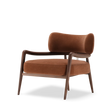
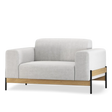
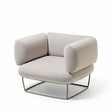
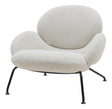
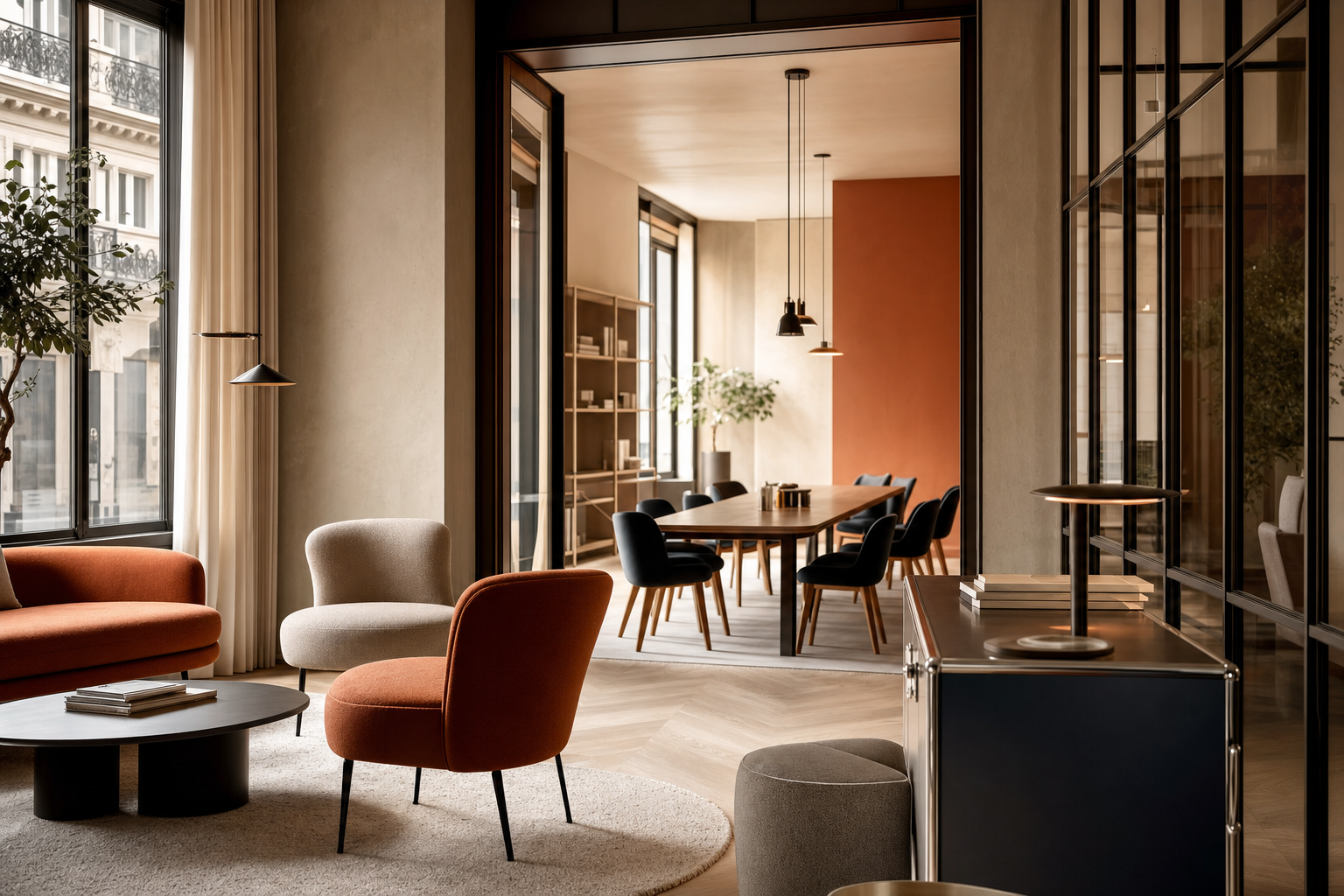
A Brussels office lease gets signed. The fit-out budget lands on the finance director's desk a week later. Desks, ergonomic chairs, meeting tables, acoustic zones, lounge seating, lighting, delivery, assembly, replacements. What looked like a straightforward purchase quickly becomes a capital allocation problem, an operational timing problem, and, in many cases, a waste problem three years later.
That is where furniture rental in Belgium stops being a temporary workaround and starts becoming a procurement strategy. For startups opening a first office in Brussels, boutique hotels refreshing common areas, or co-living operators furnishing units at pace, the key question isn't whether furniture is needed. It's whether locking cash into depreciating assets still makes sense when teams, layouts, and occupancy can change faster than the original fit-out plan.
Belgium is also moving towards more furnished living formats, with landlords, property managers, and operators increasingly expected to deliver turnkey spaces. The wider European current is measurable: Future Market Insights projects the furniture rental and subscription market to grow at 8.5% a year in France and 10.2% in the UK between 2025 and 2035, and Belgium sits squarely in that same shift. It pushes furniture into the centre of the operating model rather than the end of the project checklist.
Table of Contents
- The Modern Furnishing Dilemma in Belgium
- Beyond Basic Rental: Understanding Flexible Asset Models
- The Financial Case for Furniture Subscription
- The Circular Advantage for Furniture Rental in Belgium
- Procurement and Logistics for Your Belgian Project
- How Enky Delivers Furniture as a Service
- Frequently Asked Questions
The Modern Furnishing Dilemma in Belgium
A scale-up hiring into Brussels rarely wants generic furniture. It wants a workplace that helps recruitment, supports hybrid work, absorbs team growth, and still looks credible in front of investors and clients. The problem is that traditional procurement assumes stability. Most businesses don't have that.

A 50-person startup moving into a new Brussels office is a good example. The team needs desks, ergonomic chairs, meeting rooms, a quiet zone, and a reception area. Buying everything upfront ties up cash before the team even settles in. Choosing the cheapest package often creates a second problem later. Poor ergonomics, weak durability, and a space that can't adapt when headcount changes.
What buyers are actually solving for
Most buyers searching for furniture rental in Belgium aren't looking for short-term convenience alone. They're trying to solve four practical issues at once:
- Cash-flow pressure because furniture competes with hiring, product, and market expansion.
- Timing risk because offices, hotels, and co-living schemes often open to hard deadlines.
- Specification risk because layouts evolve after teams begin using the space.
- Exit risk because no one wants surplus furniture sitting in storage at the end of a lease.
Furniture becomes expensive when the business pays twice. Once at purchase, and again when the original layout no longer fits reality.
Why furnished demand matters beyond residential
The move towards furnished apartments in Belgium matters beyond housing. It changes expectations across the market. Residential developers need turnkey packages. Boutique hospitality operators need flexible room and common-area furnishing. Employers want offices that feel intentional, not improvised.
That's why office furniture, hospitality seating, modular sofas, acoustic booths, and dining furniture now sit inside a broader service conversation. Buyers increasingly expect not just delivery and installation, but planning, maintenance, swap-outs, and an answer to what happens at end of term.
Beyond Basic Rental: Understanding Flexible Asset Models
The most important distinction in Belgian furniture procurement is this. Rental is only one model. Finance and operations teams usually have several routes available, and the wrong one creates hidden friction later.

Subscription-based Furniture as a Service models let businesses access high-quality ergonomic furniture without the heavy upfront capital that traditional office fit-outs demand, shifting spend from CAPEX to OPEX and keeping cash free for the operating business.
Four models that buyers should separate clearly
| Model | Best suited to | Main strength | Main limitation |
|---|---|---|---|
| Outright purchase | Stable long-term use | Full ownership from day one | High upfront cash requirement |
| Traditional rental | Temporary setups | Simple short-term access | Often rigid and limited in scope |
| FaaS subscription | Growing or changing operations | OPEX structure and lifecycle support | Needs a provider with strong service operations |
| Circular purchase | Buyers wanting ownership with a recovery path | Asset control plus planned end-of-life | Requires a more strategic sourcing partner |
Traditional rental
Traditional rental works when a company needs furniture fast for a fixed period and doesn't expect the scope to change much. It suits temporary apartments, short hospitality activations, or interim office setups. It usually doesn't solve broader operational questions such as reconfiguration, lifecycle maintenance, or asset recovery reporting.
FaaS subscription
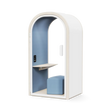
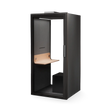
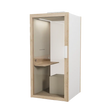
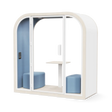
Furniture as a Service Belgium buyers should read this model as a managed access structure, not a simple rental agreement. The business pays monthly, uses the furniture, and can often adapt the plan as headcount or layout shifts. This is particularly relevant for ergonomic desks, Muuto lounge areas, or Framery acoustic phone booths in hybrid workplaces where demand changes over time.
A useful reference point is subscription furniture access, where the model is framed around monthly use rather than a one-off procurement event.
Practical rule: If the business expects change in headcount, occupancy, or workspace design, fixed ownership is rarely the most flexible financial tool.
Circular purchase and leaseback
Circular purchase is for teams that want ownership but don't want disposal uncertainty later. The furniture is owned from day one, yet the procurement logic includes recovery and second-life planning. That matters when a developer wants higher-grade assets on the balance sheet but still wants a defined path at the end of use.
Leaseback solves a different issue. A company already owns furniture, but wants to release capital, up to 90% of the furniture's value, while keeping the assets in operation. For finance leaders, that can turn a static interior investment into a more flexible balance-sheet decision.
These models matter because furniture leasing Belgium buyers often begin with a narrow search term but require a wider capital strategy.
The Financial Case for Furniture Subscription
For a finance leader, the strongest argument for subscription isn't aesthetics. It's optionality. A furnishing decision should preserve room for hiring, market moves, and operational surprises.
Take a hypothetical 50-person startup opening a Brussels office. The team needs desks, ergonomic chairs, meeting tables, storage, lounge seating, and at least one acoustic zone for calls. A purchase model demands cash upfront and locks the initial specification in place. If the company reorganises six months later, procurement starts again. If the team outgrows the office, the original furniture mix may no longer fit.
What improves when furniture moves into OPEX
A subscription structure changes the decision in several ways:
- Working capital stays available for recruitment, software, or commercial expansion.
- Monthly budgeting gets clearer because furniture becomes an operating cost rather than a large one-off project spike.
- Change becomes less punitive because additions, reductions, or swaps can be handled inside an existing service relationship.
- Operational burden drops when one provider handles delivery, assembly, maintenance, and retrieval.
This isn't theoretical in Belgium. When Enky furnished 4Ventures' Belgian offices, the subscription structure let a growing venture builder equip a design-led workspace, plush modular sofa included, without freezing capital that its portfolio companies needed more. The same logic applies in hospitality, where a boutique hotel opening with modular sofas, dining chairs, bar stools, lighting, and shelving needs design consistency without committing all capital before rooms begin generating revenue.
The hidden cost of choosing only on monthly price
The wrong comparison is "buying is expensive, renting is cheap" or the reverse. The right comparison is total business impact.
Cheap rental packages can create long-term overpayment if the contract structure doesn't match the use case. Some rental offers still rely on minimum terms that look flexible at first and become inefficient later. That's especially risky when the furniture quality is too low for heavy office or hospitality use, or when the provider can't scale with the project.
A stronger evaluation framework is simple:
- How long is the furniture realistically needed?
- How likely is the layout to change?
- Does the business value ownership or flexibility more?
- What happens when the project ends?
The financial question isn't only "what does this cost per month". It's "what does this choice stop the business from doing with its capital".
Where premium specification still matters
Subscription only works if the furniture can withstand repeated, real-world use. That's why spec matters. Pedrali bar stools in a restaurant, ergonomic workstations in a scale-up office, and Framery booths in an open-plan floor all need durability, replaceable parts, and serviceability. Without that, a monthly model can become a maintenance problem disguised as flexibility.
That is also why premium European-made products often make more sense than anonymous packages. Better repairability and clearer material standards usually produce a more reliable operating asset over time.
The Circular Advantage for Furniture Rental in Belgium
Most providers explain delivery. Few explain what happens after use. That omission matters because end-of-life is where many furniture decisions become expensive, opaque, and wasteful. The scale of the problem is European: around 11 million tonnes of furniture waste are produced in Europe every year, with only about 3% recycled.

There is a real information gap here. Furniture content, in Belgium as elsewhere, tends to focus on setup rather than recovery, refurbishment, redistribution, or certified material tracking, and buyers who ask providers for verified end-of-life detail often find the answers vague.
What circular furniture actually changes
Circular furniture Belgium is not a styling label. It changes the asset logic from linear consumption to managed lifecycle.
That means looking for:
- Certified materials such as FSC/PEFC timber and OEKO-TEX textiles where relevant
- Modular construction so parts can be repaired or replaced
- Ease of disassembly for refurbishment and next-life deployment
- Recovery planning before the first item is installed, not after the contract ends
A practical example is Actiu's Dorik Contract Table Outdoor - Round Ø100 H74, designed by Odosdesign. Its demountable system, adjustable levellers, and certified material approach make it relevant to meeting, contract, and terrace applications where maintainability and reuse matter.
Why finance teams should care about circularity
Circularity reduces more than waste. It reduces procurement risk.
A business with a credible end-of-life process is easier to align with ESG reporting, internal procurement standards, and landlord or investor expectations. It also avoids the familiar last-stage scramble where good furniture becomes an unplanned disposal project because no recovery pathway was defined at the start.
A useful benchmark for this model is circular purchase with recovery planning, where ownership and end-of-life can sit inside the same procurement logic rather than conflicting with each other.
Decision test: If a provider can't explain collection, refurbishment, redistribution, and material recovery, the sustainability claim is incomplete.
Circularity also protects design quality
The circular model works best when the initial specification is worth extending. Muuto lounge seating, Alki dining furniture, Softline modular sofas, and Pedrali tables all make more sense in a circular system than low-grade alternatives because they are built to remain useful beyond a single occupancy cycle.
For hospitality and workspace projects, that creates a better balance between design quality and lifecycle responsibility. It's one of the clearest reasons sustainable furniture rental has become strategically relevant rather than purely ethical.
Procurement and Logistics for Your Belgian Project
A strong furniture plan can still fail in the final week. The weak points are usually logistics, site coordination, and contract detail rather than product choice.
For office furniture rental Brussels projects, city access, loading windows, lift constraints, phased installation, and architect coordination matter as much as the catalogue. The same applies to hospitality rollouts where opening dates are fixed and snagging time is short.
Questions every buyer should ask before signing
The fastest way to test a furniture partner is to ask operational questions early.
-
What happens if the headcount changes mid-contract?
A provider should explain how additions, removals, or layout changes are handled without forcing a full restart. -
Who coordinates with the architect or project manager?
A credible partner should be able to work from plans, zoning requirements, and finish schedules. -
What does maintenance include?
Buyers need clarity on repairs, replacements, wear, and response times. -
How is delivery managed in Brussels?
Access restrictions, installation sequencing, and site readiness should be planned before dispatch. -
What is the end-of-term process?
Retrieval, refurbishment, resale, redeployment, or recycling should be addressed clearly.
Brand selection should follow use case
Product choice should start with operating conditions. Pedrali bar stools fit high-traffic restaurant environments where cleanability and durability matter. Framery phone booths suit open-plan offices where acoustic privacy affects productivity. Alki and Muuto pieces work well in reception and lounge areas where visual identity matters as much as comfort.
A practical shortlist often includes:
- Open-plan office with ergonomic chairs, bench desks, meeting tables, shelving, and acoustic booths
- Restaurant or hotel lobby with dining chairs, bar stools, lounge seating, and lighting
- Co-living common areas with modular sofas, durable tables, and easy-to-maintain finishes
Logistics discipline is now part of procurement quality
Furniture projects increasingly depend on tight coordination between procurement, warehousing, transport, and installation teams, especially on multi-site or phased rollouts where delivery administration and scheduling complexity can slow execution.
Good furniture procurement looks quiet on opening day. That usually means someone solved the logistics early.
The provider's service model should make the site team's job easier, not add another chain of approvals and uncertainty.
How Enky Delivers Furniture as a Service
Some buyers don't need a generic rental package. They need a furnishing system that matches a finance plan, a design brief, and a lifecycle policy at the same time.

Enky is a European furniture company headquartered in Brussels and active across Belgium, France, Switzerland, Spain, and the UK. Founded by Aïssa Laroussi, it has delivered 180+ projects, supports 5,000+ daily users, and has avoided an estimated 1,990 tonnes of CO2e emissions. Its operating model combines premium furniture for workspace, hospitality, and residential environments with three access routes. Subscription, circular purchase, and leaseback.
How the model fits Belgian business needs
For a Brussels project, that structure matters because it aligns furniture with business reality rather than forcing every client into one contract type. A startup can build an office around hybrid work, acoustics, and ergonomic performance from the workspace collection, and the Belgian track record is concrete: Enky furnished CVA's Brussels office on subscription, equipped 4Ventures' Belgian workspace, and fitted out the UrbanTech Hub in Brussels.
The catalogue is built around European-made brands including Pedrali, Alki, Muuto, Framery, Softline, and Lapalma. Those brands are relevant because they allow a workplace or hospitality space to remain design-led while still supporting repairability, modularity, and certified material choices such as FSC/PEFC and OEKO-TEX where applicable.
One system instead of disconnected vendors
The useful distinction isn't just that there are several models. It's that they connect.
A company might subscribe to desks and ergonomic chairs for a fast-moving office, use circular purchase for a more permanent reception area, and consider leaseback if existing assets are tying up capital. That makes furniture procurement more flexible across departments and property types.
There is also a secondary investment layer through Enky Invest, which offers furniture-backed investment opportunities with target returns of up to 9%. As with any investment, capital is at risk and returns are not guaranteed. For buyers interested in how furniture functions as an asset-backed class rather than only a cost centre, that adds another dimension to the model.
Reference clients such as Konbini, The Moment, Oneder, Momoamo, and 4Ventures show the relevance of this approach across workspace and hospitality settings. The underlying value is operational coherence. Design curation, flexible access, maintenance, recovery, and next-life use sit inside the same system.
Frequently Asked Questions
Is furniture rental in Belgium only for temporary apartments?
No. That's the oldest use case, not the only one. Businesses use furniture rental in Belgium for offices, boutique hospitality, co-living schemes, show units, and phased property openings where preserving cash and retaining flexibility matter more than owning every item immediately.
When does renting become more expensive than buying?
It depends on contract length, product quality, and what happens at renewal. A real caution is that minimum terms can hide long-run overpayment. As an illustration, renting an item worth €1,500 at €80 per month over 24 months totals €1,920, more than the purchase price. That doesn't make rental wrong. It means the model has to fit the actual duration and use case, and it's why service, maintenance, flexibility, and end-of-term recovery belong in the comparison, not just the monthly figure.
What should happen at the end of a furniture contract?
The provider should explain collection, condition review, refurbishment, redeployment, and what gets recycled if reuse isn't possible. If that answer is vague, the client is still carrying end-of-life risk even if the agreement is presented as flexible.
Can a business scale a furniture plan up or down?
A well-structured FaaS or leasing arrangement should allow change. That's one of the main reasons finance and operations teams choose it. The important point is to confirm how additions, removals, and product swaps are handled before signing.
Is premium specification worth it in a subscription model?
Yes, if the furniture has to perform daily. Ergonomic chairs, durable tables, acoustic booths, and modular seating all need to withstand repeated commercial use. Better specification usually supports repairability, longer lifecycle, and a stronger user experience.
Businesses planning a workspace, hospitality, or residential furnishing project in Belgium can explore Enky for subscription, circular purchase, and leaseback options, along with a curated catalogue of European-made furniture and project support aligned with design, finance, and end-of-life recovery needs.


