


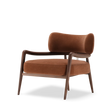
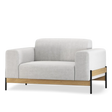
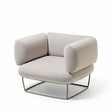
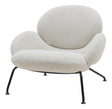
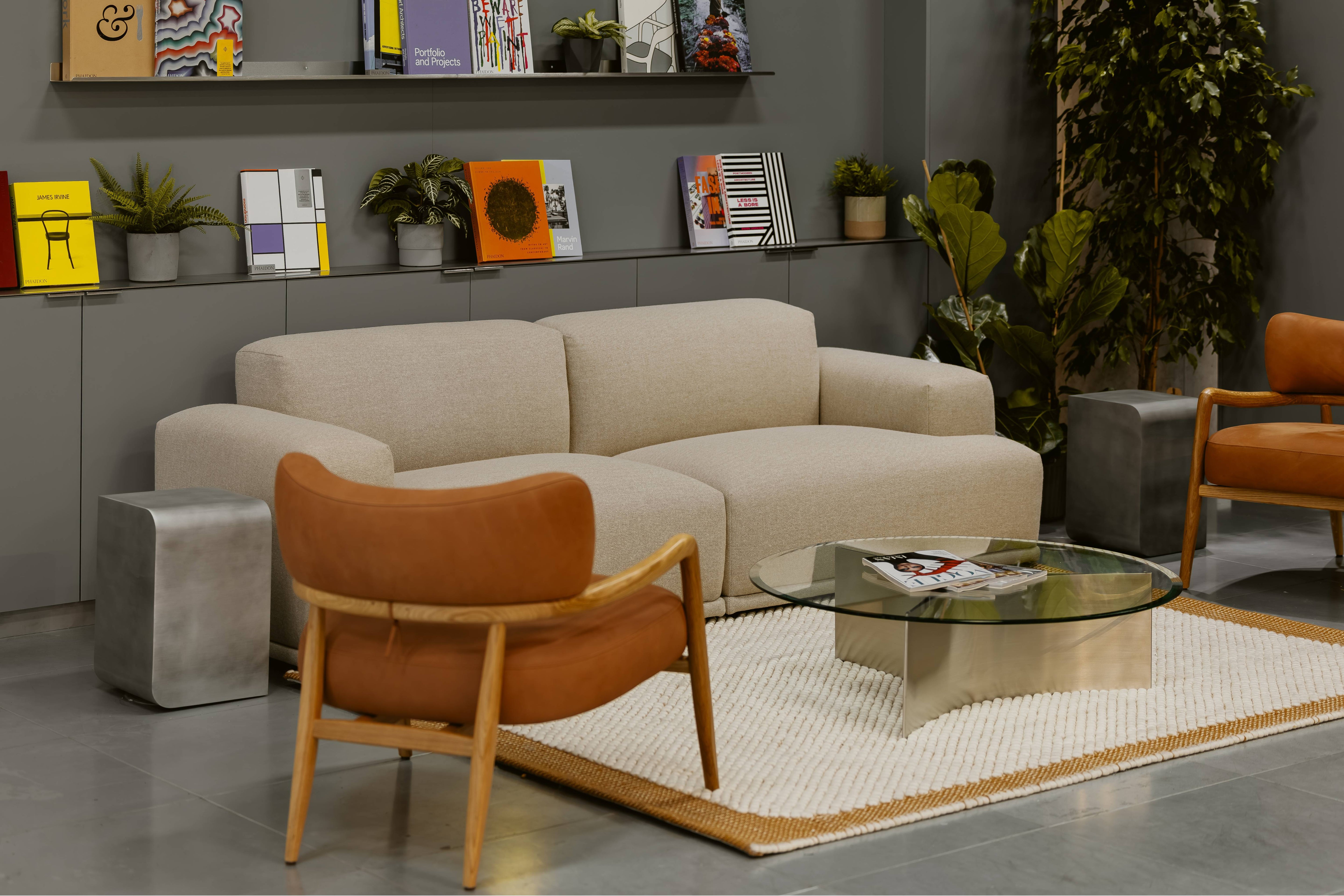
Boutique Hotel Furniture Suppliers | Circular & Design-Led
Boutique hotel furniture suppliers are no longer judged on style alone. Operators are prioritising cash preservation and flexible financing as opening costs rise, and the market reflects it: Future Market Insights projects the UK furniture rental and subscription market to grow at 10.2% a year between 2025 and 2035. That changes the buying brief from "Who can deliver beautiful furniture?" to "Who can deliver beautiful furniture without locking too much capital into depreciating assets?"
A boutique property opening in a converted townhouse or relaunching a design-led restaurant rarely struggles with taste. It struggles with timing, liquidity, and operational risk. Traditional one-off buying pushes too much spend into the opening phase, then leaves the operator with maintenance, replacement, and disposal problems later. That model doesn't fit a market focused on cash preservation and clearer ESG reporting.
The better approach is practical. Boutique hotel furniture suppliers should be assessed not only on product quality and finish consistency, but also on procurement model, end-of-life recovery, and whether the interior can evolve without wasteful refits. For buyers comparing contract furniture for hotels, that's where the key difference now lies.
Table of Contents
- Introduction
- Understanding Supplier Roles and Evaluation Criteria
- Comparing Procurement Models for Boutique Hotels
- Streamlining Project Workflow and Key Questions
- Balancing Cost and Lifecycle Value
- Ensuring Sustainability Through Certifications
- How Enky's Flexible Models Meet Boutique Hotel Needs
- FAQ
- Conclusion
Introduction
Boutique hotel owners usually hit the same wall. The design concept is strong, the architect is aligned, and the guest experience is clear. Then the furniture budget lands. Lobby seating, dining chairs, lighting, guest room pieces, and built-ins create a serious upfront burden before the first booking arrives.
That's why the conversation around boutique hotel furniture suppliers has changed. The strongest suppliers still need to deliver a design-led interior, but they also need to support better capital planning. A hotel operator choosing between outright purchase, hotel furniture leasing, or a circular ownership model is making a financial decision as much as a design one.
For boutique hotel interior furnishing, traditional procurement often creates the wrong pressure at the wrong moment. Cash gets tied up early. Design changes become expensive. End-of-life is ignored until it becomes a disposal problem. Flexible access models solve a real operational issue, especially for operators balancing launch costs, staffing pressure, and sustainability commitments.
Practical rule: If a supplier only talks about finishes and lead times, that supplier is only solving half the problem.
Understanding Supplier Roles and Evaluation Criteria
Most buyers evaluate boutique hotel furniture suppliers too narrowly. A strong sample and a polished moodboard aren't enough. The supplier has to perform across quality control, customisation, lifecycle support, and certification.
What quality actually looks like
For UK hospitality fit-outs, the baseline should be strict. A serious supplier can show its defect-handling procedures, sample-approval workflows, tolerance standards for bespoke dimensions, and quality certifications such as ISO 9001 where they hold them. That matters when a boutique scheme includes bespoke joinery, unusual room layouts, or architectural built-ins.
A supplier that misses dimensions or finish consistency creates site delays. In a hotel, those delays affect opening schedules and revenue, not just aesthetics.
The four criteria that matter
- Quality assurance: Ask for defect handling processes, sample approval workflows, and tolerance standards.
- Repairability: A Pedrali lounge chair in a high-traffic lobby should be maintainable, not treated as disposable.
- End-of-life recovery: Sustainable hotel furniture isn't just made from better materials. It also needs a credible next-life pathway.
- Certification depth: FSC or PEFC for timber and OEKO-TEX for textiles, where applicable, should be documented, not loosely referenced.
What to ask before requesting quotes
| Evaluation area | What to verify |
|---|---|
| Quality control | Defect procedures, finish consistency, production QA |
| Custom fit | Accuracy on bespoke dimensions and room-specific adaptations |
| Lifecycle support | Maintenance, refurbishment, recovery, redistribution |
| Compliance | ISO 9001, FSC/PEFC, OEKO-TEX documentation |
Muuto lighting, for example, works well in boutique settings where visual restraint matters, but the buying decision shouldn't stop at look and feel. The real question is whether the supplier can integrate specification, maintenance logic, and replacement planning from the start.
Comparing Procurement Models for Boutique Hotels
The procurement model now matters as much as the furniture itself. Buyers looking at boutique hotel furniture suppliers should compare ownership structure before comparing fabrics.

Three models, three different financial outcomes
Circular purchase suits operators that want ownership from day one but don't want end-of-life risk to sit entirely on their side. It keeps the furnishing strategy tied to the circular economy rather than treating disposal as someone else's problem later.
Subscription or FaaS works best where flexibility matters more than title ownership. That's useful for soft launches, phased rollouts, hybrid public spaces, or properties testing a concept before fixing the interior long term. For a practical overview of how this structure works, see this Furniture as a Service guide for commercial interiors.
Leaseback is the most overlooked option in hospitality. If a property already owns usable furniture, leaseback can release tied-up capital, up to 90% of the furniture's value, while keeping those assets in use.
Procurement Model Comparison
| Model | Ownership | Upfront Cost | End-of-Life |
|---|---|---|---|
| Circular purchase | Client owns from day one | Higher than subscription, lower lifecycle risk | Recovery and circular pathway can be built in |
| Furniture subscription | Supplier retains ownership during contract, with option structure depending on agreement | Lower upfront burden with recurring payments | Return, maintenance, refurbishment built into model |
| Leaseback | Client sells existing assets, then leases them back | Unlocks capital from existing furniture base | Assets remain in circulation rather than being discarded |
Which model fits which hotel
- Stable occupancy and long-term concept: Circular purchase is usually the cleanest fit.
- Pilot concept, seasonal adaptation, phased opening: Subscription gives room to adjust.
- Existing hotel under cash pressure: Leaseback deserves serious attention.
Pedrali seating on subscription makes sense for a restaurant or lounge that may be repositioned. Lapalma dining chairs under a circular purchase model make more sense where the design scheme is stable and ownership still matters. The models also combine: at the Domaine de Courtigis, the 90-hectare retreat estate operated by Momoamo, Enky structured the furnishing of five renovated buildings as a hybrid, with circular purchase covering the permanent anchor pieces and a subscription layer that can evolve with the concept.
Streamlining Project Workflow and Key Questions
Furniture procurement fails when it's treated as a late-stage shopping exercise. In boutique hospitality, it has to run alongside design development, technical coordination, and installation planning.

A clean workflow usually follows five phases. Discovery, concept selection, prototyping, install coordination, and final hand-over. Each phase needs a decision owner, not just a design preference.
The questions that keep projects under control
-
Discovery
Have site dimensions been verified against actual access routes, stairs, lifts, and irregular floorplates? -
Concept selection
Does the furniture language stay coherent across lobby, dining, and guest areas without forcing unnecessary bespoke joinery? -
Prototyping
Have materials, upholstery, and module configurations been signed off in a way that avoids late substitutions?
A converted townhouse is a common problem case. Tight corners, uneven rooms, and heritage constraints make standard planning unreliable. In those cases, modular European-made pieces from brands such as Alki solve real layout problems because they can be adapted room by room without rebuilding the concept from scratch.
For lounge and waiting areas, the Cuic Two Colour Lounge Chair is relevant because its modular soft seating system combines high-resilience polyurethane foam, elastic webbing, strong wooden frames, and an epoxy-coated steel base. That kind of construction supports longevity while giving designers more control in awkward footprints.
Add the forgotten layer
Boutique hotels often spend heavily on furniture and lighting, then under-specify the walls. Public areas need visual warmth, not just seating density, and a considered art and finishes plan helps complete the room rather than leaving the furniture to carry the whole atmosphere.
Tight workflow beats heroic problem-solving every time.
Balancing Cost and Lifecycle Value
Upfront price is the wrong metric. The useful metric is lifecycle value. That means purchase or access cost, maintenance responsibility, replacement risk, and what happens when the concept changes.
What buyers usually miss
A chair isn't expensive because of its invoice value alone. It becomes expensive when the operator has to replace it early, repair it informally, store surplus stock, or dispose of it without residual value. That's why contract furniture for hotels should be judged against total operational burden, not just procurement cost.
This is also where CAPEX versus OPEX becomes practical rather than theoretical. Purchase pushes cost forward and ownership responsibility inward. Flexible models spread cost and can shift some maintenance and asset management obligations out of the operator's day-to-day workload.
A better budgeting lens
- Maintenance exposure: Who handles wear, repair coordination, and refresh cycles?
- Refurbishment route: Can pieces be renewed instead of replaced?
- Residual logic: Is there any buy-back, recovery, or secondary use path?
- Accounting fit: Does the property need ownership, or does it need control and predictability?
Leaseback is particularly useful when a hotel is asset-rich but cash-constrained. Enky's leaseback model is worth reviewing for operators trying to free capital without stripping character from the property.
A boutique hotel interior furnishing scheme should be treated like a managed asset strategy. If the furniture supports guest experience but traps cash and creates waste later, it isn't efficient design. It's just deferred friction.
Ensuring Sustainability Through Certifications
Sustainability in hospitality furniture isn't a moodboard choice. It's a documentation issue. If a supplier can't prove material origin, fabric safety, and recovery logic, the ESG story won't hold up.
The scale of the underlying problem is why this discipline matters: around 11 million tonnes of furniture waste are produced in Europe every year, with only about 3% recycled. Buyers increasingly want sustainable hotel furniture that supports both guest-facing design and back-end reporting.

The certifications worth checking
- FSC and PEFC: These matter for timber traceability and responsible forest sourcing.
- OEKO-TEX: This matters for textile safety in upholstered seating, headboards, and soft furnishings.
- Chain-of-custody evidence: Ask for actual paperwork, not brand logos in a presentation deck.
The material mix matters too. European manufacturers increasingly integrate recycled and certified materials into production, which supports lower-waste sourcing without forcing the project into an overtly "eco" aesthetic. The discipline lies in asking for the documentation rather than accepting the claim.
Sustainability has to reach operations
Softline upholstery or Lapalma seating can support a cleaner specification when paired with proper certification review, but the same discipline should extend beyond furniture into service items, finishes, and operating supplies. Guest-facing sustainability is built through many small specification choices, not one big statement piece.
For a broader lifecycle view, Enky's circular purchase approach is the framework hospitality teams should be applying from the first brief.
How Enky's Flexible Models Meet Boutique Hotel Needs
The gap in most boutique hotel furniture suppliers comparisons is obvious. They explain what to buy, but not how to structure the asset. That's where flexible models become useful.

Three models matched to real hospitality needs
Enky's hospitality collection is built around three access routes relevant to boutique hotels.
- Subscription for operators that want predictable monthly fees instead of a large opening-phase hit. Enky's UK subscription service shifts expenses from CAPEX to OPEX, includes maintenance, and eliminates large upfront costs, as described in Sustainability Magazine's coverage of the UK launch.
- Circular purchase for operators that want ownership from day one with end-of-life recovery built into the relationship. The related circular purchase model fits hotels with stable occupancy and clearer long-term brand direction.
- Leaseback for hotels sitting on existing furniture assets that still have use value but are tying up capital.
Why this structure matters more than another supplier shortlist
This approach gives hospitality buyers more than product selection. It gives them a way to align furniture strategy with cash flow, refurbishment planning, and ESG commitments. That's the missing layer in most hospitality furniture supplier Europe comparisons.
The design side still matters, and it shows in real projects. At The Moment, a bistrot in Paris' 5th arrondissement, founder Emilie Piolet used Enky's subscription model to specify an upmarket look, Pedrali velvet seating in fire-retardant fabric, a Modus sofa, Mobitec stools, that a conventional opening budget would have ruled out. A boutique property can specify Pedrali seating in public areas, Muuto lighting in quieter zones, or Lapalma dining stools in restaurant settings and still avoid the rigid ownership model that usually comes with contract furniture for hotels.
For teams reviewing alternatives, the subscription model is often the easiest starting point because it clarifies monthly exposure, maintenance scope, and upgrade flexibility early in the conversation.
Choose the procurement model first. Then choose the chair.
FAQ
Can a hotel combine subscription and circular purchase in one project?
Yes. Public areas that may change faster can sit on subscription, while stable guest room schemes can be handled through circular purchase. That's exactly how the Domaine de Courtigis was structured with Momoamo: owned anchor pieces, flexible subscription layer.
Does hotel furniture leasing limit design control?
It doesn't have to. The key question is whether the supplier supports curated, design-led brands and clear specification workflows.
What happens if the room layout changes mid-contract?
That depends on the agreement and product type. Modular systems are easier to reconfigure than fixed bespoke pieces, which is why they suit boutique properties in older buildings.
Is leaseback only useful for distressed operators?
No. It's useful for any hotel that wants to free up capital from existing furniture while keeping those assets in use.
Conclusion
The strongest boutique hotel furniture suppliers do more than fill a schedule of finishes. They help operators protect cash, maintain design standards, reduce waste, and keep interiors adaptable. That requires a sharper buying process. Check quality thresholds. Review certifications properly. Match the procurement model to the operating model. Don't accept a beautiful scheme that creates a clumsy asset strategy.
For boutique hotels, the smart move is usually not traditional ownership by default. It's a furnishing model that fits the property's liquidity, lifecycle plan, and brand direction.
A practical next step is to review Enky for hospitality catalogue options, circular purchase, subscription, and project support aligned with design-led hotel interiors.


