


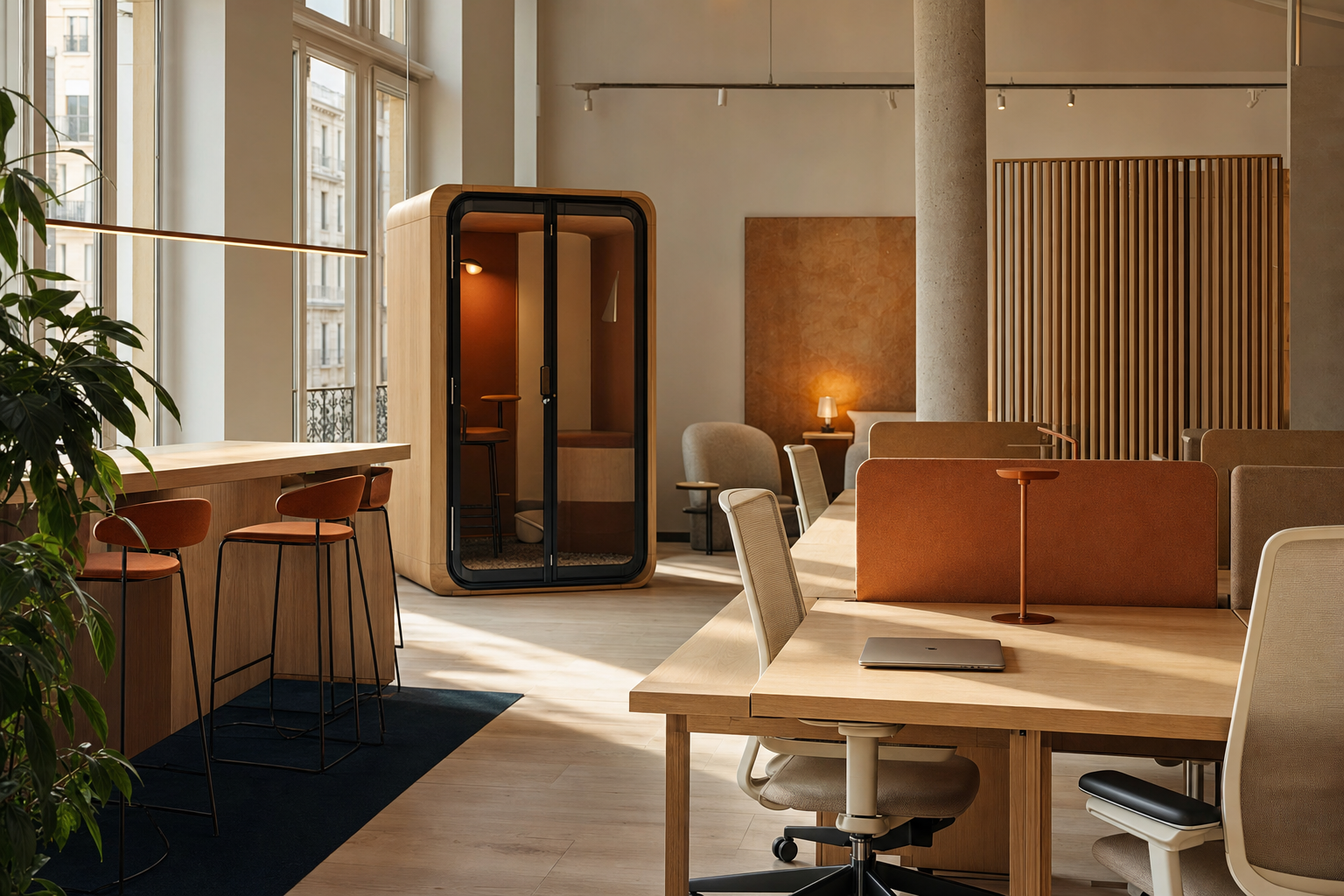
Flexible Workspace Solutions: Furniture That Moves with You
A 50-person startup can sign a flexible lease and still end up trapped. The space moves, the team grows, and the desks, chairs, booths, and meeting tables stay fixed in the wrong places. That is the key failure point in most flexible workspace solutions discussions. The lease gets all the attention, but the furniture is what has to absorb churn, hybrid attendance, and the next hiring wave.
UK demand makes that problem harder to ignore. Coworking and flex space reached 839,000 sq ft across the UK at the end of Q3 2024, the highest level since 2019, with London established as one of the hottest flexible workspace markets globally. UK flexible office supply kept climbing into 2025 too, with inventory up 32% year-on-year in Q1 2025, pushing total stock past 8.6 million sq ft. The market is not waiting for perfect certainty. It is moving with it.
The practical answer is not more static fit-out. It is furniture access that can keep up.
Table of Contents
- Why Flexible Workspace Starts With Furniture, Not Lease Terms
- The Five Models That Make a Workspace Truly Flexible
- Financial and Operational Benefits That Move the P&L
- Procurement and Evaluation Criteria Worth Scoring on Paper
- An Implementation Roadmap From Brief to Reconfigured Floor
- What Each Stakeholder Gets Out of the Model
- Common Objections and How to Answer Them
Why Flexible Workspace Starts With Furniture, Not Lease Terms
A team can move into a new office in four weeks and still be stuck for months if the furniture is wrong. That usually happens when headcount is uncertain, the old layout no longer fits hybrid attendance, and the purchase order is already signed. The lease may look flexible on paper, but the interior is already fixed.
Flexible workspace solutions start with the furnishing model because that is what changes when the team grows, splits, or shifts how it works. Coworking and serviced offices handle square footage, but the desks, chairs, booths, and modular seating have to adapt inside that space. If the furniture cannot be reconfigured quickly, the office is only flexible at the landlord level.
A better test is practical. If a workplace manager needs to add seats, carve out focus space, or create more collaboration zones without waiting for a new fit-out cycle, the furniture model is the bottleneck.
Practical rule: if the layout cannot change faster than the hiring plan, the workspace is already behind.
At Enky, the right question is not what lease the business signs, it is what furniture model lets the floor plan absorb change. Furniture as a Service gives teams that need speed a way to keep moving without committing to a static layout. Leaseback and circular purchase serve a different need, they let a business keep usable assets in circulation while preserving room to reconfigure the workplace when the next change arrives.
The Five Models That Make a Workspace Truly Flexible

The first model is Furniture-as-a-Service, or FaaS. It gives monthly access to office furniture with an option to buy later, which suits teams that need speed now and ownership only if the layout settles. A startup can use it for desks and meeting tables while keeping cash for hires and product work. Enky's editorial overview of Furniture as a Service is a useful reference for how that structure works in practice.
The second model is office furniture subscription. This is the cleanest answer for short or uncertain horizons, because the business pays for use rather than ownership and can upgrade or return items as needs change. A scaleup can put ergonomic task chairs, storage, and a few modular pieces on subscription, then change the mix when hybrid attendance shifts.
The third model is leaseback. This matters when a company already owns usable furniture but wants cash freed from it. The furniture stays in place and keeps serving the team, while the business converts up to 90% of the asset's value into liquidity and keeps operational continuity. Enky's leaseback model fits that brief without forcing a disruptive refit.
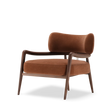
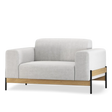
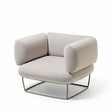
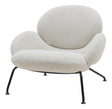
The fourth model is modular and hybrid workspace design. Here the furniture itself is the mechanism of flexibility. Pedrali and Lapalma pieces work well when seating, soft zones, or tables need to connect and disconnect as the floor plan evolves. A modular sofa that can gain or lose seats is more useful than a beautiful but fixed configuration.
The fifth model is managed coworking. In that setup, furniture and fit-out come bundled with the space, which is useful when speed is more important than control. It is the least custom model, but it can be the fastest route to an operational floor.
A hospitality operator might pair subscription with leaseback. A scaleup might use circular purchase for anchor pieces and subscription for everything that must flex. That mix is usually stronger than committing to one model everywhere.
Financial and Operational Benefits That Move the P&L
The financial case starts with a simple shift. Subscription moves furniture spend from CAPEX toward OPEX, which makes costs easier to align with headcount and project timing (the precise accounting treatment still depends on contract terms). That matters in real offices because the cost of owning furniture is not only the upfront buy, it is also the maintenance, repair, replacement, storage, and eventual disposal that sit outside the original quote.

Leaseback does something different. It turns furniture that is already sitting on the balance sheet into fresh liquidity without forcing the team to change how it works day to day. For an operator watching cash closely, that is often more useful than selling used furniture in pieces and starting over.
CFO rule: any furniture strategy that ignores repair, replacement, and end-of-life cost is leaving money out of the model.
The sustainability logic is not separate from the financial one. Enky's circular purchase includes end-of-life recovery, so the furniture is recovered and redistributed rather than treated as waste. That keeps the asset in use longer and fits a workspace strategy that values longevity over one-time procurement.
For teams comparing models, the question is blunt. Does the furniture strategy protect cash, reduce disruption, and keep the floor usable when the team changes? If it does not, it is not flexible, it is just delayed procurement.
Procurement and Evaluation Criteria Worth Scoring on Paper

The weakest procurement brief is the one that asks for "modern furniture" and stops there. A flexible workspace needs a scorecard that tests whether pieces can survive movement, reuse, and repair without looking tired after one cycle. That means lifecycle, disassembly, material standards, modularity, and end-of-life service.
Lifecycle expectancy should be checked first. If the provider cannot explain realistic refresh cycles and warranty logic for core items, the business is buying replacement risk. Repairability comes next, because fixed or hard-to-service furniture creates downtime the moment something breaks. FSC/PEFC for wood and OEKO-TEX for textiles should be part of the brief when materials matter, not added as an afterthought.
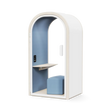
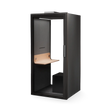
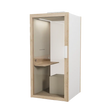
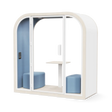
A smart zone map helps the buyer avoid vague specification. A Framery acoustic booth belongs in focus work where interruption is costly. A modular sofa belongs in collaboration zones where team size changes. Ergonomic task seating belongs on hot-desking floors where different people use the same chair all week.
One catalogue item that fits this logic is BuzziSpace's BuzziShade Standing, a freestanding acoustic lighting element with a shade made from 100% recycled PET, a powder-coated metal frame, an E27 socket up to 60W, a 250 cm fabric-covered cord with footswitch, a stability-focused base, a total height of 172 cm, a shade diameter of 69 cm, and a weight of 18 kg.
Use this plain checklist in an RFP:
- Can it be repaired easily? If not, reject it.
- Can it move between zones? If not, it will strand capital.
- Can it be recovered at end of life? If not, the circular story is weak.
- Does the supplier support modular reconfiguration? If not, the office will age badly.
- Do the materials carry credible certifications? If not, the ESG claim is thin.
An Implementation Roadmap From Brief to Reconfigured Floor
A team that doubles from 40 to 80 in eight months needs a process, not a one-off purchase. The first step is a headcount brief with two or three attendance scenarios, because hybrid work rarely follows a straight line. That brief should feed zone planning with architects or design partners, so the furniture and the architecture land together.

A pilot zone comes next. That is where one collaboration area, one focus zone, or one hot-desk cluster is tested before the whole floor is set. A two-week feedback loop is enough to show whether a modular Pedrali seating layout feels natural or whether the acoustic mix is too loud for calls.
A pilot is cheaper than a floor full of regret.
Phased rollout should follow the pilot, with each phase tied to actual occupancy rather than an abstract plan. The right KPI set is small and useful. A hybrid office typically plans for well under one desk per employee, utilisation should be visible, and time to onboard a new hire should shrink as the furniture becomes easier to place.
The final step is a quarterly review. That is where subscriptions can be adjusted, owned items can stay in place, and the floor can be reconfigured without a new procurement cycle. Enky's office space planning resource fits naturally here, because the furniture layer and the architectural layer need to ship together, not one after the other.
What Each Stakeholder Gets Out of the Model
A hotel lobby that fills up at check-in, a restaurant that pivots between lunch service and evening drinks, and a co-living lounge that needs to feel fresh after constant turnover all place different demands on furniture. Fixed fit-outs make that harder than it should be. Subscription and circular purchase give operators control over seating density, layout, and finish without parking surplus pieces in storage and calling that flexibility.
Corporate workplace managers need portfolio-level agility, and furniture access models make that practical. A London office, a Brussels satellite, and a Geneva project room often need different mixes of owned and subscribed pieces, especially when one site is being expanded while another is being reduced. The advantage is simple. The business can grow, shrink, or refresh without leaving stranded assets in one location or forcing a full procurement reset every time the plan changes.
Residential developers and co-living operators are looking for durability first, then circularity. Furniture has to survive turnover, cleaning, and repeated use, while still supporting an ESG story that can stand up in reporting and tenant conversations. Certified, repairable furniture with recovery built in is easier to defend than short-life fit-out wrapped in vague sustainability language. That matters when the same chair or table has to keep earning its place across multiple occupancies.
Design and finance stakeholders care about maturity in the supply model, because that is where flexible workspace stops being a slogan and starts becoming an operating system. UK flex office supply has been expanding sharply, and London remains established as one of the hottest flexible workspace markets globally. That scale points to a market where furniture subscription, leaseback, and circular purchase are part of how real workspace portfolios are assembled. They are no longer side bets, they are the infrastructure that lets a workplace change shape without breaking the budget or the brand.
Common Objections and How to Answer Them
What happens if headcount shrinks? Subscription is the cleanest answer, because the furniture can scale down instead of sitting unused. That is exactly why the model fits teams with volatile hiring plans.
What happens at end of life? Circular purchase includes recovery, redistribution, and next-life planning, so the exit is part of the contract logic rather than an afterthought. That is the safer answer for both waste control and asset planning.
Are premium European brands available on flexible terms? Yes, and that matters because a flexible model should not force a downgrade in finish or durability. Pedrali, Alki, Muuto, Framery, Softline, and Lapalma all fit into a serious workspace mix.
How is leaseback cash calculated when furniture is already owned? The clean answer is asset valuation against the existing furniture set, then a financing structure that returns liquidity while the furniture stays in use. A supplier should be able to explain the method clearly before any commitment is made.
Enky furnishes flexible offices with subscription, circular purchase, and leaseback, so the furniture layer can move as fast as the team does. For a workspace that needs to stay usable through growth, churn, and redesign, the catalogue and the financing model should work together. Explore the Enky approach and compare the workspace options against the floor plan already in play.


