


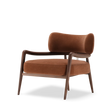
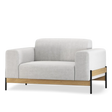
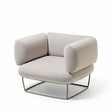
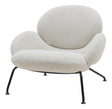
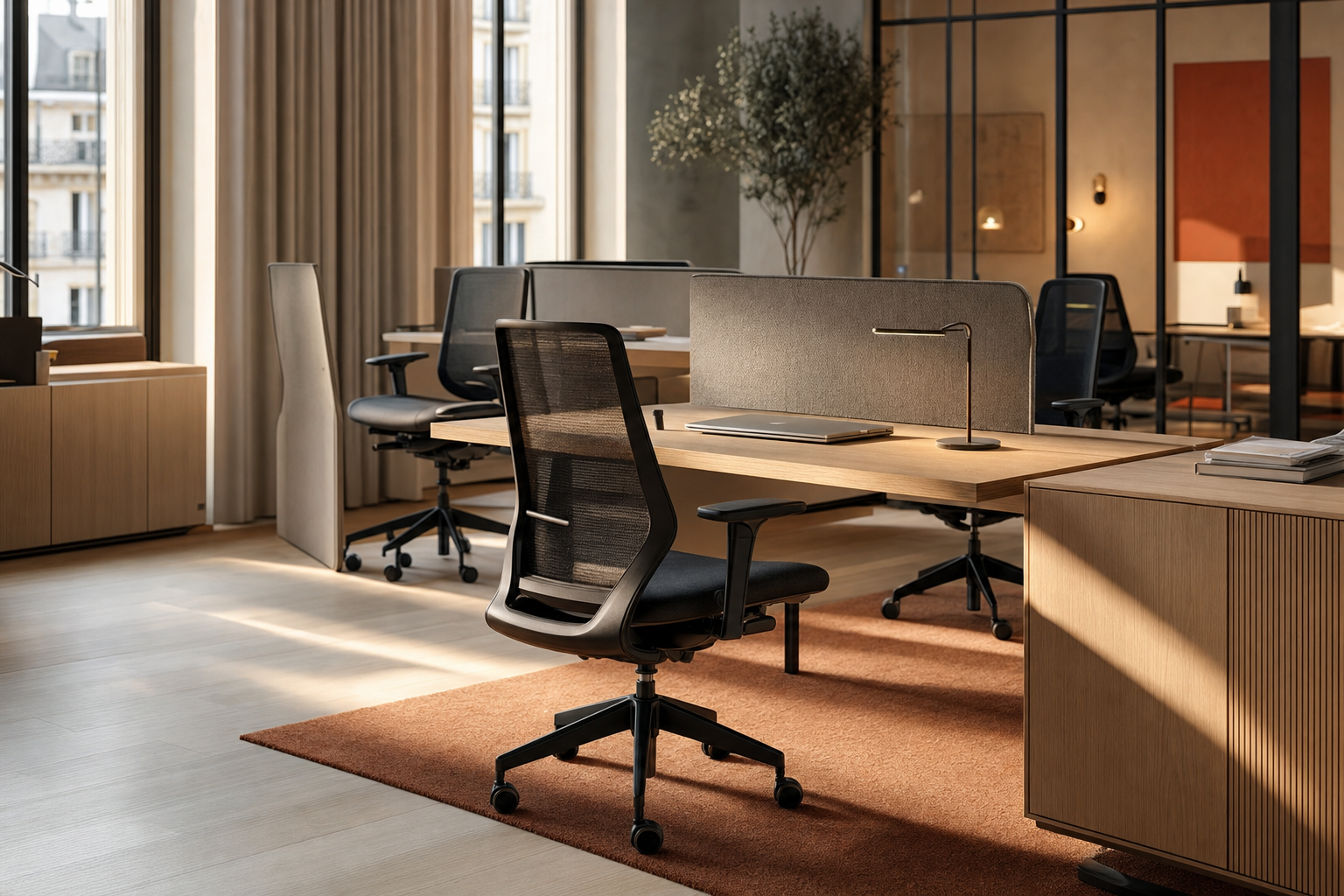
A 50-person startup can like a chair spec on paper and still miss the core problem. The order looks fine until procurement adds delivery, the CFO pushes back on a large upfront spend, and onboarding stalls because new hires have no proper seating. In the UK, that's not just a comfort issue, because DSE rules require workstation risks to be assessed and reduced, and HSE guidance says a DSE workstation should include a chair that's stable, adjustable, and offers suitable lumbar support. For buyers comparing the best ergonomic office chairs, the smarter question is not only which chair feels good, but which procurement model keeps cash flow intact, fits the body, and still makes sense over years of use.
European teams often get trapped by the same shortlist. They compare premium chairs as if the choice is a one-time purchase from the usual overseas brands, even though the UK market already rewards more flexible, circular ways to buy. Consumer-style roundups are useful on fit and features, but that lens misses the bigger decision, which is total cost of ownership, not just a product headline.
| Decision point | What matters most |
|---|---|
| Fit and posture | Adjustable seat height, lumbar support, armrest range |
| Compliance | DSE and HSG57 suitability, not just comfort |
| Budget | Upfront CAPEX versus predictable OPEX |
| Lifecycle | Repair, recovery, redistribution, replacement timing |
| Team reality | One body size, many body sizes, hybrid use patterns |
Table of Contents
- Understanding the True Cost Behind Choosing the Best Ergonomic Office Chairs
- What Makes a Chair Ergonomic Under UK Rules
- Two Fit Philosophies Compared Side by Side
- Cost Per Year of Use Across Buy, Leaseback and Subscription
- When Even the Best Chair Is Not the Whole Answer
- How Enky's Circular Approach Changes the Procurement Equation
- Common Questions Buyers Ask Before They Commit
Understanding the True Cost Behind Choosing the Best Ergonomic Office Chairs
A boutique hotel operator fitting out a new back-office suite, or a startup ordering desks for an entire floor, usually hits the same point at the same time, the chair budget grows faster than the plan. The answer is not to buy the cheapest ergonomic desk chair and hope it lasts. The answer is to choose a procurement model that matches the chair's real service life, because well-made ergonomic seating typically stays in service for 7 to 15 years with proper care.
Procurement logic matters as much as recline
A chair that costs less on day one can end up costing more if it fails early, gets replaced repeatedly, or never fits the person using it. UK workplace ergonomics also has a hard cost attached: the HSE estimates that 511,000 workers in Great Britain were suffering from a work-related musculoskeletal disorder in 2024/25, with over seven million working days lost to those conditions. That makes chair selection a workplace decision, not a decorative one.
Practical rule: the best ergonomic office chairs are the ones the business can keep in service, maintain, and recover at end of life without wasting cash or embodied carbon.
A standard roundup ranks adjustability and comfort, then stops. A stronger buying framework asks whether the chair should be bought outright, accessed through an office chair subscription, or financed through a circular model that protects residual value. Consumer buyer guides are useful on fit, but they still underplay what happens after purchase.
A startup with fast hiring may not want a five-figure CAPEX hit. A hotel may not want assets that are hard to refresh in three years. The right chair is only half the answer. The procurement route decides whether the decision still makes sense after year one, and whether the capital stays free to work elsewhere in the business.
What Makes a Chair Ergonomic Under UK Rules
A chair only passes muster in a UK workplace if it fits the person using it. Under the Display Screen Equipment regulations, employers must assess workstation risks and reduce them, and HSE guidance says the chair should be stable, adjustable, and offer suitable lumbar support. The practical test is straightforward, the user should be able to sit with feet flat on the floor, thighs roughly horizontal, and the lower back supported, as set out in HSE's HSG57 guidance on seating at work.
The checklist that matters
A chair earns its place only when it adapts to the worker, not the other way round.
- Seat height: should allow feet flat on the floor, with no dangling legs or compressed thighs.
- Lumbar support: must reach the lower back, not just the middle of the spine.
- Stable base: the chair should feel planted, not twitchy.
- Armrests: need to align with desk height so shoulders can relax.
- Seat depth: should support most of the thigh without pressing into the back of the knees.
- Posture change: the chair should allow movement and recline, not lock the user into a rigid 90-degree pose.
The European standard for office work chairs, BS EN 1335, gives buyers a concrete benchmark by setting dimensional requirements for seat height ranges and adjustability by chair type. That matters because "ergonomic" without dimensions is just marketing, and a supplier should be able to state which type classification a chair meets.

HSE's broader DSE guidance also recommends a seat pan deep enough to support most of the thigh, armrests aligned with the desk, and a tilt that supports neutral sitting. That is the baseline. Any chair that fails these mechanics is not a serious contender, no matter how premium the upholstery looks. For buyers who want to treat seating as a circular procurement decision, the fit test should sit alongside whether the chair can be kept in service, leased, or recovered at end of life through a model such as the Vital Pro ergonomic chair.
Two Fit Philosophies Compared Side by Side
The market often pretends all premium task chairs are basically the same, then defaults to a small set of familiar names. That's lazy. The more useful split is between two fit philosophies: full manual tuning, where every dimension is dialled in by the user, and weight-adaptive support, where the mechanism self-adjusts and asks less of the sitter.
Side by side comparison
| Feature | Full manual tuning | Weight-adaptive support |
|---|---|---|
| Adjustability style | Every dimension set by the user | Mechanism responds to body weight and movement |
| Fit philosophy | Specialist, configurable fit | Simpler self-adjusting support |
| Best use case | Teams needing precise setup, one chair per person | Shared desks and long sessions with low-touch adjustment |
| Main trade-off | More knobs, more setup, more training | Less manual tailoring for outlier body types |
For buyers comparing an ergonomic chair for back pain, the manual-tuning approach can be a better match when the workforce varies a lot. The self-adjusting approach is cleaner when the team wants less fiddling and more immediate sit-down comfort, and it suits hot-desking where no single user owns the setup. Neither is automatically better.
European brands matter here because the conversation is not limited to the overseas names that dominate consumer roundups. Task seating from Pedrali or Actiu sits in the same premium category while using modular, repairable construction rather than disposable thinking. Where certified materials are specified, frames can align with FSC/PEFC expectations and textiles can be selected for OEKO-TEX relevance, which is how design quality and procurement discipline should meet. The practical proof is in real fit-outs: WorkPad's London office runs 98 workstations among its 347 pieces on a mix of lease and subscription, task seating included.
The point is not to buy the most adjustable chair on the market. The point is to buy the one whose adjustability matches the body and the job.
Cost Per Year of Use Across Buy, Leaseback and Subscription
A premium chair should be treated like an asset, not a one-off indulgence. Good ergonomic chairs usually sit in the £500 to over £1,500 range, and a well-cared-for chair can stay in service for years. That is why sticker price alone is a weak procurement test. A chair that lasts, can be repaired, and still has residual value is the one that protects budget over time.
A simple way to think about the maths
A £1,200 chair lasting 10 years works out to £120 per year. A £600 chair needing replacement after 5 years also works out to £120 per year. The annual cost is the cleaner measure, because it separates real value from a low entry price.
| Model | Financial shape | What it suits |
|---|---|---|
| Upfront buy | CAPEX heavy, ownership immediate | Stable teams with long tenure |
| Leaseback | Releases cash from existing furniture, up to 90% of its value | Businesses with usable assets and capital pressure |
| Subscription | Predictable OPEX, low entry cost | Fast-scaling teams, hybrid offices, hospitality refreshes |
For buyers considering a circular route, Enky's leaseback model matters because it turns existing furniture into working capital without forcing a full replacement cycle. That is a stronger move than writing off serviceable chairs and buying new ones just to refresh a floor plan. For a startup with volatile headcount, subscription makes more sense than tying up cash in chairs that may need to be moved, returned, or replaced later, and the flexibility is real in practice: at RP France's Poitiers office, the subscription model let the team swap chairs mid-contract as needs became clearer, without restarting procurement. For a long-tenure office, circular purchase can be the cleaner option because ownership still comes with end-of-life recovery built in.
The financial test is blunt. If the chair stays in service, remains repairable, and keeps some residual value, it earns its place. If it does none of those things, the apparent bargain becomes deferred waste, and the cost lands later in storage, replacement, and disposal.
When Even the Best Chair Is Not the Whole Answer
The chair is only one part of the workstation. A good seat solves only the part of the problem that sits under the body. Fit matters more than branding when body size varies, so seat depth, armrest range, and lumbar placement deserve more attention than a glossy "ergonomic" label.
Fit changes the verdict
A smaller user may need a shallower seat depth and closer lumbar support. A taller user may need a broader backrest, more seat travel, and a wider armrest range. Buyers who ignore that end up with a room full of expensive chairs that only half the team uses correctly.
Hybrid work changes the answer too. A chair used three days a week at home does not need to solve the same problem as a shared desk in a hot-desking office, a reception suite, or a boutique hotel back office. In some setups, a footrest, a sit-stand desk, or active seating does more for long-term comfort than another expensive chair.
A Muuto chair in a design-led studio, for example, may suit short task bursts and visual coherence, while a more adjustable task chair makes sense for a shared desk used all day. The chair sits inside a system. It does not carry the full burden on its own.
The sharper buying question is direct. What combination of chair, desk height, and movement support fits this team's bodies and work pattern? Many mainstream roundups stop too soon and miss the procurement reality.
A circular procurement lens is more useful. A chair should be specified, used, recovered, and put back into circulation where possible, which is why circular purchase belongs in the buying brief, not just the sustainability appendix.

How Enky's Circular Approach Changes the Procurement Equation
A 50-person startup in London or Paris does not need a chair vendor that only sells boxes. It needs a fit-out partner that can specify, deliver, maintain, recover, and re-use furniture across its lifecycle. That is where Enky's model matters, because it combines a curated European catalogue with subscription, circular purchase, and leaseback, so ergonomic seating can be funded as OPEX, bought with end-of-life recovery included, or monetised from existing assets.
What the model changes
The catalogue matters because the furniture has to work in real projects, not in a brochure. Brands such as Pedrali, Alki, Lapalma, Softline, Muuto, and Framery fit that standard when they're selected for durability, repairability, and workplace use. Material choices built around FSC/PEFC and OEKO-TEX support the procurement logic as well, because the furniture is designed to stay in use rather than become write-off furniture.
For a boutique hotel refreshing 60 guest-room desks, the difference is immediate. Subscription can keep cash outlay predictable. Circular purchase can protect residual value. Leaseback can free up capital from furniture already on site. For a startup, that means the office can open on time without forcing the finance team into a single large CAPEX decision.
Enky also works as a project partner, not just a seller. That matters when chairs need to sit inside a broader workspace plan, not arrive as isolated units. The commercial logic and the design logic meet in the same procurement flow, which is exactly where office furniture should live.
Enky's circular economy approach to furniture explains the broader framework behind that model, but the short version is simple. Buy the chair for performance, then choose the access model that matches cash flow and lifecycle.
Common Questions Buyers Ask Before They Commit
Does subscription make sense over five years?
It can, especially for fast-scaling teams or hospitality spaces that need flexibility more than ownership. The comparison is against the chair's service life and the cost of reconfiguration, not just the monthly payment.
Do European brands like Pedrali or Actiu meet serious ergonomic standards?
They can, if the specification is checked against DSE, HSG57, and the right chair dimensions rather than brand reputation alone. A premium label doesn't replace seat height, lumbar support, or fit, and a serious supplier can state which EN 1335 type a chair meets.
What happens at end of life under circular purchase?
Recovery is built into the model, so the chair does not just get written off and binned. It stays in a managed loop of maintenance, recovery, and next-life redistribution.
How should mixed body sizes be handled?
Teams should specify by body range, not by style preference. Seat depth, armrest range, seat-height travel, and lumbar placement are the dimensions that decide whether shorter and taller users can both sit correctly, and a varied workforce usually needs a chair with a wider adjustment envelope rather than a different chair per person.
For teams ready to move from comparison to specification, Enky can help shape a workspace or hospitality fit-out around ergonomic seating, circular access, and repairable European furniture. Visit Enky to explore the catalogue and request a quote that matches the way the space will be used.
European teams often get trapped by the same shortlist. They compare premium chairs as if a choice is a one-time purchase from the usual US brands, even though the UK market already rewards more flexible, circular ways to buy. For a useful outside reference point on consumer-style roundup thinking, some buyers still start with find ergonomic chairs in Orlando, but that lens misses the bigger decision, which is total cost of ownership, not just a product headline.
| Decision point | What matters most |
|---|---|
| Fit and posture | Adjustable seat height, lumbar support, armrest range |
| Compliance | DSE and HSG57 suitability, not just comfort |
| Budget | Upfront CAPEX versus predictable OPEX |
| Lifecycle | Repair, recovery, redistribution, replacement timing |
| Team reality | One body size, many body sizes, hybrid use patterns |
Table of Contents
- Understanding the True Cost Behind Choosing the Best Ergonomic Office Chairs
- What Makes a Chair Ergonomic Under UK Rules
- Comparing Two Premium European Ergonomic Chairs Side by Side
- Cost Per Year of Use Across Buy, Leaseback and Subscription
- When Even the Best Chair Is Not the Whole Answer
- How Enky's Circular Approach Changes the Procurement Equation
- Common Questions Buyers Ask Before They Commit
Understanding the True Cost Behind Choosing the Best Ergonomic Office Chairs
A boutique hotel operator fitting out a new back-office suite, or a startup ordering desks for an entire floor, usually hits the same point at the same time, the chair budget grows faster than the plan. The answer is not to buy the cheapest ergonomic desk chair and hope it lasts. The answer is to choose a procurement model that matches the chair's real service life, because UK guidance for well-made ergonomic seating points buyers toward a 7 to 15 year lifespan with proper care.
Procurement logic matters as much as recline
A chair that costs less on day one can end up costing more if it fails early, gets replaced repeatedly, or never fits the person using it. UK workplace ergonomics also has a hard cost attached, because the HSE reported 7.8 million lost working days from work-related musculoskeletal disorders in 2023/24, and estimated 473,000 workers were suffering from those disorders in the same period HSE. That makes chair selection a workplace decision, not a decorative one.
Practical rule: the best ergonomic office chairs are the ones the business can keep in service, maintain, and recover at end of life without wasting cash or embodied carbon.
A standard roundup ranks adjustability and comfort, then stops. A stronger buying framework asks whether the chair should be bought outright, accessed through an office chair subscription, or financed through a circular model that protects residual value. For buyers who want a broader comparison mindset, the buyer guides behind best office chairs ergonomic are useful on fit, but they still underplay what happens after purchase.
A startup with fast hiring may not want a five-figure CAPEX hit. A hotel may not want assets that are hard to refresh in three years. The right chair is only half the answer. The procurement route decides whether the decision still makes sense after year one, and whether a buyer can find ergonomic chairs in Orlando without locking capital into furniture that will be hard to recover later.
What Makes a Chair Ergonomic Under UK Rules
A chair only passes muster in a UK workplace if it fits the person using it. Under the Display Screen Equipment regulations, employers must assess workstation risks and reduce them, and HSE guidance says the chair should be stable, adjustable, and offer suitable lumbar support. The practical test is straightforward, the user should be able to sit with feet flat on the floor, thighs roughly horizontal, and the lower back supported HSE HSG57.
The checklist that matters
A chair earns its place only when it adapts to the worker, not the other way round.
- Seat height: should allow feet flat on the floor, with no dangling legs or compressed thighs.
- Lumbar support: must reach the lower back, not just the middle of the spine.
- Stable base: the chair should feel planted, not twitchy.
- Armrests: need to align with desk height so shoulders can relax.
- Seat depth: should support most of the thigh without pressing into the back of the knees.
- Posture change: the chair should allow movement and recline, not lock the user into a rigid 90-degree pose.
The UK standard BS EN 1335 gives buyers a concrete benchmark. One chair type specifies a minimum seat height of 400 mm and a seat-height adjustment range of at least 120 mm, while another specifies a minimum seat height of 420 mm and a 100 mm adjustment range BS EN 1335 summary. That matters because “ergonomic” without dimensions is just marketing.
The HSE's broader DSE guidance also recommends a seat pan deep enough to support most of the thigh, armrests aligned with the desk, and a tilt that supports neutral sitting DPT NHS guidance. That is the baseline. Any chair that fails these mechanics is not a serious contender, no matter how premium the upholstery looks. For buyers who want to treat seating as a circular procurement decision, the fit test should sit alongside whether the chair can be kept in service, leased, or recovered at end of life through a model such as Enky's Vital Pro ergonomic chair.
Comparing Two Premium European Ergonomic Chairs Side by Side
The market often pretends all premium task chairs are basically the same, then defaults to the Herman Miller and Steelcase duopoly. That's lazy. UK retailer guidance already shows a useful split, the Ergochair Adapt Series sits at £830 to £1,369 with very high adjustability, while the Humanscale Freedom Task Chair starts at £999+ and leans on weight-adaptive recline with high adjustability Remtek Workplace.
Side by side comparison
| Feature | Ergochair Adapt Series | Humanscale Freedom Task Chair |
|---|---|---|
| Adjustability style | Full manual tuning | Weight-adaptive recline |
| Fit philosophy | Specialist, configurable fit | Simpler self-adjusting support |
| Price band | £830 to £1,369 | £999+ |
| Best use case | Teams needing precise setup | Long sessions with low-touch adjustment |
| Main trade-off | More knobs, more setup | Less manual tailoring |
For buyers comparing an ergonomic chair for back pain, the manual-tuning approach can be a better match when the workforce varies a lot. The self-adjusting approach is cleaner when the team wants less fiddling and more immediate sit-down comfort. Neither is automatically better.
European alternatives matter here because the conversation is not limited to US brands. A chair such as a Pedrali or Lapalma task solution can sit in the same premium category while using modular, repairable construction rather than disposable thinking. Where certified materials are specified, frames can align with FSC/PEFC expectations and textiles can be selected for OEKO-TEX relevance, which is how design quality and procurement discipline should meet.
For a product-level starting point inside a European catalogue, the Vital Pro ergonomic chair shows how a fitted office chair can sit inside a broader workspace specification instead of being treated as an isolated consumer purchase.
The point is not to buy the most adjustable chair on the market. The point is to buy the one whose adjustability matches the body and the job.
Cost Per Year of Use Across Buy, Leaseback and Subscription
A premium chair should be treated like an asset, not a one-off indulgence. Good ergonomic chairs usually sit in the £500 to over £1,500 range, and a well-cared-for chair can stay in service for years. That is why sticker price alone is a weak procurement test. A chair that lasts, can be repaired, and still has residual value is the one that protects budget over time.
A simple way to think about the maths
A £1,200 chair lasting 10 years works out to £120 per year. A £600 chair needing replacement after 5 years also works out to £120 per year. The annual cost is the cleaner measure, because it separates real value from a low entry price.
| Model | Financial shape | What it suits |
|---|---|---|
| Upfront buy | CAPEX heavy, ownership immediate | Stable teams with long tenure |
| Leaseback | Releases cash from existing furniture | Businesses with usable assets and capital pressure |
| Subscription | Predictable OPEX, low entry cost | Fast-scaling teams, hybrid offices, hospitality refreshes |
For buyers considering a circular route, leaseback furniture matters because it turns existing furniture into working capital without forcing a full replacement cycle. That is a stronger move than writing off serviceable chairs and buying new ones just to refresh a floor plan. For a startup with volatile headcount, subscription makes more sense than tying up cash in chairs that may need to be moved, returned, or replaced later. For a long-tenure office, circular purchase can be the cleaner option because ownership still comes with end-of-life recovery built in.
The financial test is blunt. If the chair stays in service, remains repairable, and keeps some residual value, it earns its place. If it does none of those things, the apparent bargain becomes deferred waste, and the cost lands later in storage, replacement, and disposal.
When Even the Best Chair Is Not the Whole Answer
The chair is only one part of the workstation. A good seat solves only the part of the problem that sits under the body. UK buyer guidance already makes the point that fit matters more than branding when body size varies, so seat depth, armrest range, and lumbar placement deserve more attention than a glossy “ergonomic” label.
Fit changes the verdict
A smaller user may need a shallower seat depth and closer lumbar support. A taller user may need a broader backrest, more seat travel, and a wider armrest range. Buyers who ignore that end up with a room full of expensive chairs that only half the team uses correctly.
Hybrid work changes the answer too. A chair used three days a week at home does not need to solve the same problem as a shared desk in a hot-desking office, a reception suite, or a boutique hotel back office. In some setups, a footrest, a sit-stand desk, or active seating does more for long-term comfort than another expensive chair.
A Muuto chair in a design-led studio, for example, may suit short task bursts and visual coherence, while a more adjustable task chair makes sense for a shared desk used all day. The chair sits inside a system. It does not carry the full burden on its own.
The sharper buying question is direct. What combination of chair, desk height, and movement support fits this team's bodies and work pattern? Many mainstream roundups stop too soon and miss the procurement reality.
A circular procurement lens is more useful. A chair should be specified, used, recovered, and put back into circulation where possible, which is why circular economy furniture procurement belongs in the buying brief, not just the sustainability appendix.
How Enky's Circular Approach Changes the Procurement Equation
A 50-person startup in London or Paris does not need a chair vendor that only sells boxes. It needs a fit-out partner that can specify, deliver, maintain, recover, and re-use furniture across its lifecycle. That is where Enky's model matters, because it combines a curated European catalogue with subscription, circular purchase, and leaseback, so ergonomic seating can be funded as OPEX, bought with end-of-life recovery included, or monetised from existing assets.
What the model changes
The catalogue matters because the furniture has to work in real projects, not in a brochure. Brands such as Pedrali, Alki, Lapalma, Softline, Muuto, and Framery fit that standard when they're selected for durability, repairability, and workplace use. Material choices built around FSC/PEFC and OEKO-TEX support the procurement logic as well, because the furniture is designed to stay in use rather than become write-off furniture.
For a boutique hotel refreshing 60 guest-room desks, the difference is immediate. Subscription can keep cash outlay predictable. Circular purchase can protect residual value. Leaseback can free up capital from furniture already on site. For a startup, that means the office can open on time without forcing the finance team into a single large CAPEX decision.
Enky also works as a project partner, not just a seller. That matters when chairs need to sit inside a broader workspace plan, not arrive as isolated units. The commercial logic and the design logic meet in the same procurement flow, which is exactly where office furniture should live.
Enky's circular economy approach to furniture explains the broader framework behind that model, but the short version is simple. Buy the chair for performance, then choose the access model that matches cash flow and lifecycle.
Common Questions Buyers Ask Before They Commit
Does subscription make sense over five years? It can, especially for fast-scaling teams or hospitality spaces that need flexibility more than ownership. The comparison is against the chair's service life and the cost of reconfiguration, not just the monthly payment.
Do European brands like Pedrali or Alki meet serious ergonomic standards? They can, if the specification is checked against DSE, HSG57, and the right chair dimensions rather than brand reputation alone. A premium label doesn't replace seat height, lumbar support, or fit.
What happens at end of life under circular purchase? Recovery is built into the model, so the chair does not just get written off and binned. It stays in a managed loop of maintenance, recovery, and next-life redistribution.
How should mixed body sizes be handled? Teams should specify by body range, not by style preference. For taller users, find a tall person's office chair can be a helpful body-fit reference point, but UK workplace selection still has to come back to seat depth, armrest range, and lumbar placement.
For teams ready to move from comparison to specification, Enky can help shape a workspace or hospitality fit-out around ergonomic seating, circular access, and repairable European furniture. Visit Enky to explore the catalogue and request a quote that matches the way the space will be used.


