


Cash is often locked in plain sight. A hotel group fits out a lounge, a startup furnishes a 50-person office, or a co-living operator opens a new site. The furniture is in place, the space is working, and the budget is already spent. Months later, the same business may need liquidity for hiring, a second location, or a landlord deposit. Traditional financing can be slow or restrictive. Selling the furniture outright would disrupt operations.
That's where leaseback furniture becomes useful. In a sale and leaseback furniture structure, a business sells existing furniture assets, receives immediate capital, and keeps using the same desks, chairs, tables, or lounge seating under a fixed monthly lease. Nothing needs to move. The space stays operational. The financing structure changes, and so does cash-flow flexibility.
For operators in hospitality, workspace, and residential environments, this only works well when the provider understands furniture as a real asset class. Brand, condition, repairability, material quality, and second-life demand all matter. Premium European pieces from makers such as Pedrali, Muuto, Softline, Alki, Framery, and Lapalma don't behave like generic commodity inventory. Their residual value can be assessed, protected, and reused inside a circular furniture model.
Table of Contents
- How Leaseback Furniture Unlocks Working Capital
- Valuing Your Furniture for a Leaseback Agreement
- The Accounting and Balance Sheet Impact
- The Circular Advantage of Furniture Leaseback
- Choosing Your Furniture Access Model
- Key Questions for a Leaseback Provider
- FAQ
How Leaseback Furniture Unlocks Working Capital
A business can turn furniture from a static asset into working capital without changing the room. That's the core mechanics of leaseback furniture.
A sale and leaseback furniture arrangement is straightforward. The operator sells existing furniture to a specialist partner, receives a lump-sum payment, and leases the same pieces back for a fixed monthly fee. The chairs stay in the restaurant. The desks stay in the office. The guest lounge keeps operating. What changes is the cash position and the way the asset is financed. Enky's leaseback model releases up to 90% of the furniture's value while the pieces stay in place.

Why operators use it
The appeal isn't abstract. As an illustration, consider a boutique hotel group that bought its lounge and restaurant furniture outright a few years ago. By selling that installed package to a specialist provider and leasing it back under a fixed monthly fee, the group converts a sunk fit-out cost into immediate capital and a predictable operating expense, and redeploys the released cash into a second property opening without taking on additional bank debt. Nothing in the guest experience changes. The financing behind it does.
That kind of structure matters because many businesses don't have a revenue problem. They have a timing problem. Cash is tied up in fit-out decisions that were sensible when made, but less useful once growth opportunities appear.
Practical rule: Leaseback works best when the furniture is already installed, operationally essential, and still strong enough to retain second-life value.
What the transaction changes
The financial logic usually comes down to three shifts:
- Immediate liquidity: existing furniture is converted into usable cash.
- Operational continuity: the business keeps using the same furniture with no disruption.
- Predictable expense profile: a one-time sunk cost becomes a monthly payment schedule.
For companies comparing options, leaseback furniture models are most relevant when quality assets are already on site and the goal is to release capital from office furniture or hospitality interiors without stripping the space back to zero.
Valuing Your Furniture for a Leaseback Agreement
Not all furniture qualifies equally for a leaseback. A financier that treats furniture as a generic fit-out line item will usually miss the factors that drive residual value.
Premium brand provenance is one of the first filters. A Pedrali dining chair specified for a boutique hotel, or a Muuto meeting table used in a design-led office, carries a clearer resale and redeployment logic than an unbranded imported alternative. The same is true for modular lounge systems, ergonomic task seating, and acoustic products that can be reconfigured instead of discarded.
What shapes buyback value
Buyback valuation usually rests on a mix of commercial and physical criteria:
- Brand and provenance: premium European brands tend to hold value better because specifiers and second-life buyers recognise them.
- Material integrity: FSC or PEFC-certified wood, strong steel frames, quality upholstery, and OEKO-TEX aligned textiles, where applicable, are easier to assess and restore.
- Condition today: surface wear, structural integrity, upholstery state, and missing components all affect the calculation.
- Circular design logic: modularity, replaceable parts, and ease of disassembly matter because they reduce refurbishment friction.
- Use context: furniture used in a lightly occupied meeting room ages differently from furniture used in a high-turnover restaurant.
A traditional lender often focuses on paperwork. A furniture specialist also looks at what happens after the first life of the asset. Can the shell be refinished? Can the upholstery be replaced? Can the table top be restored without rebuilding the base? Does the product still suit current hospitality or workplace specifications?
The strongest leaseback portfolios are usually built from furniture that was chosen well in the first place, not furniture that was simply bought cheaply.
Why premium design changes the equation
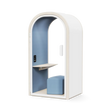
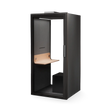
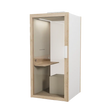
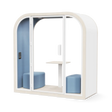
Furniture financing for businesses thus becomes more nuanced than equipment finance. A modular sofa from Softline, a stackable dining chair from Pedrali, or a Framery acoustic booth doesn't just have use value in its first installation. It may also have documented dimensions, replaceable components, and continuing demand in another project type.
That's why premium furniture can support stronger leaseback logic than many buyers expect. The value isn't only in the object as purchased. It's in the asset's ability to stay useful, repairable, and desirable over more than one occupancy cycle.
The Accounting and Balance Sheet Impact
For many finance directors, the primary appeal of leaseback furniture isn't the furniture itself. It's what the transaction does to cash-flow planning, capital discipline, and financing structure.

A purchased fit-out sits as capital expenditure and then depreciates over time. A leaseback recasts that position: the operator receives cash for the asset sale, then manages the ongoing use of the furniture as a lease. The honest way to describe the benefit is liquidity and cash-flow timing, not vanishing obligations. It's useful when a business wants to preserve borrowing capacity, avoid tying up fresh capital in interiors, or fund expansion without adding bank debt.
Why contract structure matters
For companies reporting under IFRS, sale and leaseback transactions are governed by IFRS 16, and the mechanics matter. The transfer only counts as a sale if the buyer genuinely obtains control of the asset under IFRS 15; a substantive repurchase option held by the seller generally prevents that, in which case the whole arrangement is treated as a financing rather than a sale. Where the sale does qualify, the seller-lessee recognises a right-of-use asset for the use it retains, along with a lease liability for the leaseback payments, and recognises only the portion of any gain that relates to the rights actually transferred.
That point is often missed by non-specialists. A leaseback under IFRS 16 is not an off-balance-sheet trick, and any provider selling it as one should be treated with caution. Smaller companies reporting under local GAAP may see different treatment again, which is exactly why the structure should be reviewed with the company's accountant or auditor before signing.
What tends to work in practice
A workable structure usually avoids overreaching. Terms need to reflect useful life, fair value, and real commercial optionality at the end of the agreement. Buyout options priced far below market value, or terms that leave effective control with the original owner, tend to undermine both the accounting analysis and the commercial logic.
That's why furniture-specific expertise matters. Desks, tables, lounge seating, and acoustic booths don't all age at the same rate, and they shouldn't all be contracted the same way. An operator trying to release capital from office furniture needs a structure calibrated to actual product life, not a copied template from vehicle leasing or plant finance.
The best leaseback documentation doesn't only close the transaction. It preserves the reason the client entered it.
The Circular Advantage of Furniture Leaseback
A standard sale and leaseback treats the asset as a finance problem. A circular furniture model treats it as a lifecycle problem as well.
That distinction matters because commercial interiors generate waste long before the furniture is structurally finished. WRAP, the UK's circular-economy body, estimates that the UK discards around 1.2 million desks and 1.8 million chairs every year, with only about 17% recycled. Every reuse cycle a piece survives spreads its original manufacturing footprint across another tenancy instead of triggering new production and new waste.

What changes in a circular model
When furniture enters a circular leaseback structure, end-of-life stops being an afterthought. The provider has a direct incentive to maintain condition, recover the asset, and prepare it for another use phase.
That changes behaviour at specification stage:
- Modular products are favoured because they can be repaired or reconfigured.
- Certified materials matter because traceability and quality support longer-term recovery.
- Maintenance becomes part of value protection rather than a reactive cost.
- Redistribution is planned early instead of improvised during a refit.
A boutique hotel lounge fitted with durable seating and tables isn't only furnishing one address. It may also be feeding a future co-living, workspace, or serviced-apartment project if the pieces are designed for that second life.
Why this matters for ESG and procurement
Procurement teams increasingly need evidence that a furniture decision supports both operational and sustainability objectives. Leaseback helps financially, but the circular logic is what makes it defensible in ESG terms.
For businesses that still want ownership from day one, circular purchase models can address the same end-of-life problem differently. The key principle is the same. Furniture should be specified as an asset with recovery value, not consumed as a disposable fit-out layer.
Choosing Your Furniture Access Model
The right model depends less on taste than on timing. A founder opening a first office, a hotel operator refinancing growth, and a residential developer furnishing common areas may all want the same design language, but they don't need the same financial structure.
Where Leaseback Fits Best
Leaseback is for businesses that already own suitable furniture and want liquidity without operational disruption. It's strongest when the existing assets are premium, durable, and still aligned with the space.
Subscription or FaaS is better when flexibility is the priority. A scaling team may not want to commit to ownership while headcount, layout, and acoustic needs are still moving. In that case, furniture subscription is often a cleaner answer than buying too early.
Circular purchase fits buyers who want ownership but don't want to carry the full waste burden later. It preserves CAPEX logic while building in end-of-life recovery.

A useful illustration is Ethimo's Costes Rectangular XL Dining Table. The Costes collection includes modular outdoor pieces such as a lounge chair, sofa, low and dining tables, and a sun lounger. It is made from sturdy FSC-certified teak with natural or pickled finishes, with sleek lines, ergonomic details, and weather-resistant cushions. That kind of specification suits operators who value durability, material traceability, and future redeployment potential.
Enky Furniture Access Models Compared
| Consideration | Leaseback | Subscription (FaaS) | Circular Purchase |
|---|---|---|---|
| Starting point | Existing furniture already owned | New furniture needed with flexibility | New furniture needed with ownership |
| Cash profile | Releases capital from installed assets | Spreads cost into monthly payments | Higher upfront outlay |
| Ownership during use | Provider owns asset during lease term | Provider owns unless purchase option is exercised | Client owns from day one |
| Flexibility | Medium. Depends on contract structure | High. Suited to changing teams and layouts | Lower during use, higher long-term control |
| End-of-life handling | Can be built into recovery and redistribution | Usually integrated into the model | Recovery can be planned from the start |
| Best fit | Hotels, offices, co-living schemes with quality existing assets | Startups, agile offices, temporary or fast-changing spaces | Developers and operators with stable long-term specifications |
| Financial intent | Unlock capital from office furniture or hospitality fit-out | Reduce upfront capital pressure; accounting treatment depends on contract term | Traditional asset ownership logic |
The practical decision is usually simple. If the furniture is already there and still good, leaseback deserves a serious look. If the space is being furnished from scratch and change is likely, subscription often makes more sense. If ownership is essential, circular purchase is the cleaner route.
Key Questions for a Leaseback Provider
Leaseback furniture sits in a niche and non-standardised segment. There is no formal industry classification for furniture leaseback in the way there is for larger asset categories, which makes due diligence on expertise, valuation method, and end-of-term options especially important.
How is buyback value determined?
The first question should be practical, not rhetorical. Which pieces qualify, and why?
A credible provider should explain how brand, condition, age, material quality, and refurbishment potential affect value. A stack of generic side chairs and a specified package of Pedrali dining chairs are not the same asset. Neither are bonded chipboard desks and modular FSC or PEFC-certified meeting tables designed for disassembly.
Ask to see the logic, not just the number.
Due diligence point: If a provider can't explain what happens to the furniture after recovery, that provider may be pricing risk rather than understanding the asset.
What happens at the end of the term?
End-of-term options shouldn't be vague. They should be written into the agreement from day one.
Common routes include:
- Extend the lease: useful when the furniture is still performing and the business wants continuity.
- Return the furniture: appropriate when the space is being redesigned or vacated.
- Purchase the items: viable when the operator wants to take ownership back at a pre-agreed residual value.
Terms in this category commonly run from around two to five years, with the residual value set out in advance and calibrated to product category and condition.
Which contract terms need the closest review?
Three areas deserve the most scrutiny:
-
Residual value language
The buyout option must be commercially clear. If it's priced far below market value, the transaction may not qualify as a sale in the first place. -
Maintenance and condition obligations
The contract should define acceptable wear, repair responsibility, and inspection standards. That protects both sides. -
Transfer and control provisions
If the documents leave too much practical control with the original owner, the transaction may not function as intended.
A good provider should also state whether maintenance, recovery, and redistribution are integrated or left to the client later. In furniture, that detail is central, not secondary.
FAQ
Is leaseback furniture only relevant for large companies?
No. It can suit a boutique hotel group, a growing office occupier, a co-working operator, or a residential scheme with quality installed assets. The threshold is usually asset suitability, not company size.
What kinds of furniture are easiest to place into a leaseback?
Desks, ergonomic chairs, dining chairs, meeting tables, modular lounge seating, shelving, and acoustic booths are usually easier to assess than highly bespoke built-ins. Products with known provenance, strong condition, and repairable construction tend to be more workable.
Can sale and leaseback furniture support a premium design strategy?
Yes. In many cases, premium design strengthens the leaseback case because recognised brands, durable materials, and modular construction support residual value. Pieces from brands such as Muuto, Pedrali, Softline, Alki, Framery, and Lapalma are easier to evaluate than anonymous commodity products.
Is furniture as a service better than leaseback?
Not automatically. Furniture as a service is usually better for new projects that need flexibility from the start. Leaseback is better when the furniture is already owned and the immediate goal is liquidity.
Does a circular furniture model reduce operational hassle?
It can. When maintenance, recovery, and next-life redistribution are built into the arrangement, teams don't have to solve disposal and replacement issues at the end of the fit-out cycle.
For operators assessing cash-flow, fit-out strategy, and lifecycle responsibility together, a specialist conversation is usually more useful than a generic financing quote. Enky works across workspace, hospitality, and residential environments with subscription, circular purchase, and leaseback models, plus a curated catalogue of European-made furniture designed for long-term use and recovery.


