


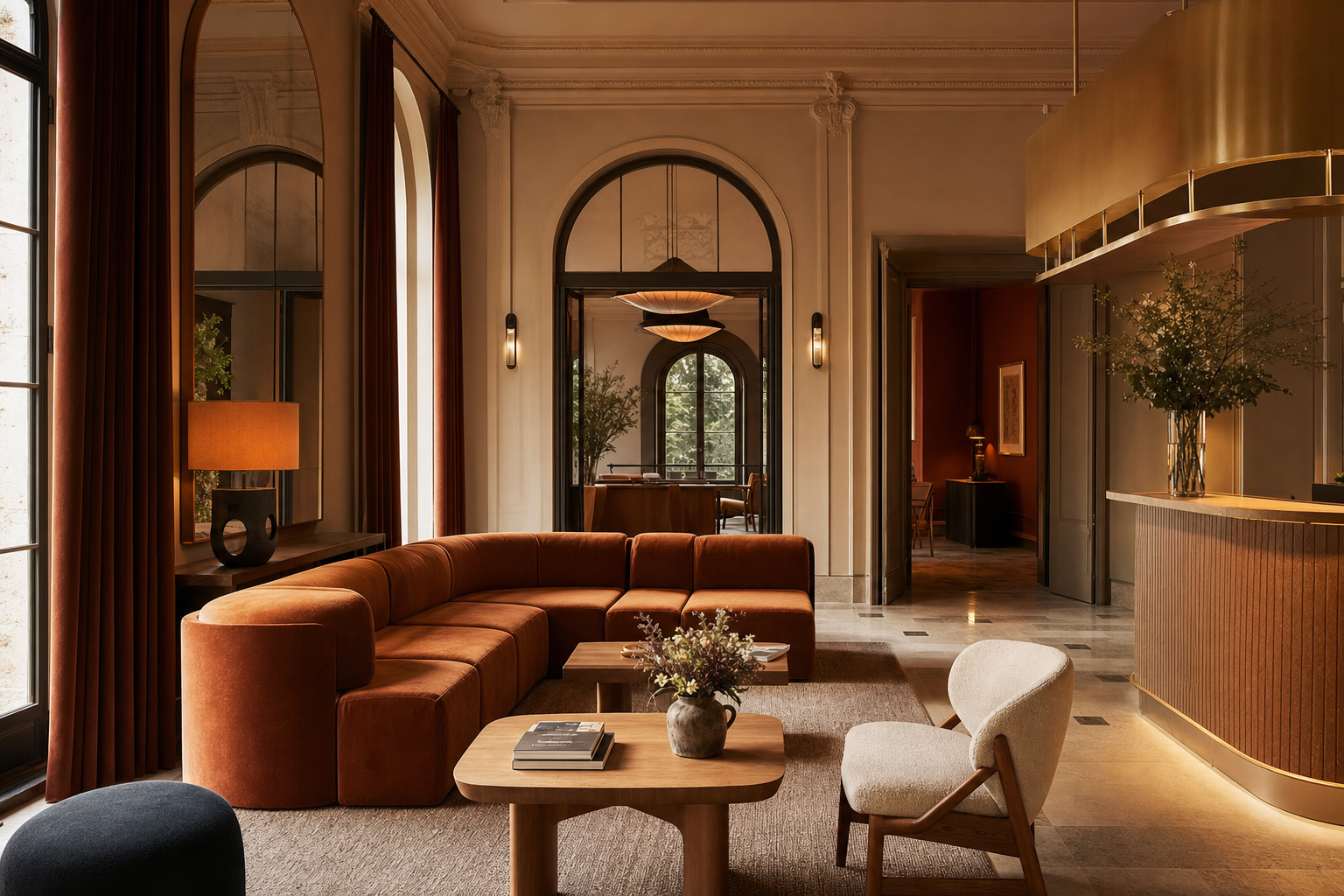
Domaine de Courtigis: The Furniture Behind the Retreat Estate in Sologne
Domaine de Courtigis is a 90-hectare former hunting estate in Sologne, about 1 hour 10 minutes from central Paris, built for small team retreats and offsites with 15 to 50 people. That matters because the challenge for a venue like this is not attracting groups, it's furnishing a place that has to work hard in short, intense bursts, then reset cleanly for the next stay.
A strategy team can book the estate, lock the agenda, and still depend on questions someone else already had to answer. What chairs support a full day of decision-making? Where do people take private calls? Which pieces make a retreat feel composed rather than improvised? Coverage of Domaine de Courtigis usually stops at the setting, but the setting is only half the job. The other half is the interior that lets a group think clearly, move easily, and reset between sessions, and at Courtigis that half was designed deliberately: the estate was furnished by Enky for its operator, Momoamo, using a hybrid of circular purchase and subscription across five renovated buildings.
Table of Contents
- Introduction
- What Makes Domaine de Courtigis a Retreat Destination
- The Retreat Furniture Problem Most Venues Miss
- Booking Domaine de Courtigis for Team Events
- Furniture Procurement Models Compared for Retreat Use
- How Courtigis Was Actually Furnished
- Planning a Retreat Property With the Right Furniture Strategy
- Frequently Asked Questions
Introduction
A leadership team arrives at a Sologne estate for a few days of work, dinners, and quiet moments between sessions. The venue may be right, and the agenda may be right, but the rooms still have to support focused discussion, private calls, and informal breaks without turning the stay into a compromise. That is where retreat properties succeed or fail, because the booking is only half of what makes the days productive.
Domaine de Courtigis is positioned for exactly that kind of small-group buyout. The venue sits on a 90-hectare estate near Paris, is designed for 15 to 50 people, and offers amenities that support both work and downtime, from courts and a pool to forest walks and a karaoke space. What venue descriptions rarely explain is what fills those spaces, and how it got there.
At Courtigis, that question has a concrete answer. Enky furnished the estate for its operator, Momoamo, treating the interior as something specified for intensive short-stay use, maintained in service, and structured so it can evolve with the concept. That is where FaaS, circular purchase, and leaseback change the equation for hospitality properties, and the estate is a working demonstration of the approach rather than a hypothetical.
What Makes Domaine de Courtigis a Retreat Destination
A retreat site has to do more than look generous on a brochure. Domaine de Courtigis sits in Loiret, in Sologne, about 1 hour 10 minutes from Paris, and it spans 90 hectares. That scale matters because retreat groups need space to separate work from daily noise, move between sessions without crowding, and keep a sense of privacy across the stay.
A property built for small-group occupancy
The venue is designed for the 15 to 50 people range, which puts it squarely in intimate buyout territory rather than conference-hall territory. For planners, that matters. A group at that size can use a whole estate without the friction that comes with shared traffic from other events, and French trade coverage of the project has highlighted exactly that group-hospitality positioning, with a strongly design-led atmosphere (Meet In's feature on Momoamo in Sologne).
Its amenity list supports that model. A heated pool, tennis and padel courts, a golf green, forest walks, an exercise room, pétanque, and karaoke or club space are not decorative extras. They shape how a work retreat unfolds once the formal sessions end, because the group needs places to recover, talk informally, and reset between blocks of work.
The retreat venues that work best keep those transitions simple.
For the operator, that changes the furniture brief. A room in a retreat estate does not need to behave like a banquet hall. It needs to support working sessions, informal conversations, and short private breaks while still feeling consistent with the architecture around it, and that usually means making deliberate choices about seating, tables, and lounge pieces rather than relying on generic event hire. Comfort and duration quickly turn a decorative choice into an operational one.

The Retreat Furniture Problem Most Venues Miss
A 40-person retreat can fail if the furniture is wrong. The estate may be beautiful, the bedrooms may be comfortable, and the schedule may be well written, but long working sessions expose bad seating fast. A dining chair that looks fine for a meal can become a liability after two hours of strategy work.
Why hotel furniture and event hire both fall short
Hotel furniture is usually optimised for turnover, not for sustained concentration. Event hire often swings too far in the other direction, with generic pieces that solve occupancy but not posture, acoustics, or layout. The result is a room that looks acceptable in photos and feels tiring in real use.
That trade-off is easy to miss because venue projects often start with the building, not the workflow. The plan covers whether the house sleeps enough people, but not whether the morning session needs meeting chairs, breakout seating, and a place for quiet calls. Once comfort and duration enter the brief, the furniture categories become practical rather than decorative, and the gap between a dining chair and a working chair stops being a styling detail.

The blind spot is that retreat use sits between office fit-out and event hire. It needs better ergonomics than a lounge setup, but it also needs the flexibility and light-touch logistics that a hospitality operation demands. Once that gap is visible, the furniture decision becomes part of the retreat concept, not a finishing touch, and Courtigis is a venue where it was treated exactly that way.
Booking Domaine de Courtigis for Team Events
The venue's operating model matters as much as its setting. Courtigis is run as a privatised domain for group stays rather than a standard hotel operation, which is the right lens for planning: the estate is booked as a whole, the group has the run of it, and the conversation with the operator matters more than aggregator listings.
What planners should check before they enquire
For team retreats, the practical booking questions are straightforward:
- Capacity fit: confirm the group sits inside the 15 to 50 person range.
- Use case fit: make sure the booking is for a full buyout, not a shared-event format.
- Operational fit: ask how the venue handles access, setup, and timing around a multi-day stay.
- Session fit: map the agenda to the rooms, plenary work, breakouts, calls, and downtime all have different furniture and layout needs.
The absence of public minimum spend detail is not unusual for private domains. It usually means the direct conversation matters more than generic enquiry forms, and that suits the format, because a privatised estate stay is really closer to a temporary executive residence with working sessions attached than to a wedding room block or a conference hotel.
A clean brief saves time on both sides, and it lets the operator match the group to the estate's rhythm rather than forcing a conference template onto a country house.
Furniture Procurement Models Compared for Retreat Use
There are three familiar ways to furnish a retreat property, and each one breaks down in a different way when the use is intense but intermittent. The issue is not price alone. It is whether the model matches the duration, the intensity of use, and the need to keep the concept fresh season after season.
Purchase, rental, and leaseback under pressure
Outright purchase gives control, but it locks the whole interior on day one. It ties capital to pieces chosen before the operator has seen how groups actually use the estate, and every later adjustment becomes a new procurement cycle.
Event rental looks lighter, but the catalogue often prioritises volume and speed over ergonomics and coherence. That can work for a reception, yet it weakens a retreat where the same chairs and tables have to support sustained thinking, and it fights the design language of a property that trades on atmosphere.
Leaseback can be useful for operators that already own furniture assets and want to release capital, up to 90% of the furniture's value, but it assumes the items exist and suit the current concept. It does not solve the specification problem when a property needs a fresh layout.

The strongest alternative treats furniture as an operational asset rather than a one-time purchase. The framework behind furniture as a service is built for that logic, because it separates use from ownership and keeps recovery in the model from the start. And at Courtigis, that alternative is not theoretical.
How Courtigis Was Actually Furnished
Enky, founded by Aïssa Laroussi, furnished the Domaine de Courtigis for Momoamo, and the structure of the project is the useful lesson for anyone planning a retreat property. The furnishing of five renovated buildings was set up as a hybrid: circular purchase for the permanent anchor pieces that define each building, and a subscription layer for the elements that can evolve as the concept develops and as groups reveal how they actually use the spaces.
A hybrid model across five buildings
The hybrid matters for three practical reasons. It kept the opening capital requirement proportionate to a phased, building-by-building renovation instead of forcing the whole interior into one CAPEX event. It built end-of-life recovery into the owned pieces from day one. And it left the operator room to adjust, because a retreat estate learns from its first seasons, and the furniture model should be able to learn with it.
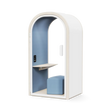
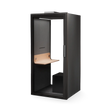
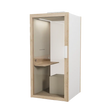
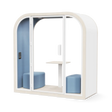
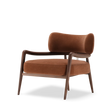
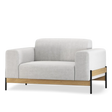
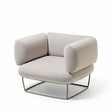
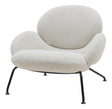
The catalogue logic follows the same discipline. Enky curates European manufacturers such as Pedrali, Alki, Muuto, Framery, Softline, and Lapalma, with FSC/PEFC and OEKO-TEX standards applied where relevant. A Framery acoustic booth in a lounge area solves private calls without forcing people to leave the estate. Pedrali seating around a meeting table does the opposite of generic event hire, it supports long working blocks without making the room feel overdesigned.
For a wider view of the circular logic behind the owned layer, the circular purchase model is the right reference point, because it keeps repairability, redistribution, and asset life at the centre of the brief.
Practical rule: for retreat properties, the best furniture strategy is the one that anchors the concept, adapts with the seasons, and never leaves the operator with waste, storage, or another procurement cycle.
Planning a Retreat Property With the Right Furniture Strategy
The most effective plan starts with the building, but it finishes with the furniture brief. First, define the layout by activity, not by room count. A leadership retreat with working sessions needs different furniture from a brand offsite that splits time between plenaries and breakout calls, and the same estate has to serve both.
What to specify, and why
A useful specification usually includes:
- Meeting chairs with real support: seated strategy work is different from dining.
- Modular tables: layouts should shift between plenary, small group, and presentation modes.
- Lounge seating with purpose: informal breaks need comfort, not just decoration.
- Acoustic privacy: a retreat benefits from places for calls and quiet focus.
- A model that can evolve: the interior should adapt as the operator learns how groups use the estate.
That is where project support matters. When structural changes are limited, space planning and furniture coordination do more than make the room look finished. They help the estate function as a temporary workplace with hospitality qualities, and for tighter breakout rooms the planning logic in Enky's office space planning guidance transfers directly.
The point is simple. Domaine de Courtigis works because the furniture strategy was treated as part of the retreat design, not as an afterthought, and that is the transferable lesson for any operator planning a comparable property.
Frequently Asked Questions
Is Domaine de Courtigis better for offsites or weddings?
For planners researching Domaine de Courtigis, the stronger fit is small team retreats and privatised stays. The venue reads less like a one-day celebration space and more like a place where a group can live and work together for a few days.
How many people can Domaine de Courtigis host?
The venue is designed for 15 to 50 people. That range matters because it points to a format where the furniture plan has to work for both concentrated work sessions and shared downtime, without making the rooms feel crowded or underused.
Does the venue already solve the furniture question?
Yes, and that is part of what distinguishes it. The estate was furnished by Enky for Momoamo through a hybrid of circular purchase and subscription, so the rooms are specified for working sessions, breakouts, and downtime rather than assembled from event hire. For groups, that means the interior is part of the offer. For operators planning similar properties, it is a working example of the model.
What is the best procurement model for a retreat property?
For a property with intense but intermittent use, a hybrid usually makes more sense than pure ownership. Anchor pieces can be owned through circular purchase with recovery built in, while a subscription layer keeps the concept adaptable as the operator learns from real stays.
Enky supports hospitality and retreat properties with subscription, circular purchase, and leaseback, plus project support for layouts that need to work in practical settings. The Domaine de Courtigis project shows what that looks like across a full estate. Visit Enky to explore the catalogue and discuss a specification that fits the venue, the group, and the timeline.


