


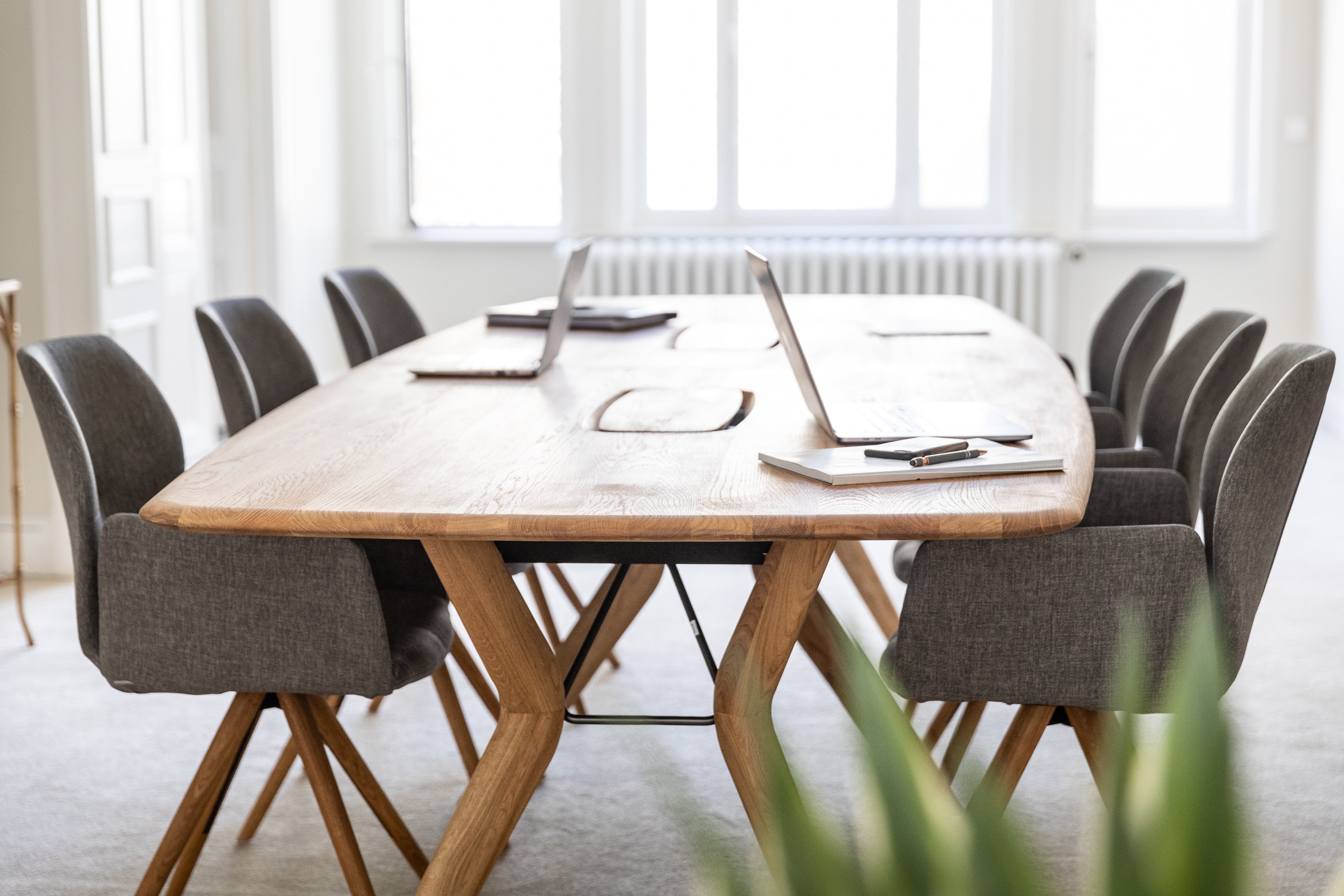
Office Refurbishment Cost 2026: Furniture Budget Guide
A mid-spec office refurbishment in the UK typically lands somewhere around £80 to £120 per sq ft all-in, and a full fit-out at a lease event usually runs higher. For a finance director, that is a useful benchmark, but it still misses the harder question: how much of that spend needs to sit upfront, and how much can be handled more intelligently.
The office refurbishment cost conversation often starts with builders' quotes and ends with a furniture line treated as a sunk purchase. That's where budgets become rigid. Construction decisions matter, but furniture is the part of the project that can often be structured differently through subscription, circular purchase, or leaseback, instead of being forced into one large capital outlay on day one.
For procurement teams comparing commercial fit out costs, that distinction matters. A project can be "on budget" in contractor terms and still be inefficient in cash-flow terms. For teams planning a new workspace strategy, Enky's workspace approach sits in that gap between design, procurement, and asset planning.
Table of Contents
- Introduction
- Typical Office Refurbishment Costs Per Square Metre
- The Primary Cost Drivers in Any Office Refurbishment
- Rethinking Furniture Procurement Beyond Upfront CAPEX
- How Circular Models Reduce Total Refurbishment Cost
- How These Models Work in Practice
- Frequently Asked Questions About Refurbishment Costs
Introduction
A finance director approves a refurbishment budget on a workable cost-per-square-foot assumption, then sees the numbers shift once furniture, AV, and change requests hit the programme. The headline rate matters, but the harder question is how much of the spend needs to be fixed upfront as CAPEX, and how much can be structured with more flexibility.
As noted earlier, UK refurbishment benchmarks vary widely by scope, specification, and building condition. That range is useful for early budgeting, yet it does not explain why two projects with a similar contractor cost can produce very different cash-flow pressure.
Furniture is usually the blind spot.
In many refurbishments, desks, task seating, meeting furniture, and ancillary pieces are still bought as a one-off capital purchase, even when the business expects headcount changes, lease uncertainty, or a workplace strategy reset within a few years. That approach turns a flexible asset category into a sunk cost. It also ignores the residual value of furniture and the option to procure through subscription, lease, or buyback-led circular models.
The cost of an office refurbishment is total cost of ownership. That includes upfront fit-out spend, financing structure, asset life, reuse potential, maintenance, and what the business can recover or avoid replacing later. Teams that treat every line item as pure CAPEX often miss the simplest financial lever in the project. Construction is largely fixed once specified. Furniture procurement still gives finance and workplace teams room to reduce upfront exposure and improve cash control.
Typical Office Refurbishment Costs Per Square Metre
A finance director signing off an office refurbishment rarely gets one clean number. Early estimates may suggest one rate per square foot, then the brief expands, furniture moves from reuse to replacement, and a modest refresh becomes a full fit-out with a very different cash profile.

Cost bands that actually help budgeting
For early budgeting, broad cost bands are more useful than a single blended average. They show how quickly spend rises once a project moves beyond decoration and into services, compliance, and workplace change.
| Refurbishment level | Cost per sq ft | What usually drives it |
|---|---|---|
| Basic updates | £19 to £50 per sq ft | Redecoration, surface refresh, minor improvements |
| Mid-to-high renovation | £50 to £100 per sq ft | Better finishes, layout work, broader upgrade scope |
| Full overhaul with structural work | £100 to £200 per sq ft | Structural interventions, major services changes, premium specification |
These are broad refurbishment ranges, and they sit below the cost of a full fit-out at a lease event, which UK fit-out specialist Oktra benchmarks at £111 to £218 per sq ft for 2026.
For teams working in square metres, the exact conversion matters less than the scope threshold. Costs change sharply once partitions, M&E changes, statutory approvals, and landlord requirements enter the job. The principle holds in any market: the brief drives the rate, not the floor area.
Practical rule: Price the scope before pricing the area. A low rate attached to an undefined brief usually becomes a high final account.
Why one office fit out cost per square metre differs from another
Two offices with the same footprint can carry very different refurbishment costs.
Location changes labour availability, delivery access, and programme risk. Building condition changes how much work sits behind the finishes. A straightforward modern floorplate usually costs less to adapt than an older building that needs power, HVAC, fire strategy, or cabling reworked to support the new layout.
Furniture is where many budgets become misleading. If desks, seating, storage, acoustic booths, and meeting settings are all purchased outright, the project cost looks heavier because those items sit in upfront CAPEX. If part of that package is acquired through subscription, rental, or leaseback, the fit-out can be structured with lower initial capital outlay and a different cash-flow profile. The office still costs money, but the decision shifts from sticker price to total cost of ownership.
Specification quality matters here. A product such as the Alki Lan height-adjustable office chair sits in a different cost class because its materials, durability, and repair potential are different. Cheap furniture lowers day-one spend, but it often raises replacement frequency, waste, and churn cost over the lease term.
A better way to read benchmarks
Use square metre benchmarks as a starting point, not a decision tool.
What matters is what sits inside the rate. A figure that includes construction only tells a different story from one that also absorbs furniture, IT, relocation, and landlord obligations. For that reason, the better budgeting question is not "what does refurbishment cost per square metre?" It is "which parts of this project need capital, which can be treated as operating cost, and what will this space cost to own over the next five years?"
That is where procurement strategy starts to affect the true refurbishment number.
The Primary Cost Drivers in Any Office Refurbishment
A finance director usually sees the pressure points before the design team does. The construction number looks manageable at concept stage, then services upgrades expand, furniture specification rises, IT moves from an allowance to a real scope, and lease obligations surface late. The result is not one bad decision. It is a budget made of several cost lines that were never tested together.
By 2026 benchmarks, a mid-range UK office fit-out totals £155 per sq ft, made up of £90 for construction, £35 for furniture, £10 for AV/IT, £18 for dilapidations, and £2 for security, according to Oktra's 2026 office fit-out cost benchmark.

Where the money goes
Construction usually carries the largest share of spend. Partitions, flooring, ceilings, power, lighting, HVAC changes, and compliance works can absorb the budget quickly, especially where the existing building services are dated or the new layout increases mechanical and electrical demand.
Furniture is the line item that gets underestimated most often.
It is smaller than construction on paper, but it is one of the few categories where procurement strategy can materially change the shape of the budget. Buy every workstation, chair, storage unit, acoustic booth, and meeting setting outright, and the project absorbs that spend as upfront CAPEX. Use a furniture subscription model for office fit-outs, and part of that same requirement can be structured as a regular operating cost rather than an upfront purchase, reducing initial capital pressure while preserving specification quality.
AV and IT are another common source of budget drift. Early numbers often cover screens and meeting room basics, then expand to booking systems, hybrid meeting hardware, cabling, access points, and integration work once the workplace operating model is defined.
Dilapidations sit outside the design conversation until they do not. If lease-end reinstatement, removals, or make-good obligations are poorly understood, the total financial exposure can be understated even when the build quote itself is accurate.
Security and access control are usually modest by comparison, but they still need clean scope definition. Entry systems, visitor management, and zoning requirements are small lines individually. Together, they can still move the final number.
What finance teams should challenge in a quote
A contractor quote is only one view of cost. It rarely captures the full ownership picture unless the brief and procurement model are already disciplined.
Three checks expose weak budgeting quickly:
- Exclusions hidden outside the core quote. Furniture, IT, comms rooms, landlord approvals, and dilapidations are often separated from the headline number. That makes the project look cheaper than it is.
- Specification mismatch. A low allowance may assume basic desks and task chairs, while the workplace brief requires ergonomic seating, collaboration settings, acoustic products, and joinery.
- Ownership assumptions that default to CAPEX. If furniture is treated as a one-time purchase without testing rental, subscription, refurbishment, or resale options, the business may be choosing the highest-cash option rather than the lowest total cost of ownership.
That third point matters more than many teams expect. Construction cost is largely fixed by design intent and building condition. Furniture cost is more flexible. It can be purchased, leased, reconditioned, or brought back into circulation later. That makes it one of the few refurbishment lines where finance can influence both cash flow and asset treatment without compromising the finished workplace. The budgeting principle is the same across markets: separate construction scope from furniture and operational scope, then test each cost line against how the space will be used and paid for.
Rethinking Furniture Procurement Beyond Upfront CAPEX
Traditional ownership still dominates office refurbishment cost planning, but that is often where otherwise disciplined projects become inflexible. In its 2026 global office fit-out cost guide, JLL reports that fit-out costs rose 2 to 6% over the past year, with 52% of markets seeing increases in Q4 2025. Against a backdrop of rising costs, treating furniture as a sunk purchase rather than a flexible asset decision leaves money on the table.

Why buying everything outright is often the wrong default
Furniture is usually approved as if the decision ends at purchase. It doesn't. The business then carries maintenance, repairs, reconfiguration, storage, disposal, and replacement risk. If headcount shifts or layouts change, that "owned" package can become an operational drag surprisingly quickly.
For a fast-moving team, the issue isn't just price. It's total cost of ownership across the period the space will be used in its current form.
A 50-person startup furnishing a new office is a simple example. If it buys every desk, ergonomic chair, meeting table, storage unit, and acoustic element outright, the initial invoice may satisfy procurement logic. But if the business expands, consolidates, or moves, that same package becomes a fixed asset problem.
What finance teams should evaluate instead
A better evaluation framework looks like this:
- Cash timing. Does the business need to preserve capital for hiring, M&E, or growth?
- Useful life. Will the current furniture layout still suit the team in a few years?
- Residual value. Is there a credible end-of-life recovery path?
- Repairability. Can products be maintained instead of replaced?
- Specification quality. Do certified materials and modular construction support a longer lifecycle?
That's where curated European-made products from brands such as Pedrali, Muuto, Lapalma, Softline, and Framery matter. Not because of branding alone, but because durability, modularity, acoustic performance, and repairability are part of the asset logic.
For teams comparing alternatives, furniture subscription models change the accounting conversation as much as the design one.
The hidden cost sits after handover
Many buyers focus on the day the office opens. Finance should focus on the years after that. A low upfront furniture spec can trigger earlier replacement, uneven performance, and poor adaptation when the layout changes. A better spec with flexible procurement often produces a cleaner operating outcome.
A short explainer helps make that shift tangible.
How Circular Models Reduce Total Refurbishment Cost
A finance director usually sees the pressure point first. The contractor wants deposits, M&E scope is firming up, and furniture is still being treated as a one-off purchase that drains capital before the space has proved itself.

Circular models change that cost profile. They do not make furniture free. They reduce total refurbishment cost by changing cash timing, preserving residual value, and cutting the amount of waste built into the usual buy-use-dispose cycle.
Subscription reduces upfront capital pressure
Subscription shifts part of the furniture package away from a large upfront purchase and into a regular payment. That matters in live projects where cash is better used on building works, compliance items, IT infrastructure, or contingency. The exact accounting treatment depends on the contract terms: short-term or low-value agreements can be expensed, while longer subscriptions are usually recognised as a right-of-use asset under IFRS 16. Either way, the consistent benefit is a lower upfront capital outlay and better cash-flow timing, not simply moving furniture off the balance sheet.
It also gives the business room to adjust after occupation. If headcount changes, teams are reorganised, or hybrid use alters the balance between desks, meeting settings, and acoustic products, the furniture plan can change without writing off a recent purchase.
The cost benefit is usually less about the monthly line item alone and more about avoiding the wrong ownership decision at the wrong time.
Circular purchase improves total cost of ownership
Some organisations still want furniture on the balance sheet. In that case, the smarter question extends beyond purchase price. It is total cost of ownership over the product life, including maintenance, recoverability, and what happens when the layout changes or the lease ends.
A circular purchase model keeps ownership but builds in a defined recovery route. That gives procurement and finance a clearer asset story than conventional purchasing, where disposal risk and residual value are often ignored until the end. For teams that want ownership with a planned buyback pathway, circular furniture purchase with end-of-life recovery gives a more controlled cost position than standard buy-and-dispose procurement.
Material quality matters here. Durable, repairable products with traceable materials and modular construction hold value better and are easier to redeploy, refurbish, or recover.
Leaseback releases budget from assets you already own
Leaseback is often the most overlooked option in an office refurbishment. If the business holds usable desks, chairs, storage, or meeting furniture, those assets may be able to release cash instead of sitting on the balance sheet until disposal.
That can help fund the refurbishment itself.
The practical effect is straightforward. Existing furniture is sold, the business continues to use it under an agreed structure, and capital is freed for core works or other project costs. For a finance lead, that changes the conversation from "What will the new furniture cost?" to "Which assets should we own, which should stay flexible, and which can help fund the project?"
In practice, the strongest results usually come from combining models rather than forcing one answer across the whole scheme.
- Own feature pieces with a stable long-term role
- Subscribe to workstations and task seating where change is likely
- Use leaseback on existing inventory if cash needs to be preserved for the build
- Keep maintenance, repair, and end-of-life recovery inside the procurement decision
Enky offers subscription, circular purchase, and leaseback across workspace furniture, acoustic products, and project support. Used properly, those routes let finance treat furniture as an asset strategy with different capital and cash-flow profiles, rather than a fixed cost that peaks on day one.
How These Models Work in Practice
The clearest way to reduce office refurbishment costs is to match the procurement model to the business model, not to force every item into ownership.
WorkPad: a London operator that needed cash flexibility
WorkPad, a London serviced-office operator, is a good real example. Opening several London sites in a single year, it could not tie large sums into furniture that might need to move or change with each new tenancy. For its Newman Street site, Enky split the fit-out across two models: a lease for the long-term pieces that stay whoever the tenant is, and a subscription for the items specific to the anchor tenant, which WorkPad can return or reconfigure when the tenancy changes. The result was a 347-piece workspace delivered on schedule, with cash flow protected and flexibility built in from day one. You can read the full WorkPad London project for the detail.
An illustrative hospitality scenario
To show how the same logic applies beyond the office, picture a boutique hotel refreshing a lobby and lounge. The project may not be called an office refurbishment, but the financial mechanics are familiar. M&E upgrades absorb capital quickly. Furniture still needs to support multiple uses, from informal work to guest events.
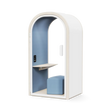
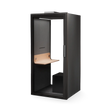
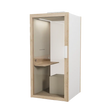
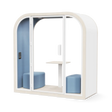
In that case, leaseback on existing seating could release budget for core works, while modular Softline sofas stay flexible to support layout changes. A Framery acoustic booth can also make sense where the lobby doubles as a work setting for guests and staff, especially when privacy matters but full construction isn't attractive.
A broader view of how clients apply these models across hospitality and workspace projects appears in client stories from Enky.
Frequently Asked Questions About Refurbishment Costs
Is furniture subscription only for startups
No. It's a finance and flexibility decision, not a company-age decision. Established firms use subscription when they want to preserve cash, avoid overbuying, or keep layouts adaptable.
Can ownership and subscription be mixed in one project
Yes. That hybrid structure is often the most practical. Stable brand pieces can be owned, while desks, chairs, storage, or acoustic elements can sit in a more flexible model.
Does better furniture really affect office refurbishment cost that much
Yes, but not only through the invoice. Better furniture affects maintenance, lifespan, adaptability, and the quality of the workplace experience. A lower purchase price can still create a higher total cost of ownership.
What happens at end of life
That depends on the model. In circular systems, maintenance, recovery, and redistribution are planned into the lifecycle. That reduces disposal friction and makes residual value part of the procurement decision.
When should finance get involved
At the start. If finance only reviews the final furniture package, most useful options have already been ruled out by the procurement structure.
If the current budget discussion is stuck on upfront spend alone, Enky is worth reviewing as part of the options set. The useful question isn't only what the furniture costs. It's whether the project would perform better if part of that spend moved from rigid CAPEX into a circular, asset-backed model with end-of-life recovery built in.


