


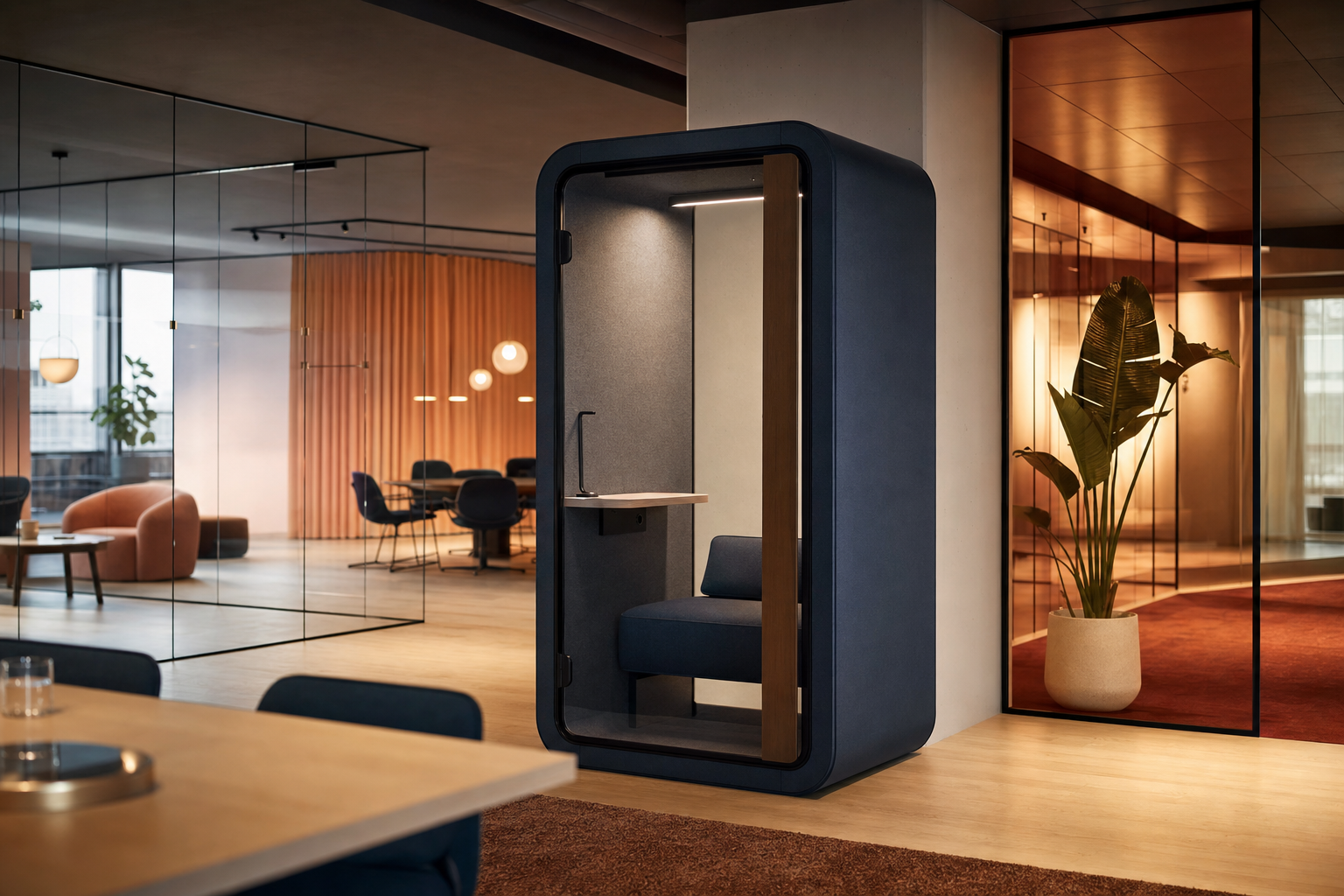
A new office can look finished on day one and still fail on day three. The complaints arrive fast, phones ring in the open, and the team starts booking meeting rooms for one-person calls because there's nowhere else to go. A well-placed acoustic office pod solves that problem without forcing the whole floor into a full rebuild, which is why buyers in Paris, Brussels, London and beyond are treating pods as a working asset, not a decorative add-on.
The mistake is buying on looks alone. A pod has to fit the actual rhythm of the office, the noise profile, the ventilation capacity, and the commercial model behind the fit-out. That is where the decision gets more useful, and more honest. The right choice is not just about whether a pod is quiet enough, it is about whether it stays usable, movable, and financially sensible when the office changes.
Table of Contents
- The Noise Problem No One Planned For
- How Acoustic Performance Is Actually Measured
- Sizing a Pod to Real Session Length and Use
- Choosing Between Subscription, Circular Purchase and Leaseback
- Integrating a Pod into the Office Without Disrupting It
- Lifecycle, ROI and the Case Against Buying Outright
- A Placement Scenario: Low Ceilings, Modular Seating and a Framery Pod
- Frequently Asked Questions About Acoustic Office Pods
The Noise Problem No One Planned For
A 50-person scale-up moves into a fresh office, the furniture is in, the lighting is good, and by lunchtime the first complaints land. Calls are being overheard, the open plan feels louder than the old space, and the meeting room is already overbooked. By week two, the team needs an acoustic office pod more than another lounge chair.
That is not a design preference, it is a workflow correction. Widely cited research on workplace interruptions has found that it can take around 23 minutes to regain full concentration after a single interruption, and in an open plan full of intelligible phone calls, those interruptions arrive all day. In plain terms, noise is a budgeting problem, not a comfort complaint.
What counts as a pod
An acoustic office pod is not the same thing as a glass phone booth, a soft seating nook, or a meeting room with a rug. It is an enclosed, purpose-built workspace designed to reduce speech leakage and support focused use, with built-in ventilation, lighting, and power. Those systems are essential, not optional, because a booth without them is not practical for sustained use.
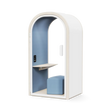
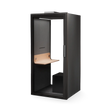
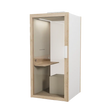
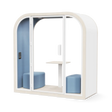
The typologies matter. A solo pod like Framery One fits short, private calls and deep-work blocks. A two-to-four-person pod like Framery Four suits interviews, client calls, and hybrid stand-ups. Larger team pods belong in offices where collaboration happens in bursts and the meeting room is already under strain.

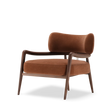
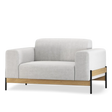
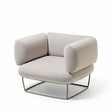
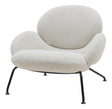
A clean specification also matters aesthetically. A pod should sit inside a broader scheme, not look dropped in from a catalogue. That is where curated European pieces from Pedrali, Alki, Muuto, Framery, Softline, and Lapalma do better than generic office hardware, because the enclosure, the seating, and the circulation around it can read as one interior language.
Practical rule: if the team complains most about calls, not chair comfort, a pod comes before any other furniture upgrade.
For buyers, the takeaway is simple. The issue is not whether open plan is "bad". The issue is whether the floor still has one place where people can talk without forcing the whole room to listen.
How Acoustic Performance Is Actually Measured
A pod's marketing copy can sound convincing and still tell you very little. The measure that matters in procurement is ISO 23351-1 speech level reduction, because it shows how much spoken content escapes the enclosure as a whole rather than how much sound one panel absorbs in a lab. The standard produces a single figure, and the practical threshold is clear: a speech level reduction of 30 dB means a pod can be placed right next to workstations without the people outside overhearing the conversation inside. Pods with lower reduction should simply be placed further from where people work.
Under the standard's classification, Class A sits at 30 dB or more of speech level reduction, with Class B below that from 25 dB. Treat those classes as procurement thresholds, not decoration: Class B performance covers focus calls and general privacy at a sensible distance, while Class A is the band to specify when confidential conversations have to happen next to occupied desks.
The spectrum is not flat
A single headline figure can still mislead, because speech level reduction is not flat across frequencies. Pods typically perform far better in the speech-critical mid and high frequencies than at low frequencies, and low-frequency leakage is where cheaper pods often feel weak in live use. A product can hold a respectable overall class on paper and still let the rumble of a deep voice travel, which is why the tested class, not the brochure adjective, should anchor the shortlist.

A comparable acoustic object inside a workplace scheme is BuzziSpace's BuzziLand, a premium acoustic wall or ceiling panel certified to ISO 11654 Class C. It is not a pod, but it shows the same principle clearly: acoustics are about engineered, tested performance, not visual softness.
| Class | Speech level reduction | Typical use case |
|---|---|---|
| Class A | 30 dB or more | Confidential conversations, sensitive calls next to workstations |
| Class B | 25 dB or more | Focus calls, normal conversations, general privacy |
A buyer who ignores speech level reduction is comparing furniture, not privacy.
That is why the safest short list starts with a tested speech-reduction class, then checks whether the use case needs ordinary privacy or the stronger end of the range.
Sizing a Pod to Real Session Length and Use
A pod that feels generous during a five-minute demo can feel wrong after four bookings in a row. Session length, occupancy, and turnover are the sizing variables, not showroom impressions. A solo pod is a different operational asset from a four-person meeting pod, even when both are marketed as acoustic furniture.
A Framery One works when the office needs a private, single-user space for short focused calls and concentrated work. A Framery Four fits longer meetings, interviews, and hybrid stand-ups where two to four people need to speak without pulling the rest of the floor into the conversation. That difference is not cosmetic, it changes ventilation demand, power provision, and how quickly the pod becomes part of the daily booking pattern.
Match the pod to the booking pattern
The ventilation numbers make the point concrete. Framery's published specifications give the solo Framery One a default airflow of 26 l/s (55 CFM), while the four-person Framery Four runs at 78 l/s (165 CFM) by default and up to 100 l/s (212 CFM) at maximum. The larger the pod and the longer the sessions, the more air it has to move to keep CO2 comfortably below the levels where concentration starts to suffer. The pod has to be sized for people, not just for sound.
Interior acoustics matter for the same reason. A pod needs very low internal reverberation so speech stays intelligible inside the booth and doesn't sound boxy, which is why the surface area and thickness of absorptive material inside the enclosure are worth checking alongside the insulation class. A pod that traps heat or sounds hollow gets underused fast.
The right question is not "how many dB does it block". The better question is "how long will people sit in it, and how many times a day will it be booked".
Sizing rule: if the pod will be rebooked all day, ventilation and power matter as much as speech privacy.
For a team choosing between a solo booth and a meeting pod, a practical test is this. If the space is mainly for one-to-one calls, candidate screenings, or heads-down work, start with the smaller format. If it needs to absorb a stream of hybrid meetings, interviews, and private reviews, move up to the larger enclosure and check the airflow spec before checking the upholstery.
Choosing Between Subscription, Circular Purchase and Leaseback
The wrong default is still outright purchase. It feels simple, but it can trap cash, create stranded assets, and make a move more expensive than the pod itself should be. For an acoustic office pod, the commercial model matters as much as the shell.
Enky's approach is built around three access models. Subscription gives monthly access with an option to buy. Circular purchase gives ownership from day one, with end-of-life recovery included. Leaseback frees capital, up to 90% of the furniture's value, from existing furniture assets while keeping them in use. The right choice depends on whether the client wants to preserve cash, own the asset, or release value from furniture already on the balance sheet. Furniture as a Service is the cleanest frame for teams that want the asset to stay flexible.

How the models differ
A 50-person startup furnishing a new office in Paris or Brussels usually has a simple tension, keep CAPEX low now or own the asset outright. Subscription moves the spend into OPEX, which helps when the team expects growth, churn, or layout changes. Circular purchase makes sense when the company wants the pod on its books but also wants recovery and redistribution at the end of use. Leaseback fits a business sitting on furniture assets that could be monetised without ripping them out of service.
The commercial model should follow the company's movement pattern, not the other way around.
That is why a pod should not be evaluated as a standalone SKU. It should be treated as a recoverable workspace asset, with the financing structure aligned to the office's likely next move.
Later in the process, the same logic supports a broader scheme. A pod purchased through the right access model can sit alongside a meeting table such as Actiu's Dorik Meeting Table - Oval 240x120 H74, but the model still has to match the budget rhythm of the project. A permanent office and a fast-changing one do not need the same ownership structure.
Integrating a Pod into the Office Without Disrupting It
A pod fails when it is treated like a plug-and-play object. Placement has to respect airflow, traffic, structure, and fire egress, or the best acoustic shell becomes an operational nuisance. That is why the floor plan matters before the purchase order.
At Enky, the advisory sequence is blunt. First, audit ambient noise, footfall, and existing acoustic treatment. Second, size the pod to actual use cases. Third, place it away from HVAC vents, check floor loading and ceiling height, and confirm delivery access with facilities before the order is signed.
The site checks that save projects
A pod under a vent can feel stuffy, even when the acoustic spec is strong. A pod pressed against a load-bearing wall can complicate installation. A pod blocking a fire route creates a problem no designer wants to explain later. Accessibility matters too, including door swing, reach to controls, and the turning space around the entry.
The delivery logistics deserve the same discipline as the placement. Pods are heavy, crated units that arrive in large boxes, so the sequence is what saves the project: access route, power provision, clearances, then final placement. The same coordination issues show up with pods, desks, and modular seating, and they are all cheaper to solve on the plan than on the day.

A simple pre-installation checklist
- Noise mapping: measure the loudest points in the office before deciding where the pod belongs.
- Traffic flow: keep the unit out of high-footfall paths and away from crowded circulation lines.
- Electrical provision: confirm nearby power and data before the pod is delivered.
The goal is not to make the pod invisible. The goal is to make it feel like part of the office from day one, without creating maintenance headaches or circulation bottlenecks.
Lifecycle, ROI and the Case Against Buying Outright
A pod earns its keep only if it can be maintained, repaired, recovered, and redeployed. The cheapest invoice often becomes the most expensive decision once an office moves, shrinks, or reconfigures a few years later. That is the part buyers ignore when they treat an acoustic office pod like a permanent fixture.
The smarter decision starts with access model. A circular purchase keeps the pod in circulation through end-of-life recovery, instead of writing it off as waste. Subscription suits teams that need flexibility and do not want capital locked into furniture. Leaseback fits offices that already own usable assets and want cash released without stripping the workplace of useful equipment. For a clear explanation of how that works in practice, see Enky's leaseback model. A pod that can be reused or recovered is far less likely to become stranded when the office changes.
Materials and repairability are financial issues
Certified materials are a financial decision, not a branding detail. FSC or PEFC wood, OEKO-TEX textiles, modular construction, and repairable components, where applicable, all extend service life and reduce replacement pressure. In a fit-out, that means fewer disposals, less downtime, and better residual value.
Repairability matters just as much as the spec sheet. If a panel, textile, or internal component can be serviced without replacing the whole unit, the pod stays useful for longer and holds value when the team relocates or the layout shifts. That is why procurement should look at the whole lifecycle, not only the purchase price.
A circular purchase is stronger than a straight buy when the office may change shape. Subscription is the cleaner option when flexibility matters more than ownership. Leaseback is the right call when a company wants to release cash from assets it already owns without pushing furniture out of use.
Buy outright only when the office horizon is stable and the asset really will stay put.
That is the rule. If the team expects growth, churn, or a future move, buying outright turns a pod into a stranded asset risk. Subscription or circular purchase usually protects capital better, and leaseback can improve cash flow without breaking the workplace setup. The right choice follows the company's growth path, not the sales pitch attached to the enclosure.
A Placement Scenario: Low Ceilings, Modular Seating and a Framery Pod
As an illustration, consider a Brussels co-living operator that needs private call space inside a converted industrial building with a low ceiling height. The problem is not only sound, it is clearance, comfort, and keeping the corner useful across changing booking patterns. The answer in a project like this is a carefully specified Framery unit, such as a Framery One setup, positioned so that ventilation clearance and usable footprint are protected from the start.
The surrounding layout matters as much as the booth. Modular Pedrali seating outside the pod can turn the corner into a micro-lounge that supports both focused calls and casual meetings. One zone handles two behaviours, without crowding the circulation route or making the pod feel detached from the rest of the space.
Access model and specification should be treated together in this kind of building. Delivered under subscription, the pod lets the operator reconfigure as occupancy changes instead of being locked into a permanent asset, and interior textiles specified to OEKO-TEX standards matter because enclosed spaces need material confidence as well as acoustic performance for daily use.
The result to aim for is a quieter call space and a more adaptable corner of the floor, ready to shift when the occupancy pattern changes. Flexible furniture works when it respects the building, not when it tries to overpower it.
Frequently Asked Questions About Acoustic Office Pods
Will an acoustic office pod be quiet enough for confidential calls?
If the pod is tested to ISO 23351-1 Class A, meaning 30 dB or more of speech level reduction, it can sit next to occupied workstations without conversations inside being overheard, which is the practical bar for confidential use. Lower classes can still work for normal conversations at a greater distance from listeners, but they should not be sold as a confidentiality solution.
What happens when the pod reaches end of life?
That depends on the commercial model. With circular purchase, recovery is built in, so the pod stays in circulation rather than becoming stranded. With subscription, the asset can stay flexible if the office changes, and with leaseback, existing furniture can remain in use while capital is released.
Is a pod cheaper than building another meeting room?
Usually, the better question is whether it preserves cash and avoids permanent fit-out work. A pod can be treated as an operational asset instead of a structural project, which is why subscription often makes more sense for a fast-changing office than a fixed room.
Can it be moved if the office relocates?
Yes, but only if the original spec considered delivery access, floor loading, ceiling height, and ventilation from the start. A lower-profile pod can be adapted for a tighter industrial interior and still stay usable under subscription, which is exactly why those checks belong in the original brief.
For buyers comparing models, the clean next step is to review the acoustic phone booths catalogue and then decide whether subscription or circular purchase matches the office plan. The right pod is the one that fits the floor today and still makes sense when the floor changes.
Enky supports office teams, hospitality operators and developers that need an acoustic office pod to work as part of a larger interior and a smarter capital plan. Explore the catalogue and compare subscription, circular purchase, or leaseback with Enky if the office needs a quieter space that can also stay flexible, recoverable and ready for the next move.


